
Storage room ownership in apartment buildings
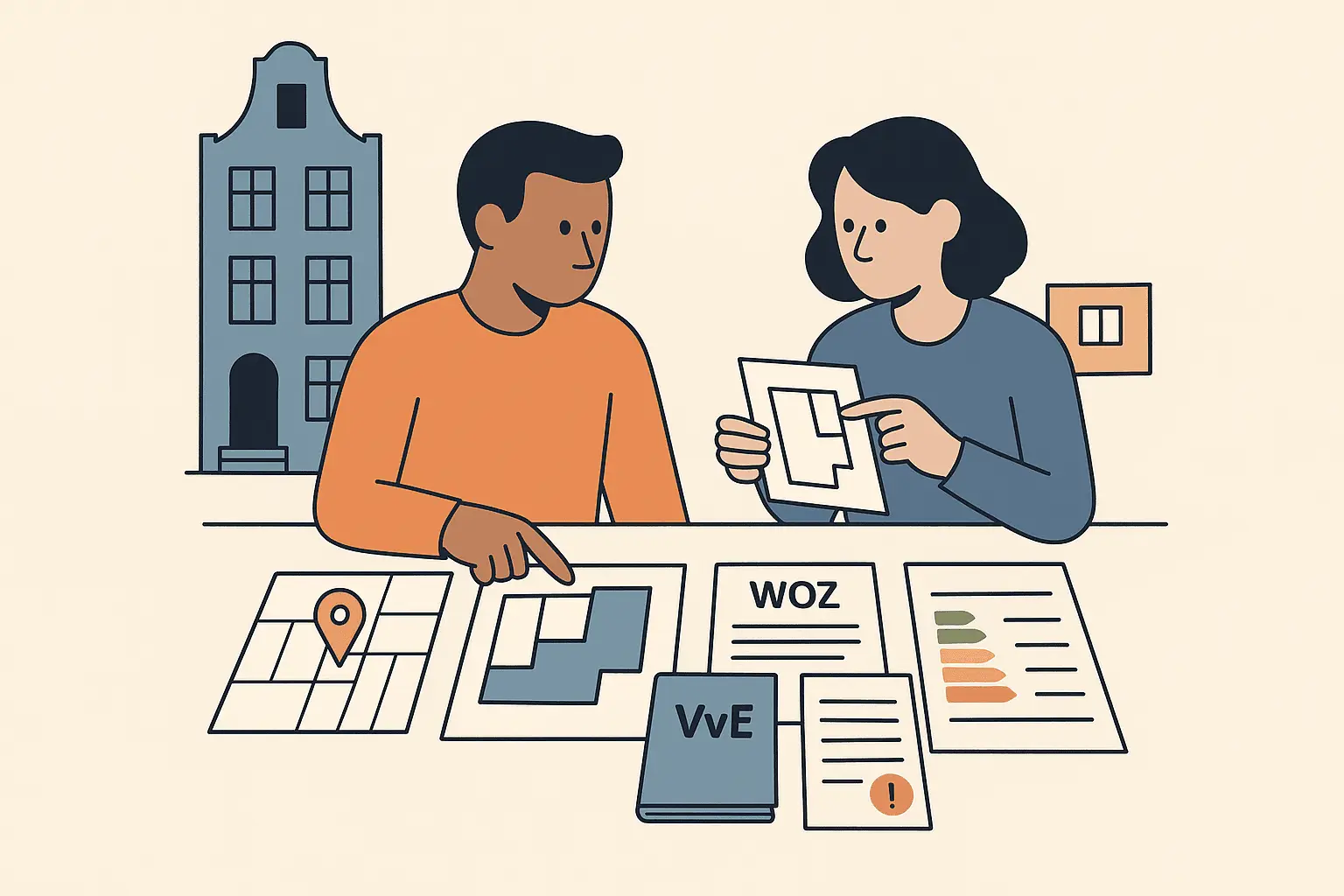
A storage room can look simple during a viewing: a basement box, a bike storage space, an attic cupboard, or a separate “berging” with a number on the door. But in Dutch apartment buildings, the legal position is not always obvious.
Before you bid, check whether the storage room is actually part of the apartment right, a separate right, a shared VvE area, or only an informal use arrangement. This is the practical issue behind searches for “apartment storage ownership Netherlands”: what exactly are you buying, using, and paying for?
Considering a specific apartment? Enter the address in Huisscan and upload the sales brochure, VvE documents, or deed of division if you have them. Huisscan turns one Dutch address into a clear pre-bid report with available Dutch property data, risk signals, document analysis, and buyer questions. Check a Dutch property before you bid.
Why storage-room ownership matters before bidding
For many buyers, especially when buying a house in the Netherlands as an expat, storage is not a small detail. It can affect daily life: bikes, suitcases, tools, a stroller, or seasonal items often need a secure place.
But it can also affect your bid.
If the listing says “with storage” but the documents show only a shared bicycle room, you may be valuing the apartment too highly. If the storage room is a separate apartment right, it needs to be correctly included in the sale documents. If it is only a practical arrangement made by the VvE, it may not give you the same certainty as a private storage room.
The goal is not to become a legal expert. The goal is to know what to ask before your offer becomes serious.
The common storage situations in Dutch apartment buildings
Dutch apartment ownership works through an appartementsrecht: an apartment right. This gives you a share in the building and the exclusive right to use certain private parts, as defined in the deed and drawings.
A storage room can appear in several ways.
1. Private storage included in the apartment right
The storage room may be part of the same apartment right as the apartment itself. The splitsingsakte and splitsingstekening should show which parts are private, often with an index number or marked area.
This is usually the clearest situation, but you still need to check that the storage shown during the viewing matches the documents.
2. Separate apartment right
Sometimes a storage box, parking space, or garage has its own separate apartment right or cadastral index. In that case, it should be clearly included in the sale, purchase agreement, mortgage process, and transfer deed.
If the apartment and storage are separate legal rights, do not assume both are included just because the brochure mentions them.
3. Common area with an exclusive right of use
A storage room may be part of the common property of the VvE, but one owner has an exclusive right to use it. This right may be written into the deed, regulations, or VvE documents.
This can be useful, but it is not the same as a separately owned private storage area. If value depends on it, ask your notary, buyer agent, or legal adviser to confirm what the right means.
4. Shared bicycle or storage room
Many buildings have a shared fietsenberging or communal storage area. This may be convenient, but it usually does not mean you own a specific private room.
For bidding purposes, shared storage should not be valued the same way as a private lockable storage box.
5. Informal or historical allocation
Be careful with statements such as:
- “The previous owner always used this box.”
- “Everyone just uses the storage room with their apartment number.”
- “The VvE knows about it.”
- “It is not in the documents, but it has never been a problem.”
That may be true in practice, but it is weaker than a clear legal right. If the storage room matters to your decision, get written clarification before bidding.
Dutch documents and terms to check
The sales brochure is useful, but it is not enough on its own. For storage-room ownership in apartment buildings, compare the listing with the legal and VvE documents.
| Dutch term | Plain-English meaning | Why it matters |
|---|---|---|
| Berging | Storage room | May be private, shared, separate, or only a use right |
| Kelderbox | Basement storage box | Check the number and whether it matches the drawing |
| Zolderberging | Attic storage | May have access or use restrictions |
| Fietsenberging | Bicycle storage | Often shared, not always private |
| Appartementsrecht | Apartment right | Defines what you are buying in an apartment building |
| Splitsingsakte | Deed of division | Main legal document dividing the building into apartment rights |
| Splitsingstekening | Division drawing | Shows private and common parts of the building |
| Privégedeelte | Private part | Area for exclusive private use under the apartment right |
| Gemeenschappelijk gedeelte | Common area | Shared part managed by the VvE |
| Gebruiksrecht | Right of use | May be different from ownership or a private part |
| VvE | Owners’ association | Manages shared building matters and documents |
| Huishoudelijk reglement | House rules | Can explain practical use, but may not prove ownership |
Useful sources include:
- Kadaster information for registered apartment rights and cadastral references.
- The splitsingsakte and splitsingstekening.
- The VvE documents, including regulations, house rules, minutes, and financial documents.
- The seller’s questionnaire, often called a vragenlijst.
- The draft purchase agreement, once available.
- Written answers from the selling agent or seller.
Red flags to notice before you make an offer
Storage-room issues are often found in small inconsistencies. Look carefully for these signals:
- The brochure says “with storage”, but the deed or drawing does not show a private storage room.
- The storage number shown during the viewing does not match the drawing.
- The agent describes it as “in use” rather than “included” or “part of the apartment right”.
- A storage box appears to have a separate cadastral or apartment index, but it is not clearly included in the sale.
- The storage room is currently used by someone else.
- The VvE documents mention disputes, reallocation of storage rooms, or unclear use rights.
- The storage area has been changed, combined, or converted without clear documentation.
- The only evidence is a house rule or verbal explanation.
- Access is unclear, for example through another private area or a locked common space.
- There are practical condition issues, such as damp, leakage, poor ventilation, or damage.
One red flag does not always mean you should walk away. It means you should ask better questions before you price the apartment as if the storage is certain.
Practical pre-bid checklist
Use this checklist before bidding on a Dutch apartment with a storage room:
- What exact wording does the listing use: berging, box, fietsenberging, privéberging, or gemeenschappelijke berging?
- Did you physically see the storage room during the viewing?
- Is there a number on the storage door, and does it match the floor plan or division drawing?
- Does the splitsingstekening show the storage as a private part?
- Does the splitsingsakte describe the storage right clearly?
- Is the storage part of the same apartment right, or a separate apartment right?
- If separate, is it clearly included in the sale information?
- Do the VvE documents mention any special rules, disputes, or changes involving storage?
- Is the storage shared, private, or only allocated by practical agreement?
- Are there extra VvE contributions, maintenance obligations, or access restrictions?
- Has the seller or selling agent confirmed the storage situation in writing?
- If anything is unclear, have you asked your buyer agent, notary, or legal adviser before making a firm offer?
A good pre-bid property check in the Netherlands compares three things: the advertisement, the legal documents, and the physical reality.
How storage uncertainty can affect your bid
Storage ownership does not need to stop a purchase, but it can change your approach.
If the storage room is clearly private and correctly documented, it may support your bid and make the apartment more practical.
If the storage is shared, informal, or uncertain, you may decide to:
- reduce your bid;
- ask for documents before bidding;
- make your offer subject to satisfactory document review;
- ask for the storage right to be described clearly in the purchase agreement;
- pause until the seller gives written clarification;
- walk away if the storage is essential and cannot be confirmed.
Do not use generic wording if the storage room matters. Ask your buyer agent, notary, or legal adviser how to describe the storage condition properly in your situation.
What Huisscan can help you check
Huisscan is built to support a practical pre-bid property check Netherlands buyers can use before making an offer.
With one Dutch address and uploaded documents, a Huisscan pre-bid report can help you:
- review available Dutch property data for the address;
- identify whether the property appears to involve apartment rights;
- analyse uploaded sales brochures, floor plans, VvE documents, and deed extracts;
- flag possible inconsistencies around the storage room;
- highlight missing documents you should request;
- translate Dutch property terms into clearer buyer questions;
- identify relevant property risks Netherlands buyers should consider before bidding.
For this topic, Huisscan may help you form questions such as:
- “Is storage room number 12 part of the apartment right being sold?”
- “Is the storage a private part, common area, or separate apartment right?”
- “Can the seller provide the splitsingstekening showing the storage?”
- “Are there VvE rules or disputes about storage allocation?”
- “Will the storage right be clearly included in the purchase agreement and transfer documents?”
Huisscan does not replace a notary, lawyer, appraiser, mortgage advisor, or building inspector. It helps you organise the available information and ask sharper questions before you bid.
FAQ
Is a storage room automatically included when I buy a Dutch apartment?
No. It may be included, but you should not assume this from the viewing or brochure alone. Check the apartment right, deed of division, division drawing, VvE documents, and sale wording.
What is the difference between ownership and a right of use?
In apartment buildings, “ownership” is often shorthand. Legally, you usually buy an apartment right that includes exclusive use of certain private parts. A separate right of use for a common storage area can be different. If the distinction affects your bid, ask a qualified professional to confirm it.
Can the Kadaster show whether the storage room is mine?
Kadaster information can show registered apartment rights and cadastral references. It may not explain every practical storage allocation inside the building. For that, you usually also need the splitsingsakte, splitsingstekening, and VvE documents.
What if the storage number in the basement does not match the drawing?
Treat it as a question to resolve before bidding. It may be a harmless numbering difference, but it may also indicate an informal swap or unclear allocation. Ask the seller or agent for written clarification and supporting documents.
Can I make my offer conditional on storage-room confirmation?
Buyers sometimes include conditions when important documents or rights still need to be checked. The wording matters, so discuss this with your buyer agent, legal adviser, or notary before relying on it.
Can Huisscan confirm legal ownership of the storage room?
Huisscan can analyse available data and uploaded documents, flag inconsistencies, and generate buyer questions. Final legal confirmation should come from the notary or another qualified professional involved in your purchase.
Check the address before you bid.