
Soil contamination: what Dutch buyers should know
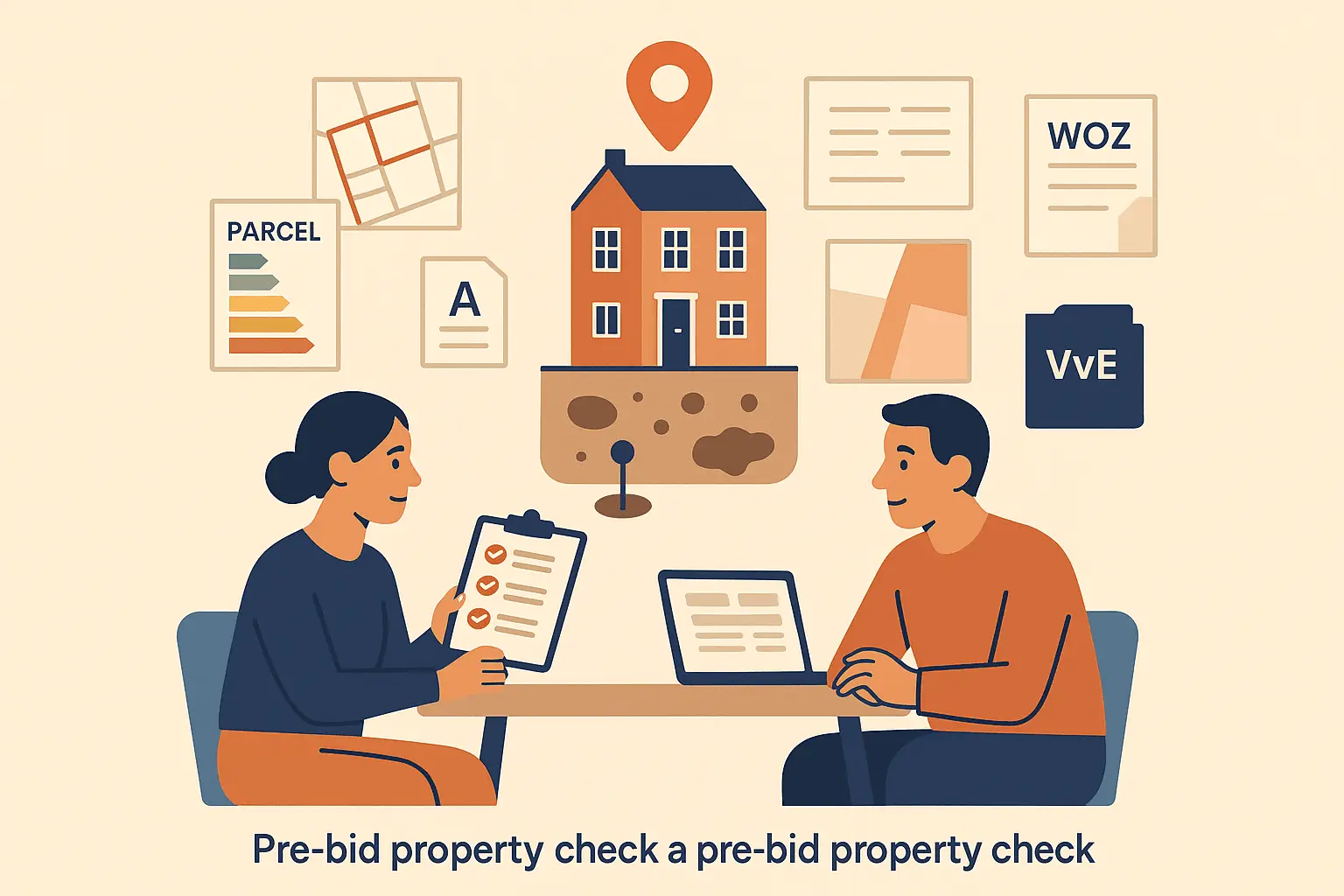
Soil issues are easy to miss when you are buying a house in the Netherlands. You can view the kitchen, check the energy label, and compare the asking price, but you cannot see what is in the ground beneath the garden, driveway, extension, or apartment block.
For buyers and expats searching for soil contamination property Netherlands, the key pre-bid question is simple: is there enough information to bid with confidence, or do you need more answers before making an offer?
Soil contamination does not automatically mean “do not buy.” Many locations have old records, minor background contamination, or completed remediation. But it can affect price, future renovation plans, mortgage discussions, contract conditions, and your decision to walk away.
Want to review environmental signals before you bid? Huisscan can help you check a Dutch property before you bid by turning one address and your uploaded documents into a clear pre-bid report with available Dutch property data, risk signals, document analysis, and buyer questions.
Why soil contamination matters before a bid
Soil contamination, or bodemverontreiniging, means that harmful substances may be present in the soil or groundwater. In the Netherlands, this can relate to historic industry, old fuel tanks, filled land, former workshops, agricultural use, demolition material, or nearby commercial activity.
Before bidding, soil risk matters because it may influence:
- whether the garden is suitable for normal use;
- whether you can safely build an extension, basement, driveway, or garden office;
- whether excavation soil must be handled or disposed of in a specific way;
- whether there are remediation costs or aftercare obligations;
- whether an appraiser, lender, buyer agent, or notary asks follow-up questions;
- how comfortable you are with the price and purchase conditions.
The most important distinction is between suspected, confirmed, and remediated contamination. A public record showing historic risk is not the same as confirmed pollution. A remediated location may be acceptable, but you need to understand what was done, whether restrictions remain, and whether the documents match the property you want to buy.
Dutch soil terms and data sources you may see
When reviewing property risks Netherlands buyers often run into Dutch terms. These are the most useful ones to understand before you bid:
| Dutch term | Plain English meaning | Why it matters |
|---|---|---|
| Bodemverontreiniging | Soil contamination | The general term for pollution in soil or groundwater. |
| Bodemonderzoek | Soil investigation | A report based on desk research, sampling, or both. |
| Historisch bodemonderzoek / vooronderzoek | Historic desk study | Looks at past uses that may have caused contamination. |
| Verkennend bodemonderzoek | Exploratory soil investigation | Usually includes sampling to check whether contamination is present. |
| Nader bodemonderzoek | Further investigation | More detailed research after a possible issue is found. |
| Sanering | Remediation or cleanup | Work done to remove, isolate, manage, or reduce contamination. |
| Nazorg | Aftercare or monitoring | Ongoing measures after remediation, such as monitoring or use restrictions. |
| Gebruiksbeperking | Use restriction | A limitation on how the land can be used. Important for gardens and future works. |
| Bodemkwaliteitskaart | Soil quality map | Area-level background soil quality. Useful context, but not a parcel-specific guarantee. |
| Omgevingsrapport / bodeminformatie | Environmental or soil information report | Often from the municipality or regional environmental service. May list known investigations, tanks, or historic activities. |
| Omgevingsdienst | Regional environmental service | A public body that may hold or manage local environmental records. |
| Ondergrondse olietank | Underground oil tank | Old tanks can leak. Ask for removal or cleaning certificates if relevant. |
Useful places to look include the seller’s documents, the NVM questionnaire if available, municipal or Omgevingsdienst soil information, public soil portals such as Bodemloket where available, and any historic reports connected to the address or cadastral plot.
A key warning: no single map is a complete guarantee. Public data may be old, incomplete, or based on suspicion rather than testing. Use it to decide what to ask next.
Red flags around Dutch homes
You do not need to become an environmental specialist. But before making an offer, look for signals that justify extra questions.
Common red flags include:
- a former petrol station, garage, workshop, dry cleaner, printing business, metalworking site, shipyard, or factory;
- a house built on or near former industrial land;
- a property near old greenhouses or intensive horticulture areas;
- a filled ditch, former landfill, raised ground, or unknown fill layer;
- signs of an old or removed oil tank;
- asbestos-related history, especially after demolition, fire, or old outbuildings;
- older urban areas where lead or heavy metals may be present in topsoil;
- nearby contamination records, especially if groundwater movement may be relevant;
- apartment buildings with commercial units below or next door.
For apartments, the land may be shared through the owners’ association, or VvE. Soil issues can still matter if there are planned foundation works, basement works, garden works, or correspondence with the municipality. Ask for relevant VvE minutes and technical documents if there is any sign of environmental discussion.
Documents and questions to ask before you offer
If there is any signal of soil risk, ask the selling agent for the underlying documents before you bid, not after you are emotionally committed.
Useful documents include:
- previous bodemonderzoek reports;
- municipal or Omgevingsdienst soil information;
- remediation documents, completion reports, or authority correspondence;
- certificates for removed, cleaned, or decommissioned oil tanks;
- permits or documents for extensions, basement works, or major groundworks;
- VvE minutes and maintenance plans for apartments;
- any environmental clauses in the draft purchase agreement.
Good buyer questions include:
- Are there any known or suspected soil or groundwater contamination issues?
- Has any soil investigation been carried out? If yes, can we receive the full report, not only a summary?
- Was any remediation completed, and are there remaining restrictions or aftercare measures?
- Are there current or former underground tanks on the plot?
- Does the information apply to this exact address and cadastral plot?
- Has the municipality or Omgevingsdienst issued any relevant correspondence?
- Could soil conditions affect planned renovations, extensions, garden works, or excavation?
You may also hear the Dutch legal terms onderzoeksplicht and mededelingsplicht: the buyer’s investigation responsibility and the seller’s disclosure responsibility. These can become important, but do not rely on general assumptions. Ask clear questions, keep written answers, and involve a qualified professional if the risk is material.
Practical pre-bid checklist
Use this checklist before making an offer on a property where soil contamination may be relevant:
- Match the address, cadastral plot, garden, parking space, and any outbuildings to the documents.
- Check whether public soil information or local environmental records mention the property.
- Look for historic uses such as fuel, industry, workshops, dry cleaning, horticulture, or landfill.
- Ask for full soil reports, not just the seller’s verbal summary.
- Check report dates, scope, conclusions, and whether sampling covered the relevant area.
- Look for terms such as verontreiniging, sanering, nazorg, gebruiksbeperking, olietank, asbest, or PFAS.
- Ask whether any underground tank was removed or certified.
- Consider your own plans: extension, basement, garden redesign, driveway, heat pump groundworks, or excavation.
- Ask your buyer agent, notary, environmental consultant, mortgage advisor, or appraiser if the issue could affect your transaction.
- Decide before bidding: proceed, ask for more documents, adjust the price, include a condition, or walk away.
This is the purpose of a good pre-bid property check Netherlands buyers can actually use: not to create panic, but to reduce uncertainty before the offer.
How soil risk can affect your bid, conditions, or decision
Soil risk can affect a bid in several practical ways.
You may decide to bid normally if the available information is clear, recent enough, and consistent with the property’s use. You may bid lower if uncertainty or future work creates potential cost. You may ask the seller to provide missing reports before you bid. Or you may include a condition related to satisfactory environmental information, after discussing wording with a qualified adviser.
In some cases, the best decision is to pause. This may be sensible if:
- the property has a high-risk past use and no clear reports;
- remediation is mentioned but the completion documents are missing;
- use restrictions conflict with your plans;
- the seller cannot or will not answer basic environmental questions;
- your mortgage advisor or appraiser expects problems;
- you need to excavate but the soil status is unclear.
A soil concern is not always a deal-breaker. But if the cost, responsibility, or restrictions are unclear, the risk belongs in your price discussion and contract strategy before you sign.
What Huisscan can help you check
Huisscan helps buyers, expats, buyer agents, and advisors review environmental signals as part of a broader check Dutch property before bidding process.
With one address, a Huisscan pre-bid report can help you:
- organise available Dutch property data around the address;
- identify environmental and soil-related risk signals where data is available;
- review uploaded documents such as the brochure, seller questionnaire, soil reports, VvE documents, leasehold papers, or draft purchase agreement;
- flag important Dutch terms such as bodemverontreiniging, sanering, olietank, asbest, PFAS, or gebruiksbeperking;
- highlight missing or unclear documents;
- turn findings into practical buyer questions for the selling agent, municipality, Omgevingsdienst, advisor, or specialist.
Huisscan does not test soil, confirm contamination, replace an environmental consultant, or provide legal, mortgage, valuation, building, tax, or notarial advice. It helps you see the available signals earlier, so you can ask better questions before making an offer.
FAQ
Can I see soil contamination during a viewing?
Usually not. A clean-looking garden or driveway does not prove the soil is clean. Soil contamination is normally assessed through records, historic use, and professional investigation.
Is a public map showing no contamination enough?
No. It is useful, but it is not a guarantee. Public records may be incomplete, outdated, or based on limited information. If the property has a risky history or you plan excavation, ask for more documents or professional advice.
Should every buyer request a soil investigation?
Not always. For many homes, available records and seller documents may be enough for a normal pre-bid decision. But if there are red flags, missing reports, old tanks, planned groundworks, or unclear remediation history, a professional soil investigation may be worth discussing.
Can soil contamination affect my mortgage?
It can. Not every signal creates a mortgage issue, but confirmed contamination, unclear remediation, or major restrictions may lead to questions from an appraiser or lender. Ask your mortgage advisor early if you see environmental risk.
What if the property was already remediated?
Completed remediation can reduce risk, but review the documents carefully. Check what was done, whether the relevant authority accepted the work, whether monitoring or aftercare remains, and whether any use restrictions apply to the garden, groundwater, or future construction.
Is contamination on a neighbouring plot relevant?
Sometimes. Nearby contamination does not automatically mean your plot is affected, but it may matter if groundwater, historic land use, or shared fill layers are involved. If neighbouring records concern you, ask the municipality, Omgevingsdienst, or an environmental specialist what they mean for the property you want to buy.
Check the address before you bid.