Schools and family needs before bidding

A home can look right at the viewing, but still be wrong for daily family life. Before you bid, check more than the number of bedrooms: school access, childcare, cycling routes, noise, play space, future development, and whether the home works for your family routine.
For buyers and expats searching for schools neighborhood house Netherlands, the key question is simple: does this address fit your family needs before you commit to an offer?
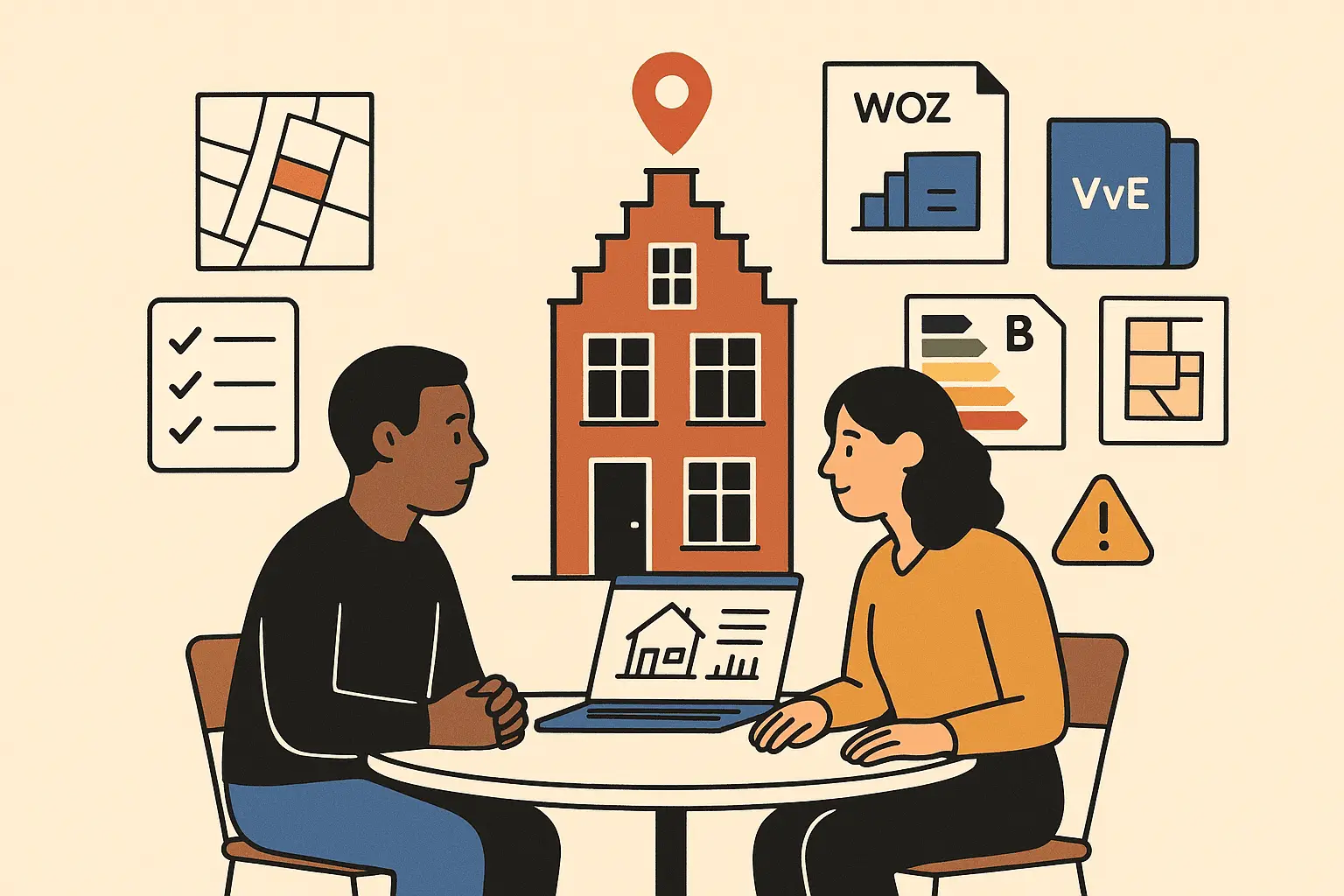
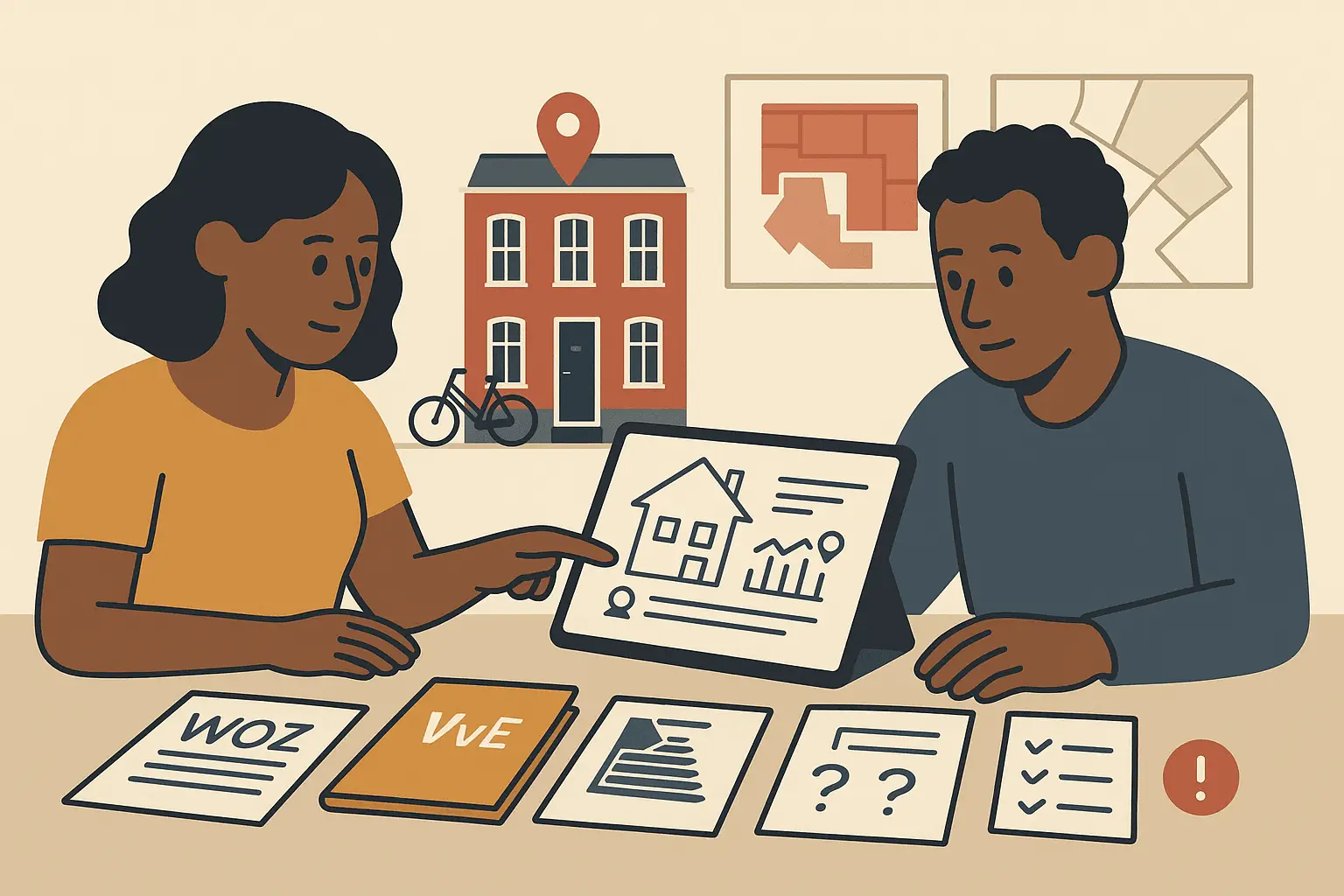
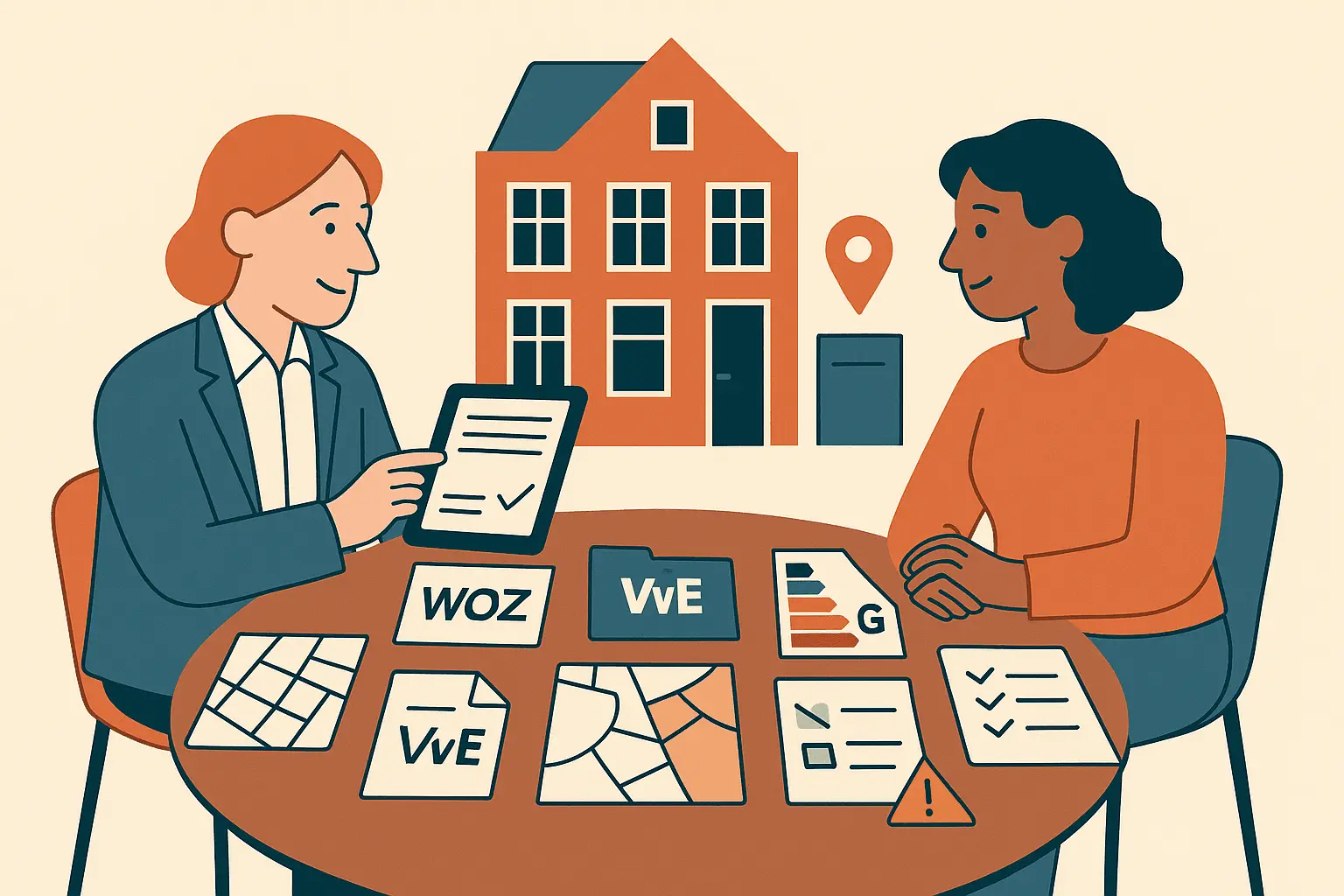
Considering a specific property? Huisscan helps you check a Dutch property before you bid by turning one address and uploaded documents into a clear pre-bid report with available property data, risk signals, document analysis, and buyer questions.
Why school and family fit belongs in your pre-bid check
When buying a house in the Netherlands, school and family needs can affect your decision just as much as the asking price.
A property may be attractive, but the area may create practical problems, such as:
- the nearest basisschool is full or uses a waiting list;
- the daily cycling route crosses a busy road or unsafe junction;
- BSO after-school care is not available when you need it;
- the apartment building has no practical storage for a stroller or bakfiets;
- future construction could change traffic, noise, or green space;
- the commute to school, work, and childcare is longer than expected.
These issues do not always mean “do not buy”. But they can change your maximum bid, your conditions, or the questions you ask before offering.
How Dutch school choice works in plain English
The Dutch school system gives parents choice, but that does not mean every nearby school is automatically available.
Useful Dutch terms:
- Basisschool: primary school.
- Middelbare school: secondary school.
- Kinderopvang: childcare or daycare.
- BSO / buitenschoolse opvang: before- or after-school care.
- Aanmeldbeleid: admission or registration policy.
- Wachtlijst: waiting list.
- Voorrangsgebied: priority area, used by some schools or municipalities.
- Internationale school: international school, often relevant for expat families.
In many places, your home address does not give a simple guaranteed school place. Some municipalities or school boards use application rounds, priority areas, sibling priority, lotteries, or waiting lists. Popular schools may have limited space.
For expats, also check whether an international or bilingual school is realistically accessible. Admission criteria, language support, fees, and waiting lists can differ strongly by school.
Always verify current admission rules directly with the school or municipality before you rely on them in a bidding decision.
What to check around the address
Start with the daily routine. A house is not only a building; it is a route map for your family.
Schools and childcare
Check at least three realistic school or childcare options, not just the closest one.
Look at:
- distance by walking, cycling, car, and public transport;
- school type or educational approach, such as public, religious, Montessori, Dalton, bilingual, or international;
- whether the school accepts new pupils in the relevant year group;
- childcare availability and BSO partnerships;
- language support if your child does not yet speak Dutch;
- opening hours and holiday arrangements.
A five-minute bike ride on a map can feel very different with a small child, heavy traffic, rain, or a cargo bike.
Safe routes and daily mobility
Visit the area at school drop-off or pick-up time if possible.
Check:
- cycling paths and crossings;
- busy roads, tram lines, railway crossings, canals, or bridges;
- lighting and visibility in winter months;
- parking pressure near schools;
- whether older children can travel independently later.
This can be especially important if you are moving from outside the Netherlands and are still getting used to Dutch cycling habits.
Family amenities
For family life, nearby services can matter more than they seem during a short viewing.
Consider:
- huisarts availability, as not every GP practice accepts new patients;
- pharmacy, dentist, and child health services;
- playgrounds, parks, sports clubs, swimming lessons, and libraries;
- supermarkets and public transport;
- support network, such as family, friends, or other parents.
The home itself
Family fit is also about the property layout.
Check:
- bedroom size and flexibility;
- stairs, steepness, and child safety;
- garden, balcony, or outdoor space;
- storage for bikes, stroller, car seats, sports items, and school bags;
- sound insulation between rooms and neighbours;
- possibility of a home office or study space;
- renovation work needed before moving in.
For apartments, check the VvE documents. A VvE is the homeowners’ association for an apartment building. Its rules and maintenance plans can affect where you store bikes, whether you can change the layout, and what shared costs may arise.
Dutch sources, terms, and documents to review
Use both public sources and the documents supplied by the seller or selling agent.
| What to check | Dutch source or term | Why it matters before bidding |
|---|---|---|
| School information | School websites, Scholen op de Kaart, Onderwijsinspectie | Helps you compare school profiles and available quality signals |
| Admission rules | Gemeente, school board, aanmeldbeleid | Shows whether living nearby gives priority or not |
| Childcare registration | Landelijk Register Kinderopvang, childcare provider | Confirms whether a childcare provider is officially registered |
| Seller disclosures | Vragenlijst, verkoopbrochure | May mention nuisance, renovations, defects, or neighbourhood issues |
| Apartment rules | Splitsingsakte, huishoudelijk reglement, VvE minutes, MJOP | Shows rules, planned maintenance, costs, and recurring building issues |
| Land-use planning | Omgevingsplan, municipality planning maps | Helps identify future development, roads, schools, or commercial use nearby |
| Property facts | BAG, Kadaster, WOZ information where available | Helps verify basic Dutch property data such as building year, surface, parcel, or registered use |
| Noise and environment | Municipal maps, Atlas Leefomgeving, local environmental information | Gives signals about road, rail, industry, air, water, or other surroundings |
These sources do not replace professional advice. They help you decide what to verify before your offer becomes serious.
How findings can affect your bid or decision
School and family research can change your pre-bid strategy in several ways.
Your maximum bid
If the area adds practical costs or stress, you may decide to lower your maximum price. For example, a longer childcare commute, need for a second bike or car, or urgent renovation to create a child’s room can affect affordability.
Homes near popular schools or family amenities may attract extra interest, but this is not automatic. Compare with recent local sales and speak with your buyer agent or appraiser if price impact is important.
Your questions before bidding
Ask clear questions before you offer, such as:
- Are there known nuisance issues around school traffic, parking, or neighbours?
- Are there planned roadworks, building projects, or zoning changes nearby?
- For an apartment: are bikes, strollers, or cargo bikes allowed in shared areas?
- Have there been complaints in the VvE minutes about noise, safety, or maintenance?
- Does the seller know of any nearby developments that could affect family life?
The selling agent represents the seller, so verify important answers independently where possible.
Your conditions
Some family-related risks can be difficult to make conditional in a bid. For example, school admission is usually not a standard condition in a purchase contract. If you want to include a special condition, discuss it with a qualified professional, such as your buyer agent or legal adviser.
More common pre-bid considerations include financing, building inspection, valuation, handover date, and whether essential documents have been reviewed.
Your walk-away point
Sometimes the right decision is not to bid.
Consider walking away if:
- there is no realistic school or childcare option;
- the daily route feels unsafe or unworkable;
- the home cannot reasonably adapt to your family needs;
- VvE rules or maintenance issues create ongoing problems;
- future planning signals conflict with your reason for buying the home.
A calm “no” before bidding is often better than regret after winning.
Practical checklist before bidding
Use this checklist for every family home you are considering.
- List the nearest three realistic basisscholen or middelbare scholen.
- Check each school’s admission rules, waiting lists, and priority areas.
- Contact childcare or BSO providers if you need them.
- Test the school route at a realistic time of day.
- Check public transport options for older children.
- Look for playgrounds, parks, sports facilities, and healthcare nearby.
- Review seller documents for noise, nuisance, defects, or neighbourhood comments.
- For apartments, review VvE rules, minutes, and maintenance plans.
- Check the omgevingsplan or municipal planning information for future changes.
- Decide whether the findings affect your maximum bid.
- Write down your must-ask questions before making an offer.
- Agree your walk-away points before the bidding pressure starts.
What Huisscan can help you check
Huisscan is designed for a practical pre-bid property check Netherlands buyers can use before making an offer.
With one Dutch address, Huisscan can help turn available information into a clear pre-bid report, including:
- available Dutch property data connected to the address;
- risk signals from available sources, including relevant surroundings and property risks Netherlands buyers should review;
- analysis of uploaded documents, such as the sales brochure, vragenlijst, energy label, VvE documents, or other files you received;
- a clearer list of buyer questions to ask the selling agent, school, municipality, buyer agent, mortgage advisor, or other professional.
For school and family needs, Huisscan does not guarantee school placement or judge what is best for your child. It helps you organise the address-specific checks so you can make a calmer bidding decision.
That is the core idea: check Dutch property before bidding, not after the pressure has already started.
FAQ
Are homes in the Netherlands assigned to a fixed school area?
Not always. The Netherlands has school choice, but some schools or municipalities use admission policies, priority areas, lotteries, or waiting lists. Check the current rules directly with the school or municipality.
Should I bid more for a house near a good school?
Not automatically. A nearby school may increase demand for some buyers, but availability and fit matter more than distance alone. Compare local prices and ask your buyer agent or appraiser if you need price guidance.
What should expat families check first?
Check language needs, international or bilingual school availability, waiting lists, commute time, childcare, and whether your child can realistically enter the right year group. Do this before bidding, not after the purchase process starts.
Can I make my offer conditional on school admission?
This is not a standard condition in most bids. If you want a special condition, ask a qualified professional to help draft and assess it. Sellers may also be less willing to accept unusual conditions.
What if we do not have children yet?
Still check family fit if you may need it later. Bedrooms, stairs, storage, outdoor space, school routes, childcare, and neighbourhood amenities can affect future use and resale appeal.
Can Huisscan replace a buyer agent, school adviser, inspector, or notary?
No. Huisscan supports your pre-bid decision with available data, document analysis, risk signals, and better questions. It does not replace professional legal, building, appraisal, mortgage, school, or notarial advice.
Check the address before you bid.