Renovation restrictions in Dutch apartments
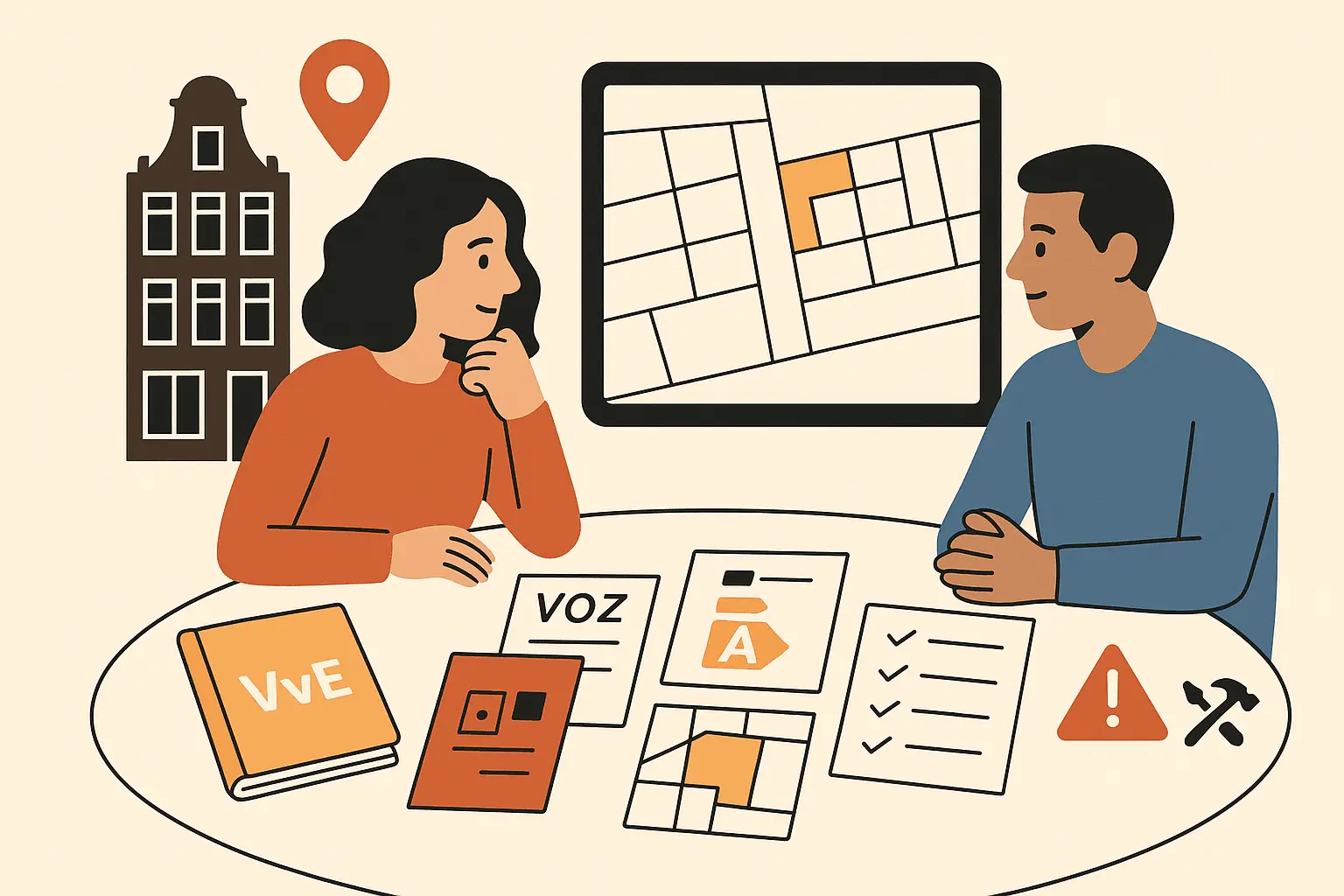
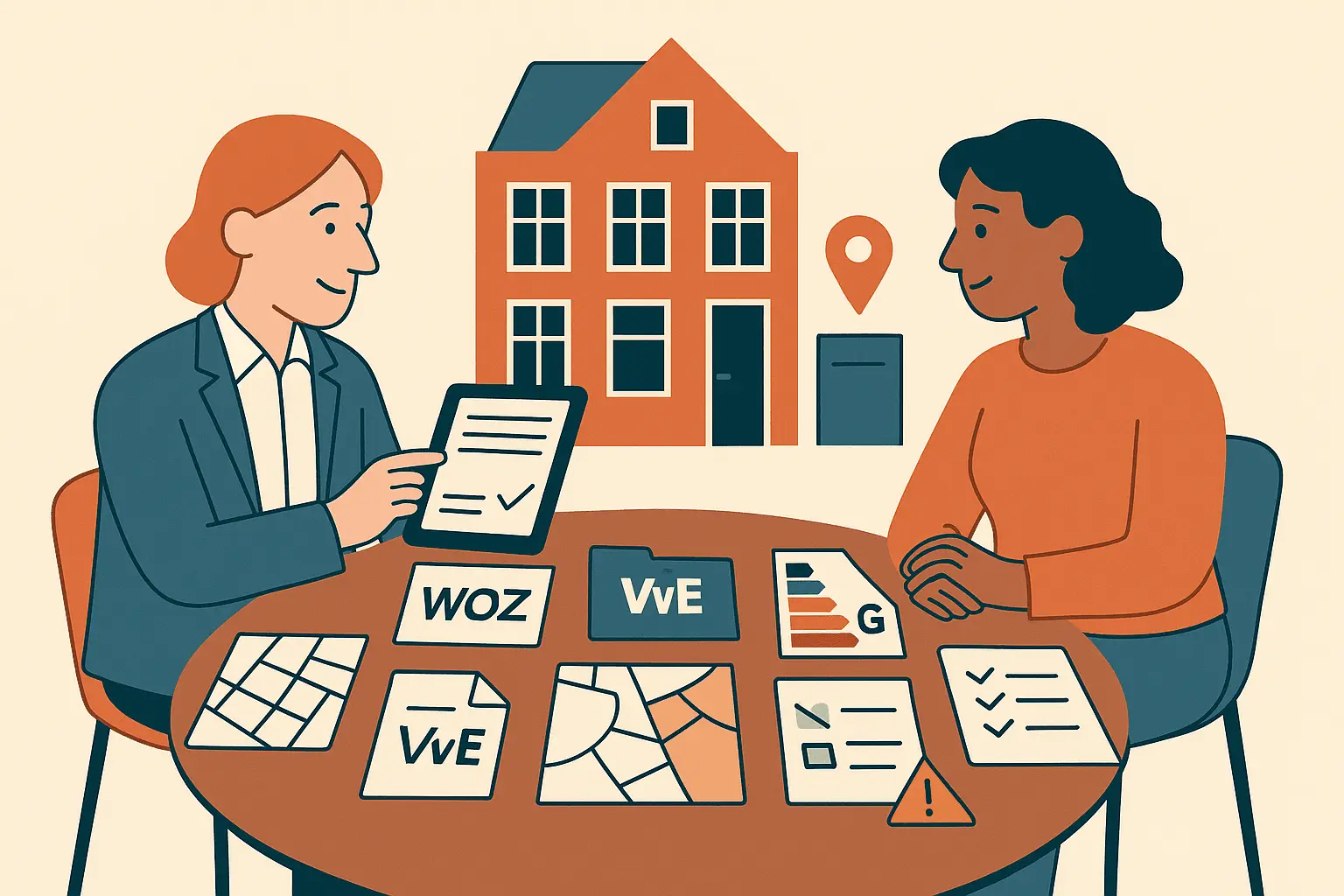
You may own the apartment, but that does not always mean you can renovate it freely. In the Netherlands, apartment renovations can be limited by the VvE, the deed of division, municipal permit rules, monument status, noise rules, and technical building constraints.
For buyers, this matters before bidding. If your plan depends on removing a wall, replacing windows, adding a roof terrace, moving a kitchen, installing underfloor heating, or turning a storage space into a bedroom, the restrictions can affect the price you offer, the conditions you include, or whether you bid at all.
Apartment renovation restrictions Netherlands searches often start after a viewing. The better moment is before the offer.
Planning to bid on a Dutch apartment? Use Huisscan to check one address and uploaded documents for available property data, VvE signals, permit context, document risks, and better buyer questions before you make an offer.
Why Dutch apartments can have renovation restrictions
When buying an apartment in the Netherlands, you usually buy an appartementsrecht: an apartment right. This gives you exclusive use of your private unit, but parts of the building are shared with other owners.
That difference is important.
Your apartment may include private living space, but the following are often shared or controlled by the VvE:
- Structural walls and floors
- Roofs and façades
- Windows and window frames
- Balconies
- Stairwells and entrances
- Pipes, shafts, drains, and ventilation systems
- Foundations and load-bearing structures
- Shared gardens or courtyards
The VvE stands for Vereniging van Eigenaars, or owners’ association. It manages the shared parts of the building and enforces the rules from the deed and regulations.
So even if a renovation is inside “your” apartment, it may still require VvE approval if it affects structure, noise, safety, shared systems, appearance, or other owners.
The key documents to check before bidding
For renovation plans, the most important risk is not always visible during a viewing. It is often hidden in the documents.
Ask for these documents before you bid:
1. Splitsingsakte
The splitsingsakte is the deed of division. It explains how the building is legally divided into apartment rights and shared parts.
Check whether your planned renovation touches anything that is legally shared. For example, replacing window frames may feel like a private upgrade, but the frames may belong to the VvE.
2. Splitsingstekening
The splitsingstekening is the division drawing. It shows the apartment boundaries and common areas.
This helps you understand whether a storage room, attic, roof section, balcony, or garden area is private, shared, or subject to exclusive use rights.
3. Splitsingsreglement and modelreglement
The splitsingsreglement contains the rules for apartment owners. It may refer to a standard modelreglement.
Look for rules about:
- Alterations to private sections
- Changes affecting common parts
- Floors and noise insulation
- Use of balconies, roof areas, and storage spaces
- Ventilation, flues, and technical installations
- Permission procedures
- Liability for damage caused by renovations
4. Huishoudelijk reglement
The huishoudelijk reglement is the house rules document. It often covers daily living rules, but it can also include practical renovation limits.
For example:
- Work hours for contractors
- Floor covering requirements
- Rules for drilling or demolition work
- Waste disposal
- Moving and lift use
- Noise nuisance rules
5. VvE meeting minutes
The notulen van de ALV are minutes of the owners’ meetings. They can show whether similar renovation requests were approved or rejected.
Look for discussions about:
- Roof terraces
- Façade changes
- Foundation or leakage problems
- Noise complaints
- Previous illegal renovations
- Disputes between owners
- Planned major maintenance
If several owners have been denied the same type of renovation, that is a serious pre-bid signal.
Renovation plans that often need extra checks
Not every renovation is high-risk. Painting walls, replacing kitchen cabinets, or updating a bathroom within the same layout is usually simpler than structural or exterior work.
But the following plans deserve careful checking before you bid.
Removing or changing walls
Some internal walls are load-bearing or contain shafts, pipes, ventilation, or shared services. Removing them may require technical assessment, VvE approval, and sometimes municipal permission.
Ask whether previous structural drawings are available and whether similar changes have been approved.
Replacing windows or changing the façade
Windows, frames, balconies, exterior doors, and façade elements are often common parts. The VvE may control their material, colour, insulation standard, and timing.
This matters if you want double glazing, new frames, a larger window, French doors, or a balcony change.
Installing a roof terrace
A roof terrace is one of the most sensitive apartment renovations. It can involve structure, waterproofing, escape routes, privacy, noise, insurance, the deed of division, and municipal rules.
Do not assume a flat roof means you can use it.
Moving a kitchen or bathroom
Moving “wet rooms” can affect drainage, ventilation, noise, and leakage risk. In older Dutch buildings, pipe routes may be limited.
Check whether the VvE allows new pipe routes through shared areas or structural floors.
Adding underfloor heating or changing floors
Many Dutch apartment buildings have rules about impact noise. Hard floors often need a minimum sound insulation standard.
Underfloor heating can also affect floor build-up, shared systems, and downstairs neighbours. Ask for the exact VvE floor rules before assuming the renovation budget.
Installing air conditioning, heat pumps, or outdoor units
Outdoor units can affect the façade, roof, balcony appearance, noise, and shared property. VvE approval is often relevant, and municipal rules may also apply.
Renovating a monument or protected building
If the building is a rijksmonument, municipal monument, or located in a beschermd stadsgezicht area, renovation options can be more limited.
This can affect windows, façades, roofs, internal historical features, and energy improvements.
Municipal permits and public property data to check
VvE approval is not the only issue. Some renovations may also require municipal permission under Dutch planning and building rules.
Useful sources and terms include:
- Omgevingsloket: the national portal to check whether an environmental permit may be required.
- Omgevingsvergunning: an environmental permit, which may apply to construction, monument changes, façade changes, or use changes.
- Omgevingsplan: the municipal environment plan, replacing older zoning plan concepts.
- BAG: official building and address data, including basic building information.
- Kadaster: land registry information, including apartment rights and cadastral details.
- Monumentenregister: register for nationally protected monuments.
- Energielabel: energy label, useful context if your renovation depends on insulation or installation changes.
For pre-bid purposes, you do not need to become a permit expert. You do need to know whether your renovation idea is simple, uncertain, or dependent on approval.
If the plan is essential to your decision, ask the municipality, a qualified professional, or your buyer agent before making a firm offer.
How restrictions can affect your bid
Renovation restrictions are not just technical details. They can change the deal.
They can reduce what the apartment is worth to you
If you planned to add value by improving the layout, adding outdoor space, or upgrading insulation, but approval is uncertain, your offer should reflect that uncertainty.
They can increase your renovation budget
Restrictions may require:
- Architect drawings
- Structural calculations
- Specialist contractors
- VvE approval procedures
- Permit applications
- Extra sound insulation
- Specific materials chosen by the VvE
- Repair obligations if shared parts are affected
They can delay your timeline
A renovation that needs VvE meeting approval or a permit may not start immediately after transfer. If you need to move in quickly, this matters.
They can justify offer conditions
Depending on the situation, buyers sometimes discuss conditions such as review of VvE documents, technical inspection, financing, or approval-related clauses with their advisor or agent.
Do not assume every seller will accept extra conditions, especially in a competitive market. But if the renovation risk is material, it is better to address it before bidding than discover it after signing.
They can be a reason to walk away
Walking away can be rational if the apartment only works for you after a renovation that is unlikely to be approved.
Examples:
- You need a second bedroom, but the layout change depends on structural work.
- You want a roof terrace, but the roof is common property and the VvE has rejected similar requests.
- You need major energy upgrades, but the façade is protected and window changes are restricted.
- The VvE documents show disputes or unclear responsibility for previous alterations.
Practical checklist before bidding
Use this checklist if you are considering a Dutch apartment and renovation is part of your plan.
Documents to request
- Splitsingsakte
- Splitsingstekening
- Splitsingsreglement and any modelreglement
- Huishoudelijk reglement
- Recent VvE meeting minutes
- VvE annual accounts and budget
- MJOP, the multi-year maintenance plan
- Service charge overview
- Building insurance information
- Seller’s questionnaire, such as the NVM vragenlijst if available
- Any permits, drawings, or approvals for previous renovations
Questions to ask the selling agent or seller
- Which parts of the apartment are private and which are shared?
- Have similar renovations been approved in this building?
- Are there known restrictions on floors, windows, balconies, roof use, or layout changes?
- Were previous renovations approved by the VvE and, if needed, the municipality?
- Are there unresolved VvE discussions about leakage, noise, structure, or façade maintenance?
- Is there any known asbestos, foundation issue, moisture problem, or ventilation limitation?
- Are there upcoming major works that could affect my renovation plans?
Questions to ask the VvE or VvE manager
- What is the approval process for renovations?
- Does the VvE require drawings, calculations, or contractor details?
- Are hard floors allowed, and what sound insulation standard applies?
- Can owners change windows, frames, doors, balconies, or façades?
- Are outdoor units, solar panels, roof terraces, or roof access allowed?
- Who is responsible for damage caused by renovation work?
- Are there known disputes about previous renovations?
Questions to ask a professional if the plan is important
- Is the wall I want to remove load-bearing?
- Does the renovation affect fire safety, escape routes, ventilation, or shared services?
- Is a municipal permit likely to be needed?
- Are the costs realistic for this type of Dutch apartment building?
- Should my offer include specific conditions or further investigation?
What Huisscan can help you check
Huisscan helps you check a Dutch property before you bid. For apartment renovation restrictions, that means turning one address and uploaded documents into a clearer pre-bid picture.
A Huisscan pre-bid report can help you review:
- Available Dutch property data for the address
- Apartment and building context from public sources where available
- VvE-related documents you upload
- Splitsingsakte, regulations, house rules, and meeting minutes
- Signals around shared parts, maintenance, restrictions, and approval risks
- Permit and monument context where available
- Questions to ask the seller, VvE manager, municipality, buyer agent, or technical expert
- Risks that may affect price, offer conditions, renovation plans, or your decision to continue
Huisscan does not replace a notary, lawyer, building inspector, appraiser, mortgage advisor, or permit specialist. It helps you organise the information earlier, so you can ask better questions before the bid deadline.
FAQ
Can I renovate the inside of my Dutch apartment without VvE permission?
Sometimes, yes. Simple cosmetic work inside your private area is often possible. But if the work affects structure, shared systems, floors, noise, pipes, ventilation, windows, balconies, or façades, VvE permission may be needed. Always check the deed, regulations, and house rules.
Are windows and window frames private or shared in Dutch apartments?
Often they are treated as shared or VvE-controlled parts, but this depends on the splitsingsakte and regulations. Do not assume you can replace them yourself, especially in older buildings, monuments, or buildings with a uniform façade.
Can I make an offer subject to VvE approval for a renovation?
In some cases, buyers discuss approval-related conditions with their buyer agent or legal advisor. Whether this is realistic depends on the market, seller, timing, and importance of the renovation. Get professional guidance before relying on a condition.
What if the seller already renovated the apartment?
Ask for proof of VvE approval, permits if relevant, drawings, invoices, and guarantees. Previous unapproved renovations can create future issues with the VvE, insurance, resale, or repairs.
Is a roof terrace usually allowed if the apartment has roof access?
No. Roof access does not automatically mean roof terrace rights. You need to check the deed of division, VvE rules, structural suitability, waterproofing, privacy, safety, and municipal permit context.
How can renovation restrictions affect buying a house in the Netherlands?
For apartments, restrictions can affect the value, budget, timing, mortgage planning, and whether the property fits your needs. A pre-bid property check Netherlands buyers can use helps separate “nice renovation idea” from “realistic plan”.
Check the address before you bid.