Kadaster explained for home buyers
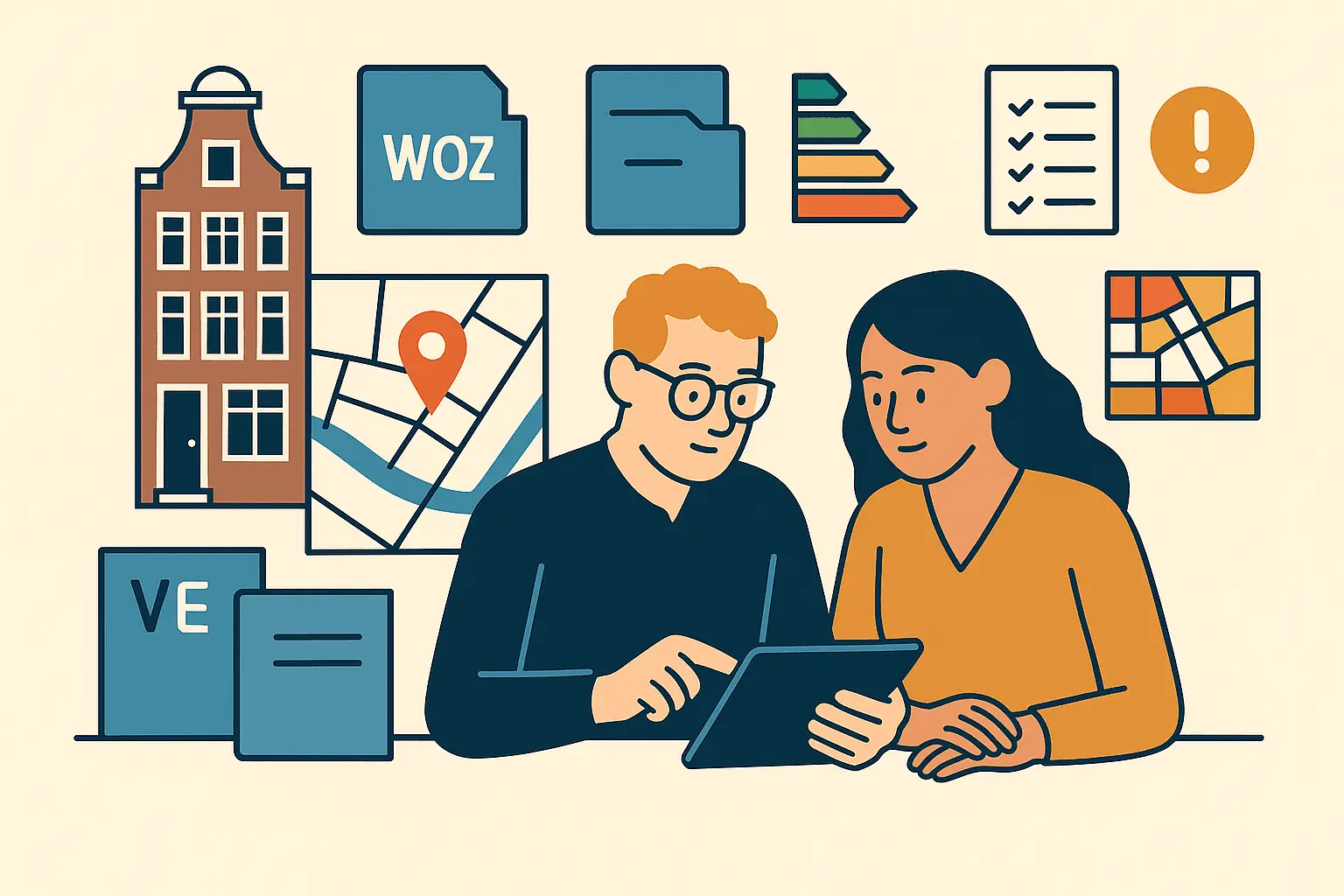
You have viewed a home, the bidding deadline is close, and the listing looks clear. But before you bid, you need to know what you are actually buying: the land, an apartment right, a leasehold position, a parking space, a garden, or a property with registered rights for someone else.
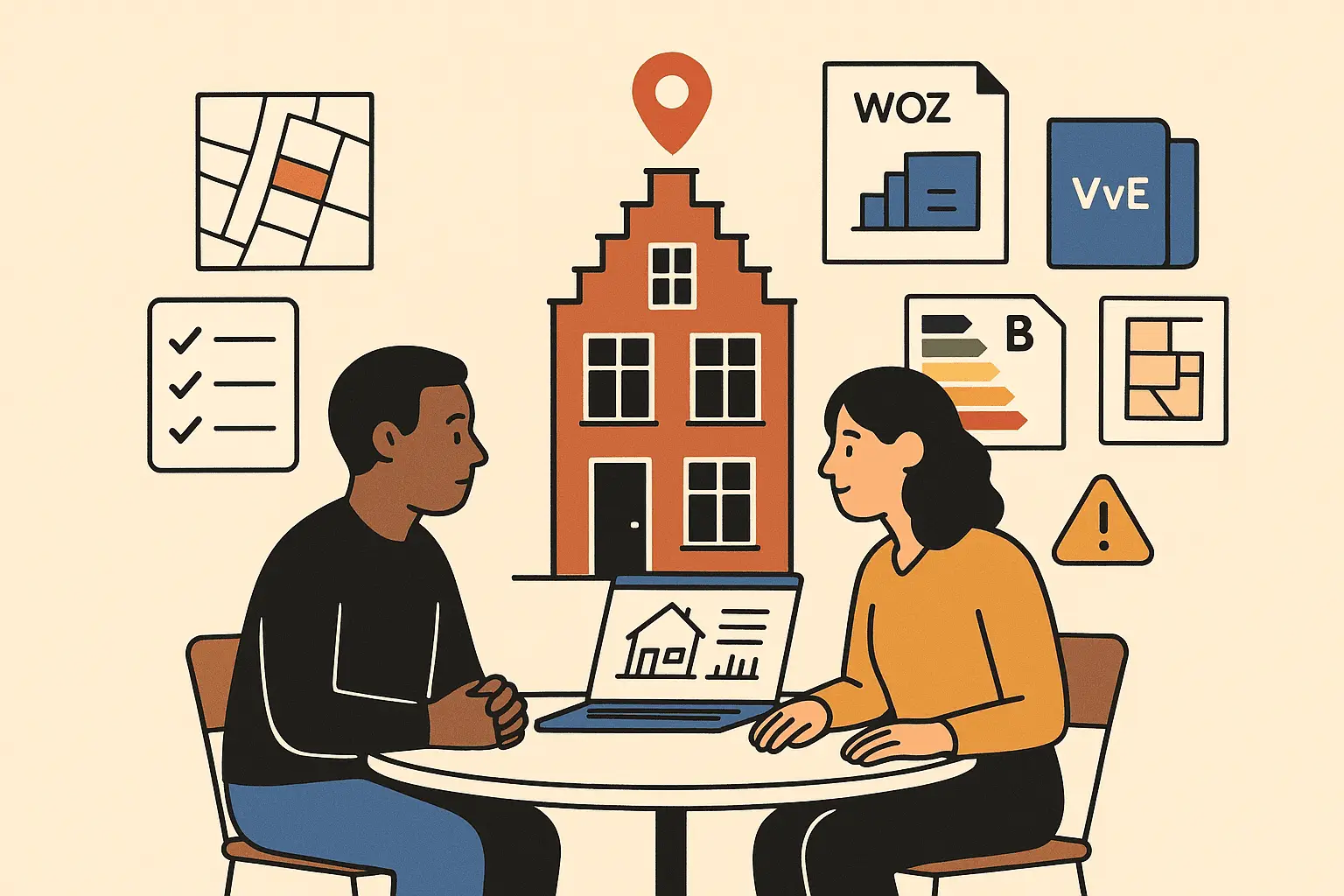
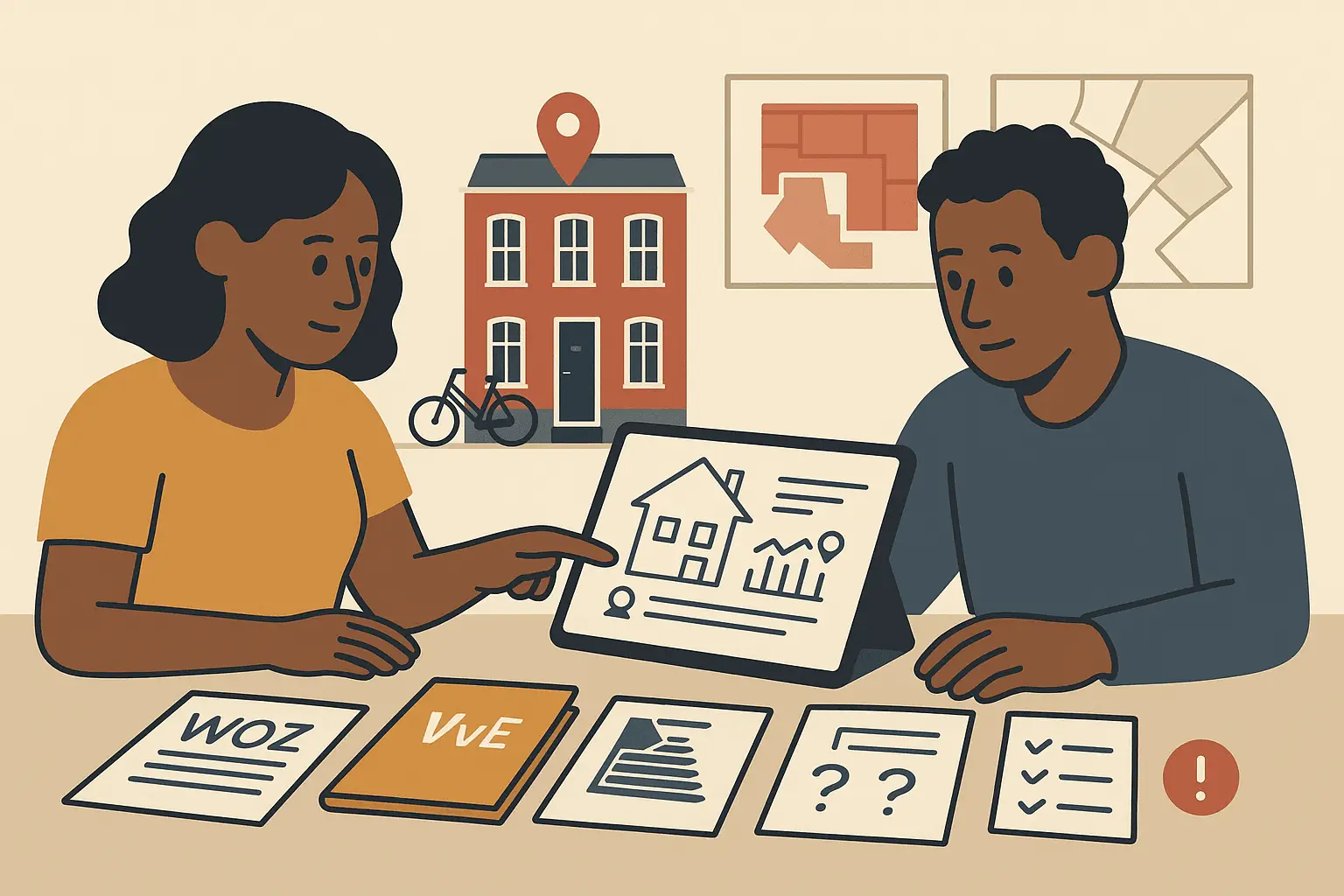
That is where the Kadaster comes in. For anyone buying a house in the Netherlands, Kadaster Netherlands property data is an important starting point. It helps you check the official land registry context behind a Dutch address.
But Kadaster is not the whole story. It will not tell you whether the roof is sound, whether the VvE is financially healthy, or whether your mortgage is affordable. It is one layer in a careful pre-bid property check Netherlands buyers should do before making an offer.
Check a Dutch property before you bid. Enter one address in Huisscan to turn available Dutch property data and uploaded documents into a clear pre-bid report with risk signals, document analysis, and practical buyer questions.
What is Kadaster in the Netherlands?
Kadaster is the Dutch land registry and mapping authority. It registers information about immovable property, such as land, houses, apartments, and certain rights connected to them.
For home buyers, Kadaster can help answer questions such as:
- Who is the registered owner?
- What is the official cadastral parcel?
- Is the property freehold, leasehold, or an apartment right?
- Are there registered rights such as a right of way?
- What does the cadastral map show about the land and boundaries?
- Are there registered mortgages or other entries?
Think of Kadaster as the official legal map and registry context for a property. It is not a valuation, building inspection, mortgage check, or legal opinion.
Which Kadaster information matters before you bid?
Not every Kadaster detail will affect your offer. The most useful pre-bid checks are the ones that help you confirm what is included, what rights are attached, and what questions you still need to ask.
Key items to check include:
1. The cadastral parcel
A Dutch property is registered by cadastral municipality, section, and parcel number. This is different from the street address.
Before bidding, check whether the parcel shown matches the home you viewed. This matters for:
- Gardens
- Side paths
- Garages
- Storage units
- Driveways
- Parking spaces
- Extensions or outbuildings
A listing may describe something as “included”, but the cadastral information and documents should support that.
2. The type of right
You may not always be buying full ownership of land. Common forms include:
- Eigendom: ownership/freehold.
- Erfpacht: leasehold; you have the right to use the land, often under conditions.
- Appartementsrecht: an apartment right; you own a share in the building and have exclusive use of your apartment.
- Opstalrecht: right of superficies; someone may own or use structures on land owned by another party.
This can affect price, financing, monthly costs, resale, and the questions your mortgage advisor or notary will ask.
3. Registered rights and restrictions
Kadaster may show rights or references to rights that affect how the property can be used. Examples include:
- A neighbour’s right to use a path.
- Shared access to a back alley.
- Rights for cables, pipes, or utility infrastructure.
- Obligations that must be passed on to a future buyer.
- Leasehold conditions.
Some details may only be clear in the underlying notarial deed. If you see a right or restriction, do not guess. Ask for the relevant document and get it explained before bidding too high.
4. Apartment and VvE context
For apartments, Kadaster can show that you are buying an appartementsrecht. That means your legal position is connected to a division of the building.
You should then request and review documents such as:
- The splitsingsakte: deed of division.
- The splitsingstekening: division drawing.
- The VvE documents: homeowners’ association rules, financials, minutes, and maintenance planning.
Kadaster helps you see that it is an apartment right. The VvE documents help you understand the practical and financial responsibilities.
5. Mortgage registrations and other entries
Kadaster can show registered mortgages or other entries on the property. A seller having a mortgage is common and is usually handled during transfer by the notary.
Still, if you see unfamiliar registrations, attachments, or references you do not understand, ask the selling agent, your buyer agent, or the notary for clarification before you bid or sign.
Key Dutch Kadaster terms in plain English
| Dutch term | Plain English meaning | Why it matters before bidding |
|---|---|---|
| Kadaster | Dutch land registry | Official source for registered property and land information. |
| Kadastraal perceel | Cadastral parcel | The official land parcel connected to the property. |
| Kadastrale grens | Cadastral boundary | Helps check whether fences, gardens, and paths match the legal situation. |
| Eigendomsinformatie | Ownership information | Shows registered ownership and certain property details. |
| Eigendom | Ownership/freehold | You own the property and land, unless other rights apply. |
| Erfpacht | Leasehold | You use land owned by another party, often with conditions and possible payments. |
| Appartementsrecht | Apartment right | You own a share in a building plus exclusive use of your apartment. |
| Splitsingsakte | Deed of division | Explains how an apartment building is legally divided. |
| VvE | Owners’ association | Manages shared parts of an apartment building. |
| Erfdienstbaarheid | Easement | A right for someone else, such as access over your land. |
| Recht van overpad | Right of way | Someone may legally use a path or access route. |
| Recht van opstal | Right of superficies | A separate right to own or use structures on another person’s land. |
| Kettingbeding | Chain clause | An obligation that must be passed on to future owners. |
| Hypotheekinschrijving | Mortgage registration | Shows a mortgage registered against the property. Often normal, but still worth understanding. |
How Kadaster findings can affect your bid
Kadaster information can change your pre-bid decision in three practical ways: price, conditions, and confidence.
Price
A property with leasehold, unclear boundaries, shared access, or missing parking rights may still be a good purchase. But it may not be worth the same to you as a simple freehold home with clear ownership and no unusual rights.
Examples:
- A garden appears large, but part of it may not belong to the parcel.
- A parking space is mentioned in the listing, but the legal right is unclear.
- Leasehold payments or future revisions may affect affordability.
- A shared path or right of way reduces privacy or changes how you can use the land.
These are not automatic deal-breakers. They are reasons to price the property more carefully.
Conditions
If the Kadaster context raises questions, you may want to reflect that in your offer strategy. For example, you might ask for specific documents before signing, include suitable conditions, or request written confirmation about what is included.
Speak with your buyer agent, notary, mortgage advisor, or legal professional before relying on conditions. Huisscan can help you identify the questions, but it does not replace professional advice.
Decision to walk away
Sometimes the best pre-bid decision is not to bid.
That may be the case if:
- The seller cannot explain what is legally included.
- The documents do not support an important part of the listing.
- Leasehold conditions do not fit your budget or risk tolerance.
- A right of way or restriction conflicts with your intended use.
- You cannot get comfortable before the bidding deadline.
Walking away is not a failure. It can be a clear decision based on better information.
What Kadaster does not tell you
Kadaster is important, but it does not cover every property risk Netherlands buyers should consider.
It usually will not tell you:
- Whether the foundation, roof, walls, or installations are in good condition.
- Whether the listed living area is accurate.
- Whether there are hidden defects.
- Whether the VvE has enough reserves.
- Whether future maintenance costs are realistic.
- Whether zoning or local planning will affect your intended use.
- Whether permits exist for renovations or extensions.
- Whether there are soil, water, noise, or environmental issues.
- Whether the price fits the current market.
- Whether your mortgage, tax, or legal position is suitable.
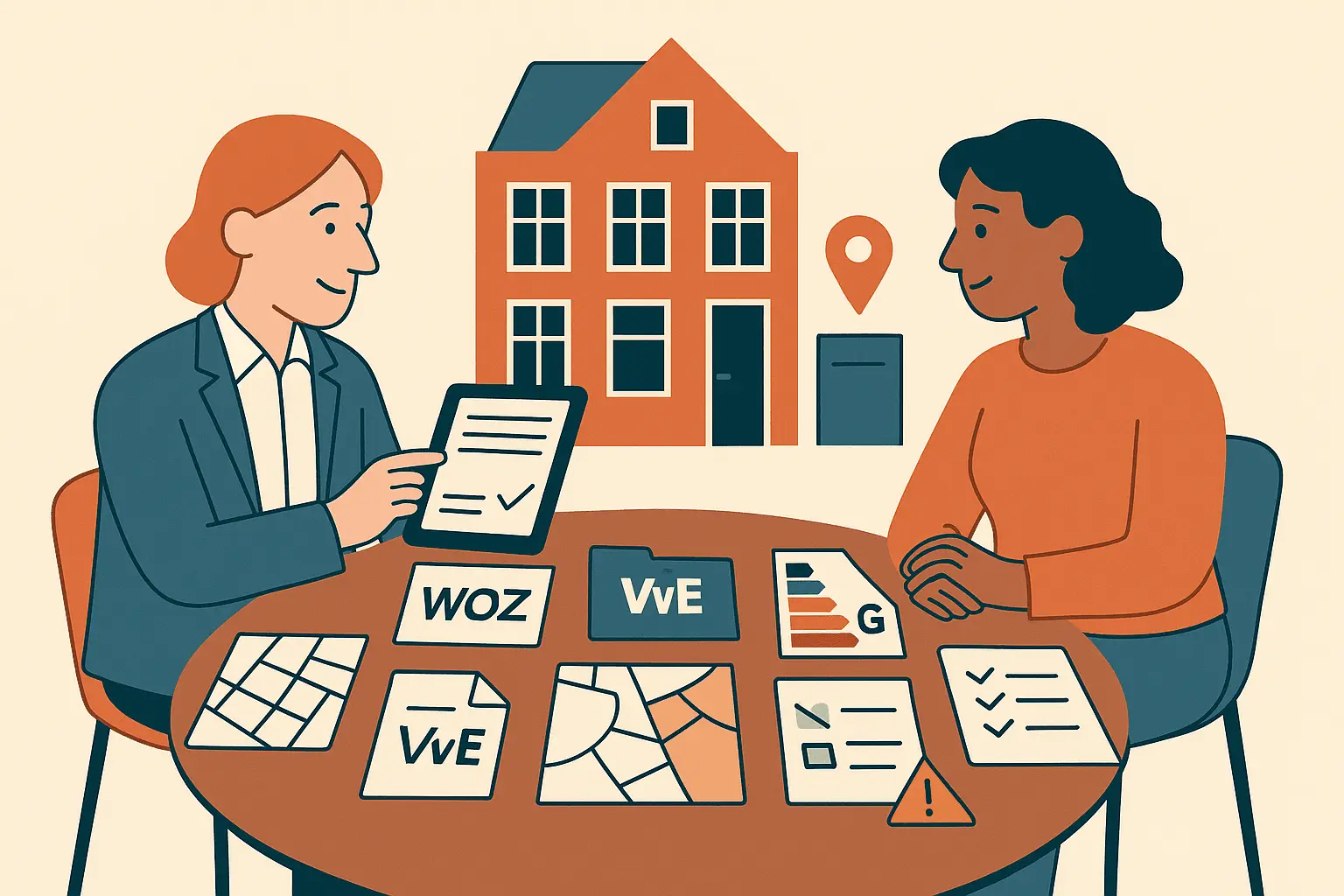
For a stronger pre-bid check, combine Kadaster with other Dutch property data and documents, such as the seller’s questionnaire, title deed, VvE documents, energy label, measurement report, municipal information, zoning information, and, where relevant, a building inspection.
Practical Kadaster pre-bid checklist
Use this checklist before making an offer on a Dutch home:
- Match the street address with the cadastral parcel or apartment right.
- Check whether the property is freehold, leasehold, or an apartment right.
- Confirm that the garden, garage, storage unit, balcony, or parking space is legally included.
- Compare the cadastral map with what you saw during the viewing.
- Ask about any fence, path, driveway, or access route that looks shared.
- Look for rights such as easements, rights of way, leasehold, or superficies rights.
- Request the underlying deed if a right or restriction is unclear.
- For apartments, request the deed of division, division drawing, VvE minutes, budget, accounts, and maintenance plan.
- For leasehold, ask for the ground rent, conditions, revision moments, and whether anything has been bought off.
- Treat registered mortgages as normal, but ask about any unusual entries you do not understand.
- Write down buyer questions before the bidding deadline.
- Adjust your bid, conditions, or decision if the legal context changes the risk.
What Huisscan can help you check
Huisscan is built for one practical moment: before you bid.
With one Dutch address, Huisscan can turn available property data into a clear pre-bid report. You can also upload documents such as the brochure, seller questionnaire, title deed, VvE documents, leasehold information, energy label, or measurement report.
A Huisscan pre-bid report can help you:
- Bring available Dutch property data into one readable overview.
- Check land registry context connected to the address.
- Spot risk signals that may affect your bid.
- Understand Dutch terms in plain English.
- Compare listing claims with uploaded documents.
- Identify missing documents to request.
- Generate practical questions for the selling agent, buyer agent, notary, mortgage advisor, or inspector.
- Decide whether to bid, bid lower, add conditions, or pause.
Huisscan supports your decision-making. It does not replace a notary, appraiser, building inspector, mortgage advisor, buyer agent, lawyer, or tax professional.
FAQ
Is Kadaster the same as a valuation?
No. Kadaster can show registered property information and, in some cases, transaction context. It does not tell you what the home is worth today or whether your bid is sensible. For valuation and financing questions, speak with an appraiser or mortgage advisor.
Can I rely on the Funda listing instead of Kadaster?
A listing is useful, but it is not the same as official land registry information. Before bidding, check whether key claims in the listing match the Kadaster context and the supporting documents.
Does Kadaster show the exact property boundary?
Kadaster records cadastral boundaries, but the map you see may not resolve every practical boundary question. If a fence, garden, driveway, or extension seems important, ask for clarification. In boundary disputes, a formal boundary check may be needed.
What if the property is leasehold?
Leasehold is common in some Dutch cities. It does not automatically mean you should avoid the property, but you need to understand the conditions, payments, revision moments, and impact on financing and resale. Ask for the leasehold documents before you bid.
Is a registered mortgage on the property a problem?
Usually not. Many sellers have a mortgage, and the notary normally handles repayment and removal during transfer. If there are unusual registrations or attachments you do not understand, ask for professional clarification.
Do expats need help with Kadaster documents?
Often, yes. Kadaster and notarial documents use Dutch legal language. A plain-English summary can help you ask better questions, but important legal points should be checked with a qualified professional before you sign.
Check the address before you bid.