
Garden ownership and boundary checks
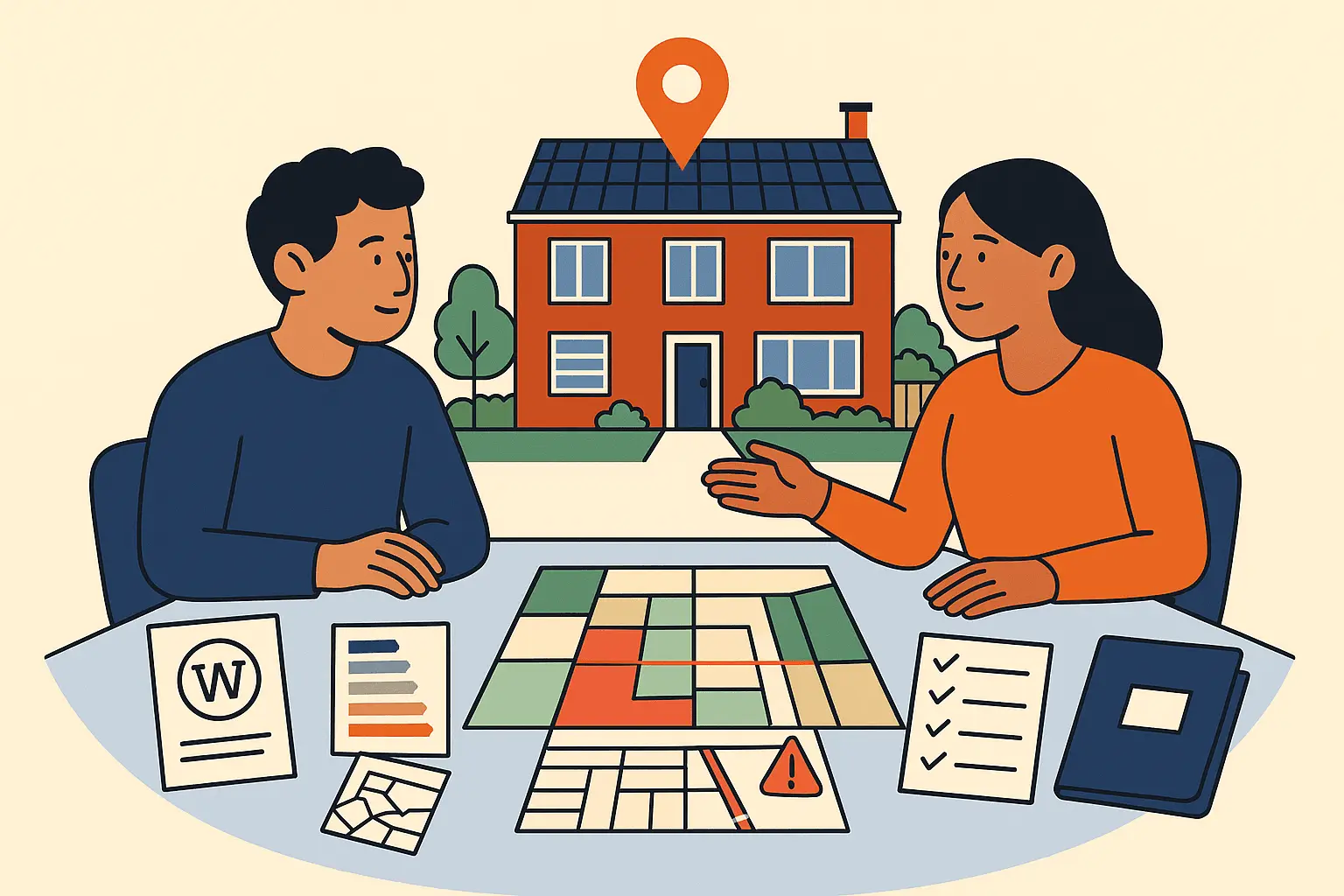
A sunny garden can make a Dutch home feel much more valuable. But before you bid, you need to know a simple thing: is the garden you see actually part of the property you are buying?
For anyone searching for garden boundary house Netherlands buying, the key pre-bid question is whether the physical fence, hedge, path, shed, or terrace matches the legal and cadastral situation. A mismatch can affect price, use, future plans, neighbour relations, and your willingness to proceed.
Planning to make an offer? Use Huisscan to check one Dutch address before bidding. A Huisscan pre-bid report can combine available Dutch property data, risk signals, uploaded documents, and practical buyer questions.
Why garden boundaries matter before bidding
In the Netherlands, the garden shown during a viewing is not always the same as the land legally included in the sale.
Common situations include:
- A fence placed inside or outside the actual cadastral boundary.
- A strip of municipal land used as garden.
- A shared rear path behind the houses.
- A right of way for neighbours.
- A ground-floor apartment garden that is common VvE property, not privately owned land.
- A shed, extension, or terrace partly crossing a boundary.
These issues do not always mean you should walk away. But they should be clear before you decide how much to bid and what questions or conditions to include.
The risk is paying for a “large garden” when part of it is not yours to own, build on, or use freely.
Dutch terms buyers should know
When buying a house in the Netherlands, these terms often appear in documents, Kadaster information, or seller answers.
| Dutch term | Plain English meaning |
|---|---|
| Kadaster | The Dutch land registry and cadastral data source. Useful for checking parcels, ownership context, and registered rights. |
| Kadastrale grens | Cadastral boundary. The registered parcel boundary, often shown on a cadastral map. |
| Erfgrens / perceelgrens | Property or plot boundary. Often used in everyday language for the boundary between neighbours. |
| Perceel | Plot or parcel of land. |
| Erfdienstbaarheid | Easement: a legal right connected to land, such as access over someone else’s land. |
| Recht van overpad | Right of way, often a path that neighbours may use. |
| Mandeligheid | Shared ownership or shared responsibility, for example a shared wall, path, fence, or alley. |
| Erfpacht | Leasehold. You may use the land under certain conditions, but do not fully own the land. |
| Snippergroen | Small strip of municipal/public land used by a private household, sometimes formally rented or bought, sometimes not. |
| Exclusief gebruiksrecht | Exclusive right of use, common in apartment/VvE situations. You may have the right to use a garden area, but not own it separately. |
A useful rule: do not rely only on what the garden looks like during the viewing. Compare the physical situation with the documents.
Documents and data sources to compare
For a proper pre-bid property check in the Netherlands, look at several sources together.
1. Kadaster map and parcel information
The kadastrale kaart can show the parcel outline and how it relates to neighbouring plots. This is an important starting point.
However, a cadastral map is not the same as a fresh boundary survey. If the exact boundary is important, ask whether a grensreconstructie or professional boundary check is needed.
2. Deed of transfer
The leveringsakte or eigendomsakte can contain descriptions of the property and registered rights or obligations. Look for references to easements, shared access, maintenance obligations, or restrictions.
3. Sales brochure and floor/plot information
The brochure may mention plot size, garden depth, orientation, and use. Treat this as marketing information to verify, not as final proof of ownership.
If the brochure says “large garden” but the Kadaster plot looks smaller than expected, ask why.
4. Seller questionnaire
The Dutch seller questionnaire, often called the vragenlijst, may mention boundary disputes, shared paths, rights of way, or agreements with neighbours.
Look carefully for vague answers such as “as far as known” or “not aware”. These are not necessarily wrong, but they may require follow-up.
5. VvE documents for apartments
If you are buying a ground-floor apartment with a garden, check the splitsingsakte, splitsingstekening, and VvE rules.
The garden may be:
- privately owned,
- part of the apartment right,
- common property with exclusive use,
- shared with other owners,
- subject to VvE rules about fences, sheds, tiles, plants, or access.
This matters for value and freedom of use.
6. Municipality and public land context
Some gardens include or border municipal strips, alleys, water, public space, or land with planning restrictions. Municipal information can help clarify whether land is private, public, rented, or subject to local rules.
Common risk signals before you make an offer
Look more closely if you see any of these signs.
The fence does not line up with the cadastral map
A fence, hedge, or wall may have been placed for convenience rather than exactly on the legal boundary. If the difference is small, it may still matter if you want to build, extend, or replace the fence.
The garden includes a rear path or alley
Many Dutch houses have a brandgang or back alley. Check who owns it, who may use it, and who maintains it. A right of way can be normal, but you should know it exists.
A neighbour uses part of the garden
If a neighbour stores bins, walks through, parks a bike, or maintains a strip, ask why. Long-term informal use can become legally complex, so get clarity before bidding.
The listing shows more garden than the parcel seems to include
This can happen with municipal land, shared land, or historical use. It does not automatically mean there is a problem, but it should be explained in writing.
There is a shed, extension, or fence close to the boundary
Check whether structures are fully within the plot and whether permits or neighbour agreements may be relevant. For building or legal certainty, ask a qualified professional.
The garden belongs to a VvE
With apartments, “garden” can mean use rather than ownership. That is still valuable, but it is different from owning the land outright.
How garden ownership can affect your bid
Garden boundary issues can influence your offer in practical ways.
You may decide to:
- bid lower if the usable garden is smaller than expected;
- ask the seller to provide clearer Kadaster or notarial information;
- include a condition related to document review or boundary clarification;
- request written confirmation about access rights or neighbour agreements;
- delay bidding until the situation is explained;
- walk away if the uncertainty is too large for your plans.
Example: if you want to build a garden office, a small boundary uncertainty may be important. If you only want a place to sit outside, the same issue may be less critical. The right decision depends on your intended use.
This is why garden checks are not just legal details. They are part of understanding property risks Netherlands buyers can face before committing to an offer.
Practical checklist before you bid
Use this checklist during your pre-bid review.
- Compare the garden you saw at the viewing with the Kadaster parcel shape.
- Check whether the plot size in the brochure matches the cadastral information.
- Ask whether the fence, hedge, or wall is on the actual boundary.
- Look for erfdienstbaarheden such as a right of way.
- Check whether any rear path, alley, or gate is shared.
- Ask if there have been boundary discussions or disputes with neighbours.
- Check if any part of the garden is municipal land or snippergroen.
- For apartments, read the VvE documents to confirm ownership versus exclusive use.
- Check whether sheds, extensions, or fences near the boundary are documented.
- Ask your buyer agent, notary, surveyor, or legal adviser if the documents are unclear.
Useful questions to ask the selling agent:
- “Is the full garden shown during the viewing part of the cadastral parcel?”
- “Are there any rights of way or shared access paths?”
- “Is any land used that is owned by the municipality or a neighbour?”
- “Has the boundary ever been measured or reconstructed by Kadaster?”
- “Are there any agreements with neighbours about fences, paths, sheds, or maintenance?”
- “For an apartment: is the garden owned privately or is it an exclusive right of use under the VvE?”
What Huisscan can help you check
Huisscan helps you check a Dutch property before you bid by turning one address into a clear pre-bid report.
For garden ownership and boundary checks, Huisscan can help you review:
- available Kadaster context and parcel information;
- visible differences between the advertised garden and registered plot context;
- uploaded documents such as brochures, questionnaires, deeds, or VvE documents;
- mentions of easements, rights of way, shared access, or use restrictions;
- potential risk signals that deserve follow-up;
- practical buyer questions to ask the selling agent, notary, buyer agent, or surveyor.
Huisscan does not replace a notary, surveyor, appraiser, building inspector, mortgage advisor, or legal professional. It helps you organise the available information earlier, so you can make a calmer and clearer pre-bid decision.
FAQ
Is the fence always the legal garden boundary?
No. A fence, hedge, or wall may not match the legal or cadastral boundary. It may have been placed informally, moved over time, or agreed between neighbours. If the exact boundary matters, ask for professional confirmation.
Does Kadaster prove exactly where my garden ends?
Kadaster information is essential context, but a map alone may not be enough for exact on-the-ground boundary certainty. For precise boundary questions, ask about a Kadaster boundary reconstruction or professional survey.
What if a neighbour has a right of way through the garden?
A right of way, or recht van overpad, can be normal in Dutch property. The key is to know what the right allows, who may use it, and whether it affects your privacy, plans, or valuation.
Is an apartment garden the same as owning land?
Not always. With apartments, the garden may be common VvE property with an exclusive right of use. That can still be valuable, but it may limit what you can change or build.
Should I still bid if the garden boundary is unclear?
Maybe, but do not ignore it. Ask for clarification, consider your intended use, and discuss possible conditions with your buyer agent or qualified adviser. If the garden is a major reason for your bid, uncertainty should affect your decision.
Check the address before you bid.