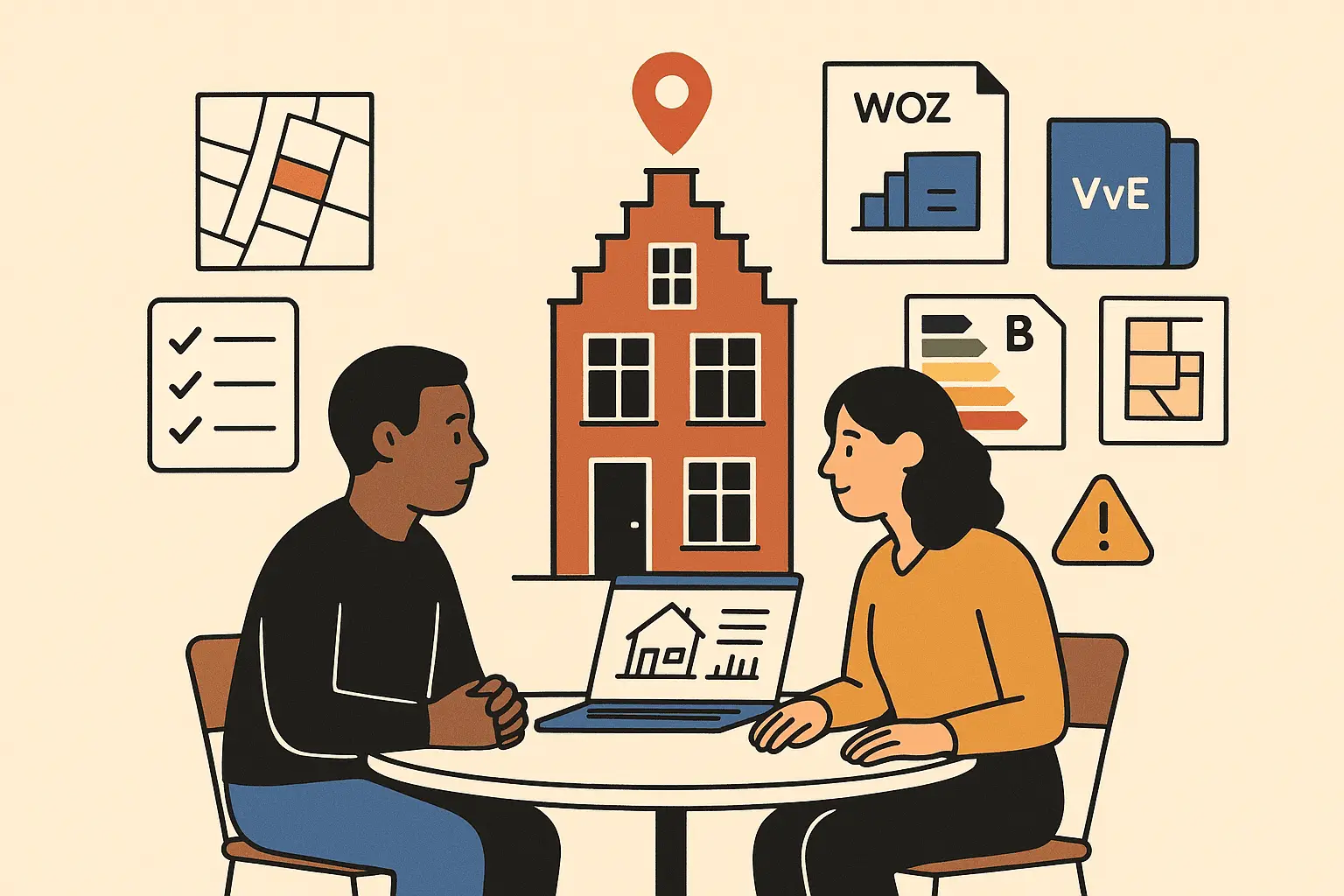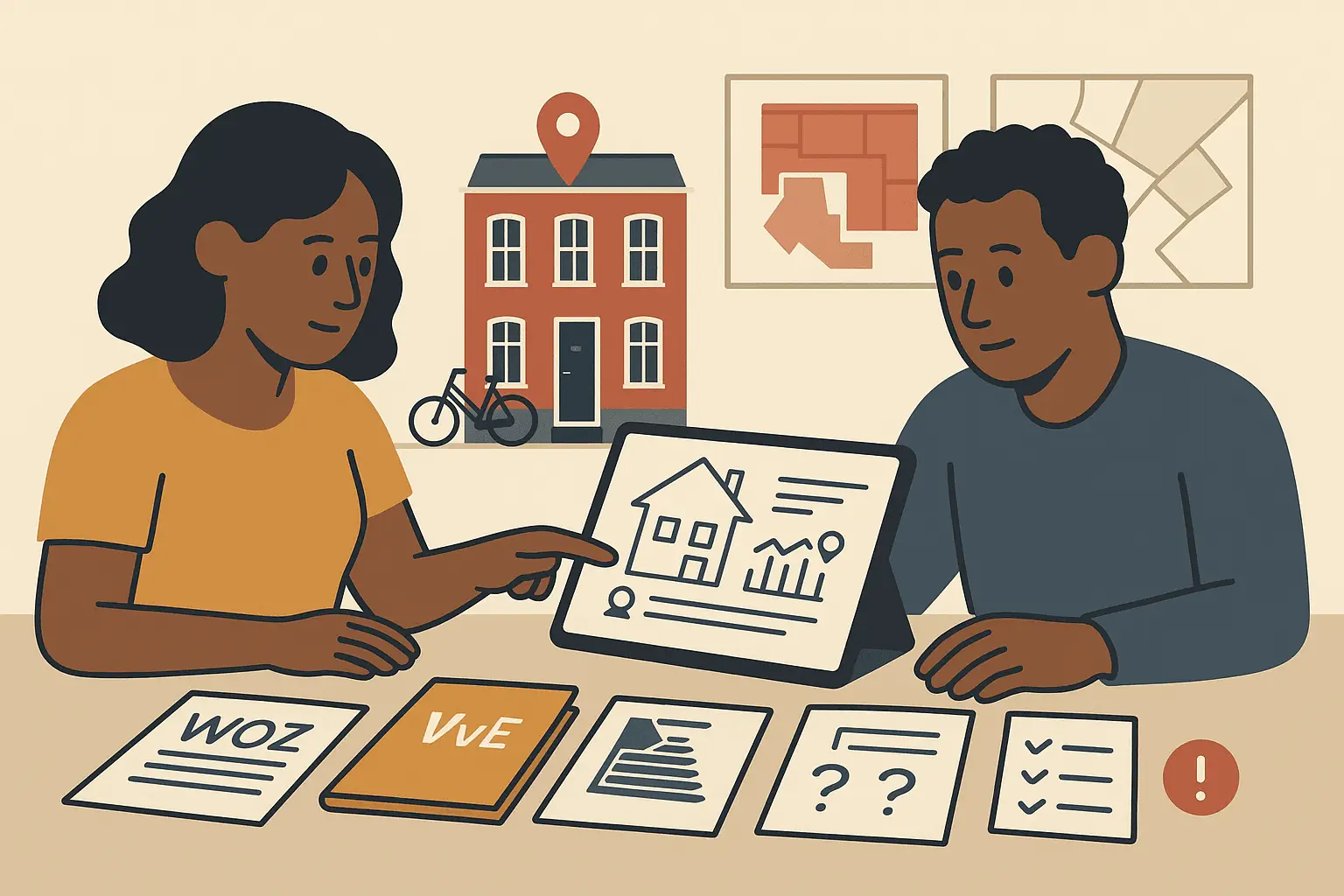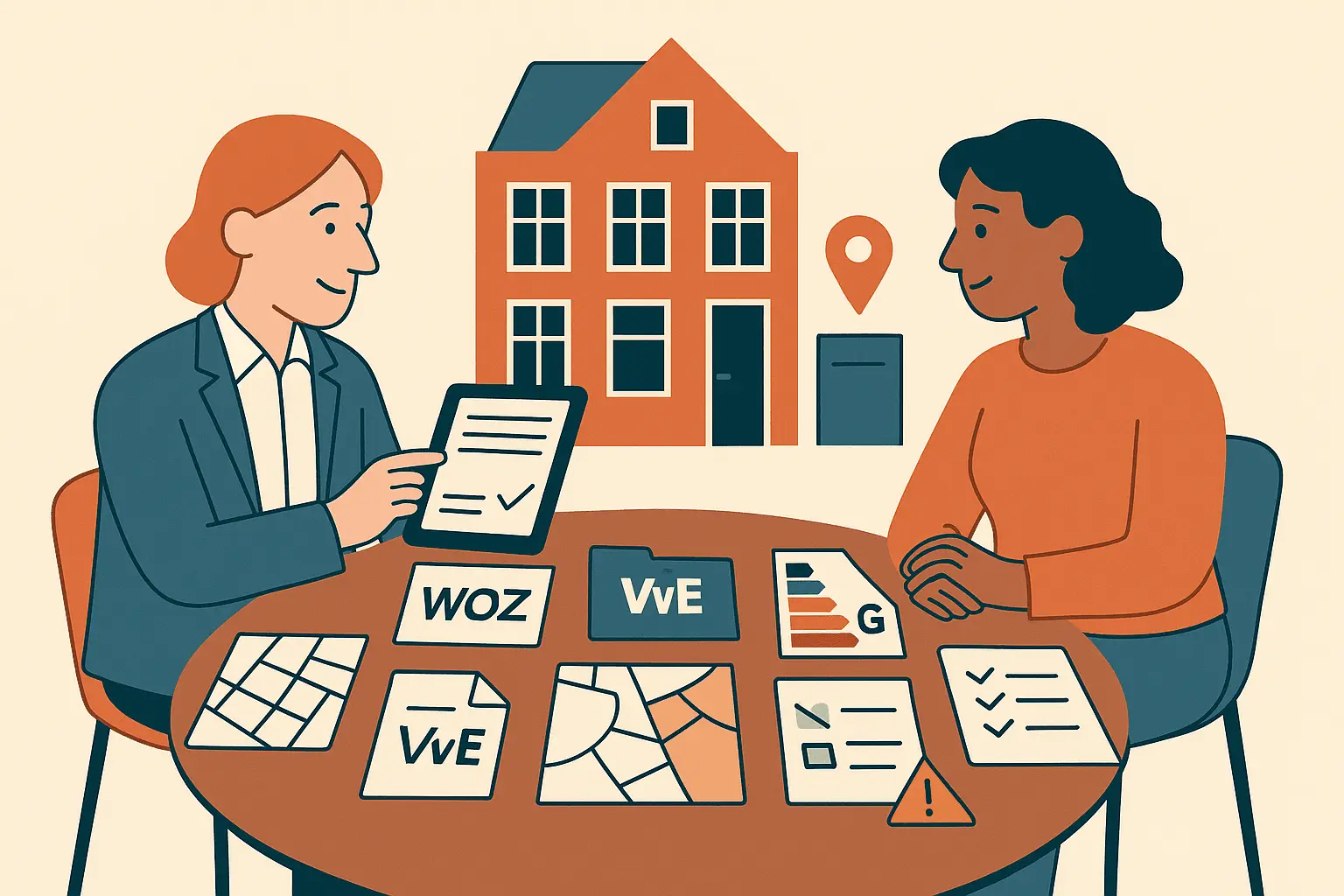
How to compare Dutch homes before bidding
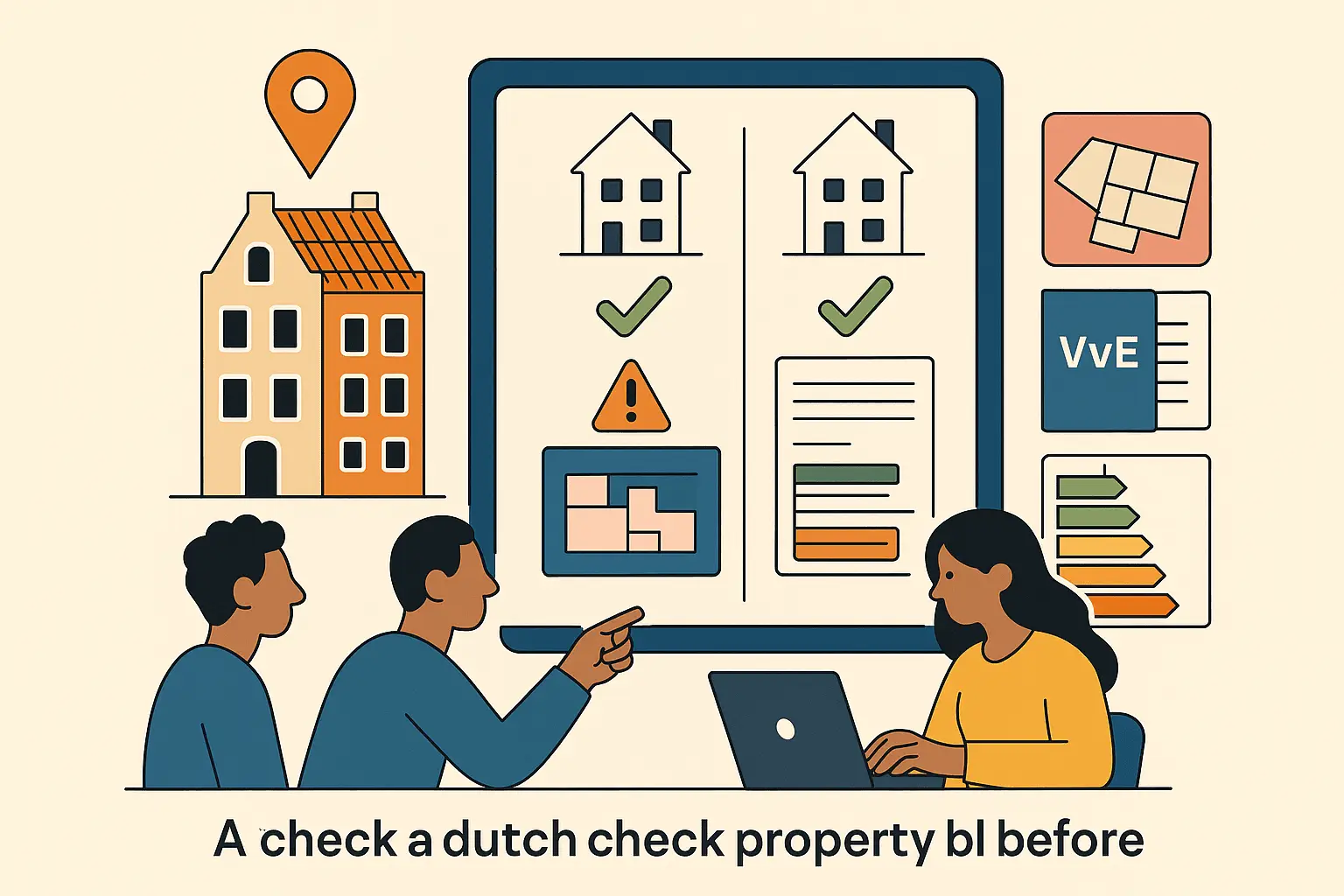
Two homes can look similar on Funda and feel completely different once you start checking the details. One may have a better layout but an uncertain VvE. Another may be cheaper per square metre but need major maintenance. A third may look perfect, until you notice erfpacht, unclear renovation permits, or missing documents.
If your search is “compare houses Netherlands before bidding”, the real question is: which home gives you the clearest, best-supported bid decision?
Before you bid, compare more than the asking price. Compare the address signals, documents, risks, and unanswered questions that could affect your maximum bid, bid conditions, or decision to walk away.
Considering a property? Huisscan can turn one Dutch address and uploaded documents into a clear pre-bid report with available property data, risk signals, document analysis, and buyer questions.
Check a Dutch property before you bid.
1. Start with more than the asking price
In the Netherlands, the vraagprijs is the asking price. It is not the same as market value, appraisal value, or the amount you should bid.
When comparing Dutch homes before bidding, look at the full picture:
- Usable living area: not just the number of rooms.
- Condition: roof, windows, insulation, installations, moisture, foundation signals.
- Ownership type: full ownership, apartment right, or erfpacht.
- Monthly obligations: VvE contribution, leasehold payments, expected maintenance.
- Energy label and insulation: comfort and future running costs.
- Documents: what is available, what is missing, and what needs clarification.
- Location risks: noise, soil, water, planning, parking, future developments.
A cheaper home is not always the better bid. A more expensive home is not always safer. The aim is to compare the parts that could change your decision before you sign anything.
2. Use the same comparison frame for every home
A calm bid decision starts with a consistent checklist. Do not compare Home A emotionally and Home B technically. Use the same categories for each address.
A simple pre-bid comparison can look like this:
| Category | What to compare | Why it matters before bidding |
|---|---|---|
| Price | Asking price, likely competition, price per m² | Helps set a realistic maximum bid |
| Property facts | Living area, plot, year built, energy label | Checks whether homes are truly comparable |
| Legal/ownership | Kadaster data, erfpacht, rights, apartment split | Can affect obligations and financing |
| Documents | Seller questionnaire, deed, VvE papers, building report | Shows what is known and what is still unclear |
| Condition | Maintenance, renovations, visible defects | Can affect price, inspection conditions, and budget |
| External risks | Noise, soil, water, zoning, future plans | May affect comfort, value, or resale |
| Bid strategy | Conditions, questions, walk-away points | Turns information into a decision |
For each category, mark the signal as:
- Clear: supported by documents or reliable data.
- Unclear: needs a question to the selling agent, VvE, municipality, or specialist.
- Material risk: could change your bid, conditions, or willingness to proceed.
This helps you avoid overbidding based only on photos, scarcity, or a busy viewing.
3. Compare Dutch property data and ownership signals
Dutch property data can be useful, but it needs to be read in context. Different sources may show different types of information.
Common Dutch terms and sources include:
- Kadaster: the land registry. It records ownership, parcel information, boundaries, and certain legal rights.
- BAG: the official register for addresses and buildings. It may include building year and registered usable area.
- WOZ-waarde: the municipal property value used for local tax purposes. It can provide context, but it is not a bid price or appraisal.
- Energielabel: the registered energy label, from A++++ to G, indicating energy performance.
- Omgevingsplan / bestemmingsplan: municipal rules about land use and development. These can matter if you want to renovate, extend, rent out, or understand future surroundings.
- Erfpacht: leasehold. You may own the building but pay for use of the land under specific conditions.
- Appartementsrecht: apartment right. You own a share in the building and are usually part of a VvE.
- VvE: Vereniging van Eigenaars, the owners’ association for apartments.
When comparing two homes, watch for mismatches. For example:
- The listing says 92 m², but official data suggests another number.
- An extension appears in photos, but documents do not explain when or how it was built.
- A property is advertised as “recently renovated”, but there are no invoices, warranties, or permit details.
- An apartment has a low service charge, but VvE reserves or planned maintenance are unclear.
A mismatch does not automatically mean you should walk away. It means you should ask better questions before bidding.
4. Compare documents before you compare emotions
Dutch property listings are often short. The important details are usually in the documents.
Before bidding, ask which documents are available. Depending on the property type, useful documents may include:
- Verkoopbrochure: sales brochure.
- Vragenlijst: seller questionnaire about the property.
- Lijst van zaken: list of items included or excluded from the sale.
- Eigendomsakte: deed of ownership.
- Splitsingsakte: deed of division for apartments.
- VvE documents: annual accounts, meeting minutes, house rules, budget, reserve position, and maintenance plan.
- MJOP: multi-year maintenance plan for a VvE.
- Bouwkundig rapport: building inspection report, if available.
- Renovation documents: invoices, permits, drawings, warranties, or contractor information.
- Energy documents: energy label and insulation information.
For apartments, VvE documents deserve extra attention. A strong-looking apartment can become less attractive if the VvE has poor records, unclear reserves, repeated disputes, or major upcoming maintenance.
For older houses, pay attention to maintenance and structural signals. In some Dutch cities, foundation risk, moisture, roof condition, and previous renovations can be important. If something is unclear, consider whether a bouwkundige keuring — a building inspection — should be part of your bid strategy.
Bid conditions, such as a financing condition or building inspection condition, can affect how attractive your offer is. Discuss this with your buyer agent, mortgage advisor, or another qualified professional before submitting a bid.
5. Compare location and external property risks
A home is also an address. The same apartment or house can have a different risk profile depending on where it sits.
Before bidding, compare:
- Noise: roads, rail, aircraft routes, nightlife, schools, or businesses.
- Parking: permits, waiting lists, paid zones, or limited availability.
- Water and flooding context: low-lying areas, surface water, drainage, or local water management.
- Soil and contamination signals: especially near former industrial sites, petrol stations, or old urban areas.
- Foundation context: relevant in some older Dutch neighbourhoods.
- Future development: zoning changes, new roads, housing projects, or commercial use nearby.
- Monument or protected status: can affect maintenance and renovation options.
- Neighbourhood fit: commute, shops, schools, safety perception, and noise at different times of day.
For expats buying a house in the Netherlands, it is especially important not to rely only on the viewing. Visit the street at another time, read translated documents carefully, and ask for explanations of Dutch terms before you bid.
External risks do not always mean “do not buy”. They can mean:
- bid lower;
- add a condition;
- ask for more documents;
- budget for future work;
- or choose a different home with fewer uncertainties.
6. Practical checklist: compare before you bid
Use this checklist for each property you are seriously considering.
Property facts
- Is the address, plot, and living area consistent across the listing and available data?
- Is the building year plausible for the condition and renovations shown?
- Is the energy label known and registered?
- Are outdoor spaces, storage, parking, and shared areas clearly described?
Ownership and legal signals
- Is it full ownership, leasehold, or an apartment right?
- If there is erfpacht, are the conditions and payments clear?
- Are there rights of way, shared access, or other restrictions?
- For apartments, are the split deed and VvE rules available?
Condition and maintenance
- Are roof, façade, windows, floors, moisture, and installations discussed?
- Are recent renovations supported by documents?
- Is there a building inspection report?
- Are there signals that specialist advice is needed?
VvE and monthly costs
- What is the monthly VvE contribution?
- Are annual accounts and minutes available?
- Is there a maintenance plan?
- Are major works planned or discussed?
- Are there disputes, arrears, or unclear financial commitments?
Location and environment
- Are noise, parking, soil, water, or foundation signals relevant?
- Are there municipal plans that could affect the area?
- Are renovation or extension plans realistic under local rules?
- Does the location still work outside viewing hours?
Bid decision
- What is your maximum bid after adjusting for risks and costs?
- Which questions must be answered before bidding?
- Which conditions do you need in the offer?
- Which risks are acceptable, and which are walk-away points?
If two homes are close in price, choose the one with the better evidence, clearer obligations, and fewer unanswered material questions — not just the one with better photos.
7. What Huisscan can help you check
Huisscan is designed for buyers who want a practical pre-bid property check in the Netherlands.
With one Dutch address and uploaded documents, Huisscan can help turn scattered information into a clearer Huisscan pre-bid report. Depending on what is available for the property, the report can help you review:
- available Dutch property data linked to the address;
- ownership and address signals;
- energy label and building characteristics where available;
- possible risk signals around the property and location;
- uploaded documents such as brochures, seller questionnaires, deeds, VvE papers, or inspection reports;
- missing or unclear information;
- practical buyer questions to ask the selling agent, VvE, inspector, mortgage advisor, or notary.
This is especially useful when comparing several homes. Instead of relying on memory after multiple viewings, you can compare address signals in a more structured way.
Huisscan supports decision-making. It does not replace a notary, appraiser, building inspector, mortgage advisor, lawyer, tax advisor, or buyer agent. Use it to ask sharper questions before you bid.
FAQ
What is the best way to compare houses in the Netherlands before bidding?
Use the same comparison frame for each home: price, living area, ownership type, documents, condition, VvE, energy label, location risks, and bid conditions. Then decide what affects your maximum bid, what needs a question, and what could make you walk away.
Is price per square metre enough to compare Dutch homes?
No. Price per m² is useful, but limited. It does not show maintenance quality, VvE health, leasehold conditions, insulation, location risks, layout efficiency, or missing documents. Use it as one signal, not the full decision.
Which documents should I ask for before making an offer?
Common documents include the sales brochure, seller questionnaire, list of items, deed of ownership, energy label, building inspection report, and renovation documents. For apartments, also ask for VvE documents such as minutes, accounts, house rules, the split deed, and maintenance plan.
What property risks in the Netherlands should buyers watch for?
Common pre-bid risks include unclear leasehold, weak or inactive VvE, overdue maintenance, foundation concerns in older areas, moisture, poor insulation, soil or noise issues, unclear permits, and municipal planning restrictions. The relevance depends on the address.
When should I walk away from a Dutch property?
A risk alone does not always mean you should walk away. Consider walking away if an important risk is unclear, not reflected in the price, impossible to investigate in time, or if essential documents are not provided. If in doubt, ask a qualified professional before bidding.
Comparing Dutch homes before bidding is not about finding a risk-free property. It is about understanding what you are bidding on, what remains uncertain, and which questions need answers before you commit.
Check the address before you bid.