How expats can avoid blind bidding
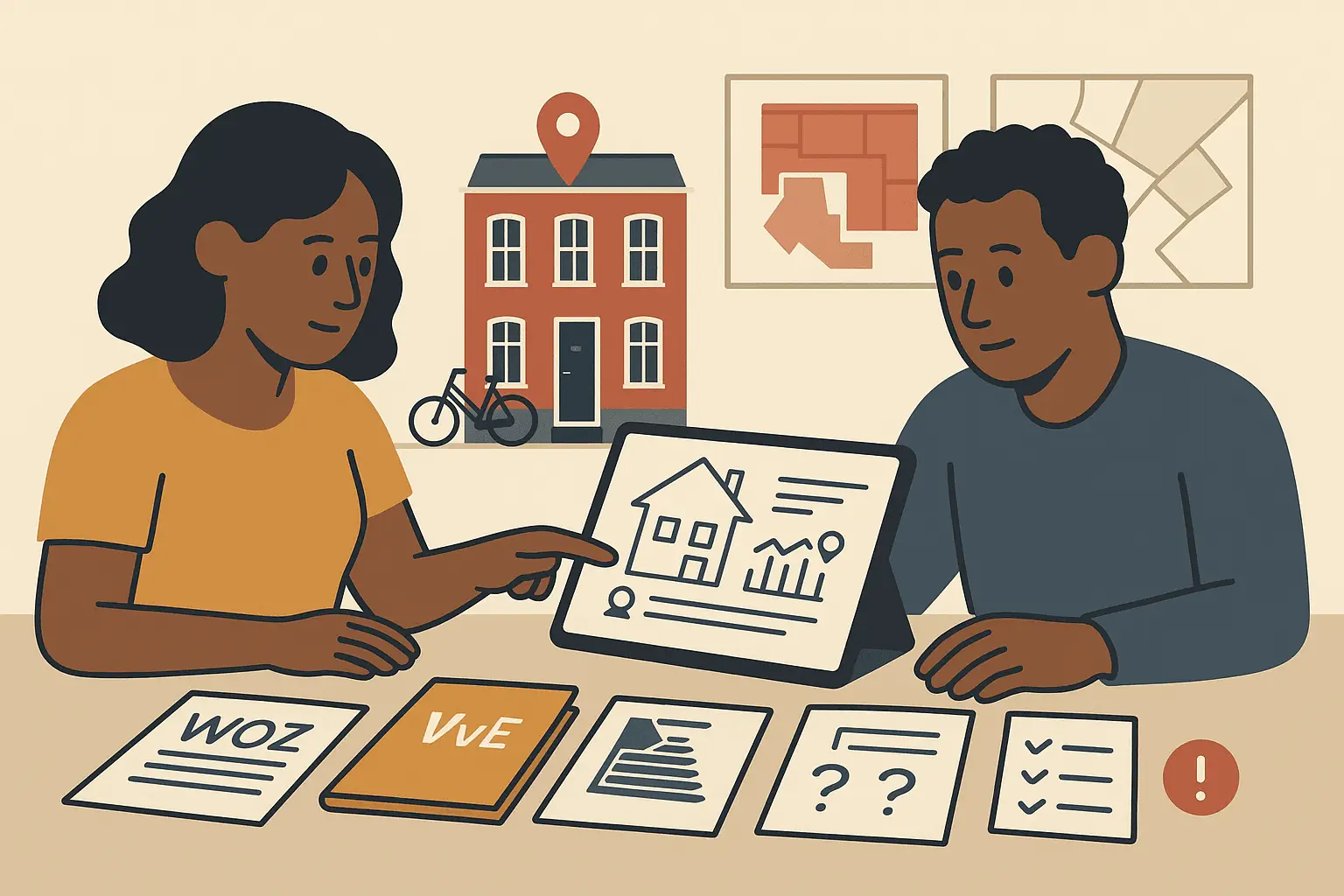
Buying a house in the Netherlands can move quickly, especially in popular cities and commuter towns. For expats, the pressure is often higher: Dutch documents, unfamiliar bidding customs, short decision windows, and property risks that are not obvious during a viewing.
Blind bidding happens when you make an offer mainly on emotion, photos, and the asking price, without checking the address, documents, local data, and risk signals first. If your search started with “expat buying house Netherlands”, the real question is not just can I buy? It is: what should I know before I bid?
The goal is not to remove every uncertainty. It is to make one clearer pre-bid decision: bid confidently, bid with conditions, lower your price, ask better questions, or walk away.
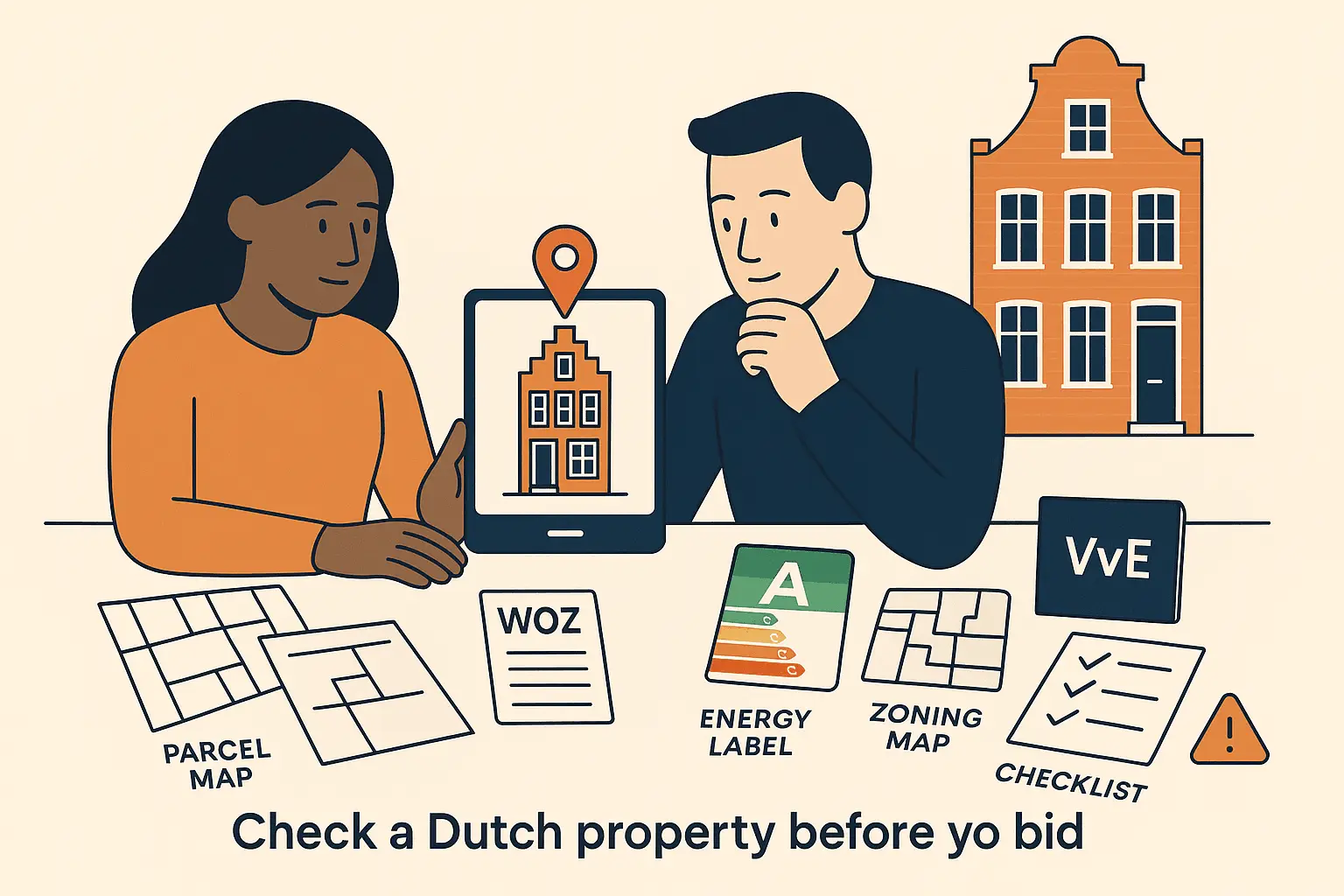
Have a specific home in mind? Huisscan can turn one Dutch address and uploaded documents into a plain-English pre-bid report with available property data, risk signals, document analysis, and buyer questions. Check a Dutch property before you bid.
Why expats can end up bidding blind
The Dutch housing market has its own rhythm and language. A home can be listed, viewed, and bid on within a short period. That can make it difficult to pause and understand what you are actually buying.
Common reasons expats bid blind include:
- The asking price feels like a valuation. In the Netherlands, the vraagprijs is the seller’s asking price, not a guarantee of market value.
- The seller’s agent seems helpful. The verkoopmakelaar represents the seller, not the buyer.
- Documents are in Dutch. Important risks may be hidden in terms like erfpacht, VvE, ouderdomsclausule, or asbestclausule.
- The home looks fine during a viewing. Some risks sit in data, ownership structure, the homeowners’ association, soil, permits, or future local plans.
- Bidding conditions are confusing. A strong offer is not only about price. Conditions such as financing or a building inspection can change your risk.
For expats buying a house in the Netherlands, avoiding blind bidding starts with a basic rule: do not treat the viewing as your only source of truth.
Dutch bidding basics you should know before an offer
Before you decide on price, make sure you understand the bidding context.
Vraagprijs
The asking price. It may be low to attract interest, high to test the market, or close to the seller’s expectation. Compare it with property data and recent local signals where available.
Bieden
Making an offer. Your bid usually includes a price, preferred transfer date, and any conditions.
Voorbehoud van financiering
A financing condition. This can protect you if your mortgage is not approved, but the exact wording and process matter. Discuss it with your mortgage advisor or buyer agent.
Bouwkundige keuring
A building inspection. This can be important for older homes, visibly renovated homes, homes with moisture signs, or properties in areas with foundation concerns.
Biedlogboek
A bidding log. Some sales processes use one. Ask the selling agent whether a bidding log applies, how the process works, and when information is shared.
Kosten koper (k.k.)
Buyer’s costs. This usually means the purchase price does not include several transaction costs, such as notary costs, transfer tax where applicable, advice costs, and mortgage-related costs. Check current rules with a qualified professional.
Voorlopige koopovereenkomst
The preliminary purchase agreement. Despite the word “preliminary”, this is a serious contract once signed. Consumer buyers may have statutory protections, but do not rely on assumptions. Ask your notary, legal advisor, or buyer agent before signing.
Dutch property data to check before setting your bid
A good pre-bid property check in the Netherlands combines the listing, documents, and external data. These checks can affect your price, conditions, or decision to walk away.
Ownership and cadastral information
The Kadaster records property boundaries, cadastral references, and ownership-related information. This can help you understand whether you are buying:
- a full house with land;
- an apartment right (appartementsrecht);
- a property with shared areas;
- a home with possible restrictions or rights attached.
For apartments, the ownership structure is especially important because you also become part of the VvE.
Floor area, plot size, and build year
Check whether the listed living area matches available registrations and documents. Dutch listings often refer to gebruiksoppervlakte wonen, a measured living area standard.
Questions to ask:
- Is the living area measured according to a recognised standard?
- Are attic rooms, extensions, or converted spaces included correctly?
- Does the build year match the visible condition of the property?
Differences do not always mean a problem, but they should be understood before bidding.
WOZ value and local price context
The WOZ-waarde is the municipal property value used for local taxes. It is not the same as market value, but it can provide context.
Use it carefully:
- A WOZ value can lag behind current market conditions.
- It may not reflect recent renovations.
- It should not replace an appraisal or comparable transaction analysis.
Still, if the asking price is far above the WOZ value, ask why. If it is below, check whether there are hidden issues.
Energy label and future costs
The Dutch energielabel gives an indication of energy performance. It can affect comfort, monthly costs, and renovation planning.
Check:
- the current energy label;
- insulation, glazing, heating system, and ventilation;
- whether sustainability upgrades are realistic;
- whether the VvE controls major improvements in an apartment building.
A low energy label is not automatically a reason to walk away, but it should be priced into your budget.
Local risks and future plans
Location risk is not only about the neighbourhood feeling pleasant. Check whether the area has factors such as:
- noise from roads, rail, aircraft, or nightlife;
- soil or contamination signals;
- water or flood-related considerations;
- parking permit rules;
- zoning or future development plans;
- protected cityscape or monument status.
For Dutch property risks, the question is practical: could this affect value, renovation freedom, mortgageability, insurance, future saleability, or your living comfort?
Documents and clauses that deserve attention
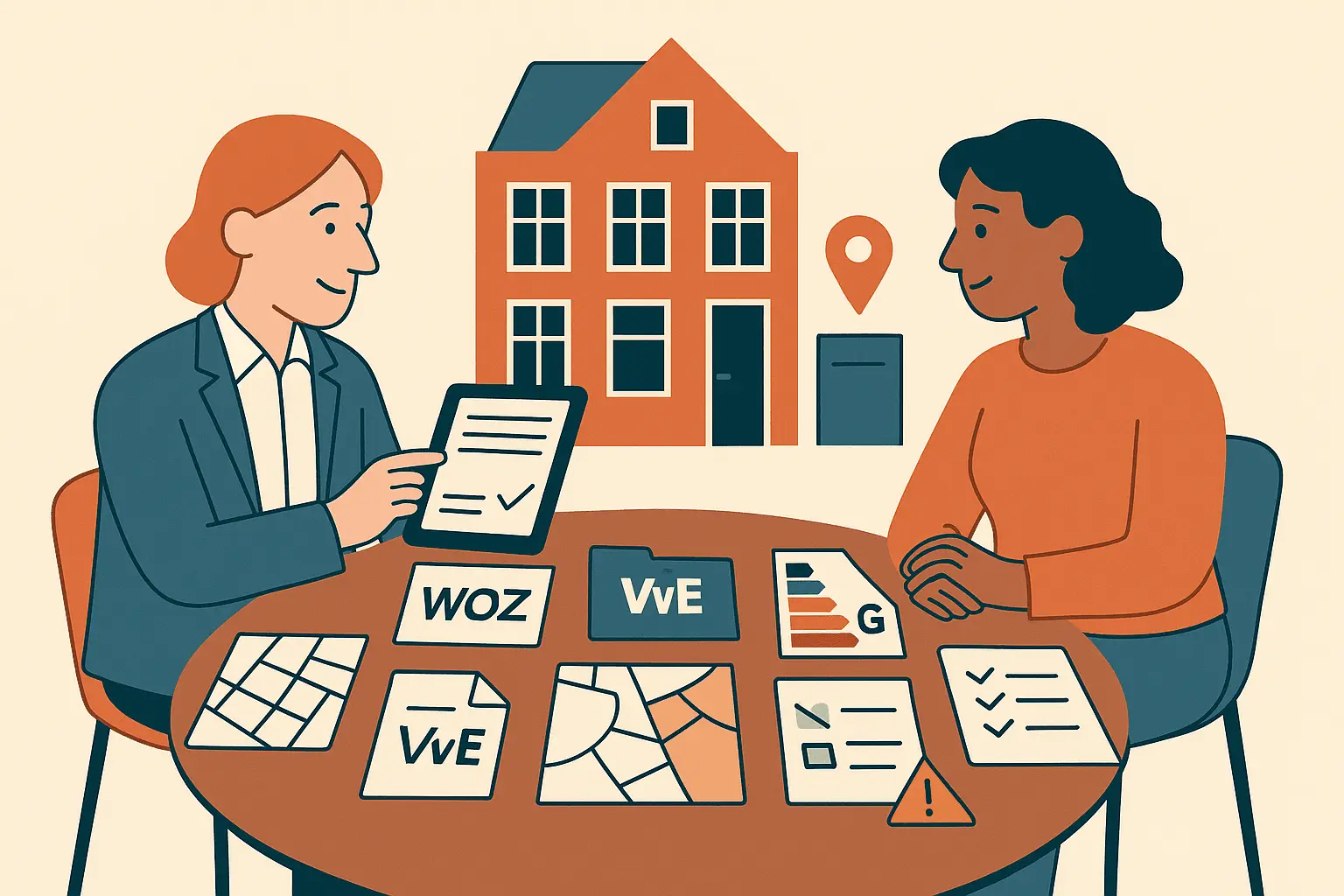
Many important pre-bid clues are in the documents. Ask the selling agent for the available information package before you bid, not after.
Useful documents include:
- sales brochure;
- seller questionnaire (vragenlijst);
- list of included and excluded items (lijst van zaken);
- title deed or previous transfer deed;
- energy label;
- available building reports;
- renovation information, permits, warranties, or invoices;
- draft purchase agreement if available;
- for apartments: VvE documents.
For an apartment, review the Vereniging van Eigenaars or VvE carefully. This is the homeowners’ association. Important VvE documents may include:
- annual accounts;
- reserve fund information;
- service charges;
- long-term maintenance plan (MJOP);
- meeting minutes;
- building insurance details;
- rules and regulations.
Meeting minutes can be especially useful. They may mention leaks, façade issues, roof repairs, disputes, lift problems, planned maintenance, or possible extra contributions.
Also watch for clauses in the purchase agreement or seller documents, such as:
- Ouderdomsclausule: an age clause, common for older homes, often shifting more responsibility to the buyer.
- Asbestclausule: asbestos clause, relevant for homes from periods when asbestos materials were commonly used.
- Niet-zelfbewoningsclausule: non-owner-occupancy clause, used when the seller did not live in the property and may know less about it.
- Erfpacht: leasehold, where you may own the building or apartment right but not the land in the usual freehold sense.
- Monumentenstatus: protected monument status, which may limit changes and increase maintenance obligations.
These clauses are not always deal breakers. But they can change your risk, your renovation budget, and the conditions you should include.
Practical pre-bid checklist for expats
Use this checklist before making an offer.
Price and market context
- What is the asking price compared with available local signals?
- Is the WOZ value much lower or higher than expected?
- Are there comparable homes nearby, and how similar are they really?
- Does the price reflect renovation needs, energy performance, leasehold, or VvE costs?
Property and building risk
- What is the build year?
- Are there signs of moisture, cracks, roof issues, or poor ventilation?
- Is a building inspection sensible before or after the offer?
- Are foundation, soil, or water risks relevant in this area?
- Are renovations documented with permits, invoices, or warranties?
Legal and ownership structure
- Are you buying freehold ownership, leasehold, or an apartment right?
- If there is erfpacht, what are the conditions and future payment obligations?
- Are there special restrictions, easements, or protected status signals?
- Does the draft contract include clauses that shift risk to the buyer?
VvE and apartment checks
- Is the VvE active?
- Are service charges realistic?
- Is there a long-term maintenance plan?
- Are reserves sufficient for planned works?
- Do meeting minutes mention problems or upcoming costs?
Bid conditions
- Do you need a financing condition?
- Do you need a building inspection condition?
- Is your mortgage advisor comfortable with the timeline?
- What transfer date works for you and the seller?
- What items are included in the sale?
Questions to ask the selling agent
- Why is the seller moving?
- Have there been recent bids or rejected offers?
- Are there known defects?
- Are there planned VvE works or expected extra contributions?
- Were renovations carried out with permits where required?
- Are there documents missing that you should review before bidding?
If you cannot get a clear answer on a material point, do not ignore it. Adjust your bid, add a condition, ask a professional, or consider walking away.
What Huisscan can help you check
Huisscan is built for one moment: before you bid.
With one Dutch address, and any documents you upload, Huisscan can create a clear pre-bid report in plain English. It helps you organise the information that is often scattered across listings, public data, and Dutch documents.
A Huisscan pre-bid report can help with:
- Available Dutch property data: address-level information, building details, energy label signals, cadastral context, WOZ context, and other available sources.
- Risk signals: possible issues around VvE, leasehold, location, maintenance, energy performance, documents, and inconsistencies.
- Document analysis: plain-English explanations of seller questionnaires, VvE documents, clauses, draft contracts, and other uploaded files.
- Buyer questions: practical questions to ask the selling agent, mortgage advisor, buyer agent, inspector, notary, or other professional.
- Decision support: a clearer view of what may affect price, conditions, negotiation, or the decision to stop.
Huisscan does not replace a notary, appraiser, building inspector, mortgage advisor, tax advisor, lawyer, or buyer agent. It helps you check Dutch property before bidding so you can speak with those professionals more prepared.
FAQ
Can expats buy a house in the Netherlands?
In general, expats can buy property in the Netherlands. Mortgage options, tax treatment, and documentation requirements depend on your personal situation, income, residency status, and lender criteria. Speak with a qualified mortgage advisor for your case.
How expats can avoid blind bidding in practice?
Start with a pre-bid property check Netherlands buyers can actually use: verify the address, read the documents, understand Dutch terms, check VvE or leasehold issues, review local risk signals, and ask specific questions before making an offer.
Is the Dutch asking price a reliable guide?
Not always. The asking price is a sales strategy, not an independent valuation. Compare it with available Dutch property data, the condition of the home, location risks, energy performance, VvE costs, and renovation needs.
Should I bid without a financing or inspection condition?
That depends on your risk tolerance and professional advice. Removing conditions can make an offer simpler for a seller, but it can also increase your risk. Discuss financing with your mortgage advisor and building concerns with a qualified inspector or buyer agent.
What property risks in the Netherlands are easy for expats to miss?
Commonly missed issues include erfpacht leasehold terms, weak VvE finances, old-age clauses, asbestos clauses, foundation concerns, undocumented renovations, energy upgrade costs, parking restrictions, and future local development plans.
Can Huisscan replace a buyer agent or notary?
No. Huisscan is a pre-bid intelligence tool, not professional legal, financial, building, mortgage, appraisal, tax, or notarial advice. It helps you organise data, understand documents, spot risk signals, and prepare better questions before you bid.
Check the address before you bid.