How buyer agents can use Huisscan

A buyer agent can help you judge the market, plan a bidding strategy, and communicate with the selling agent. But before you bid on a Dutch home, you also need a clear view of the property itself: what the documents say, which risks deserve questions, and which uncertainties could affect your offer.
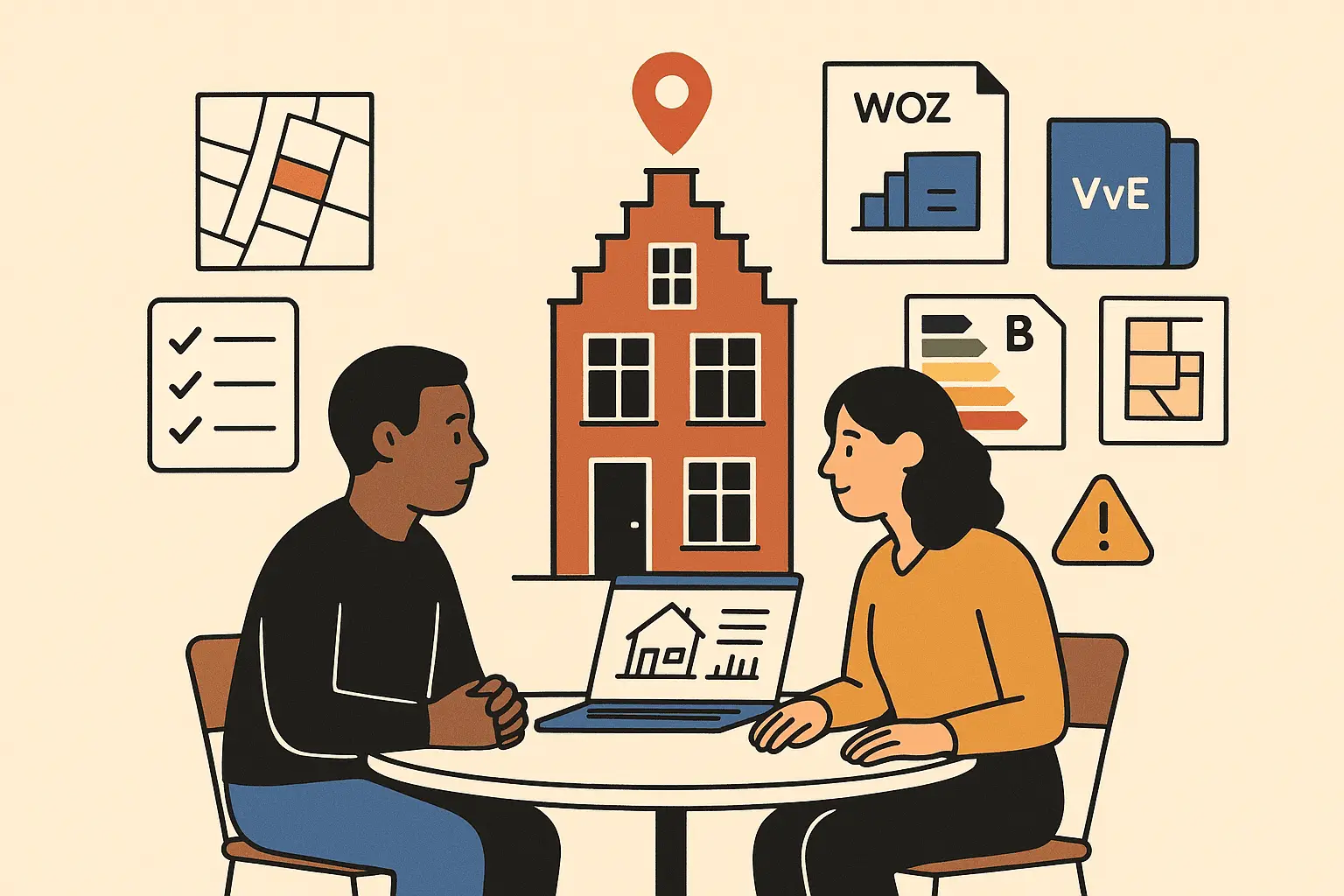
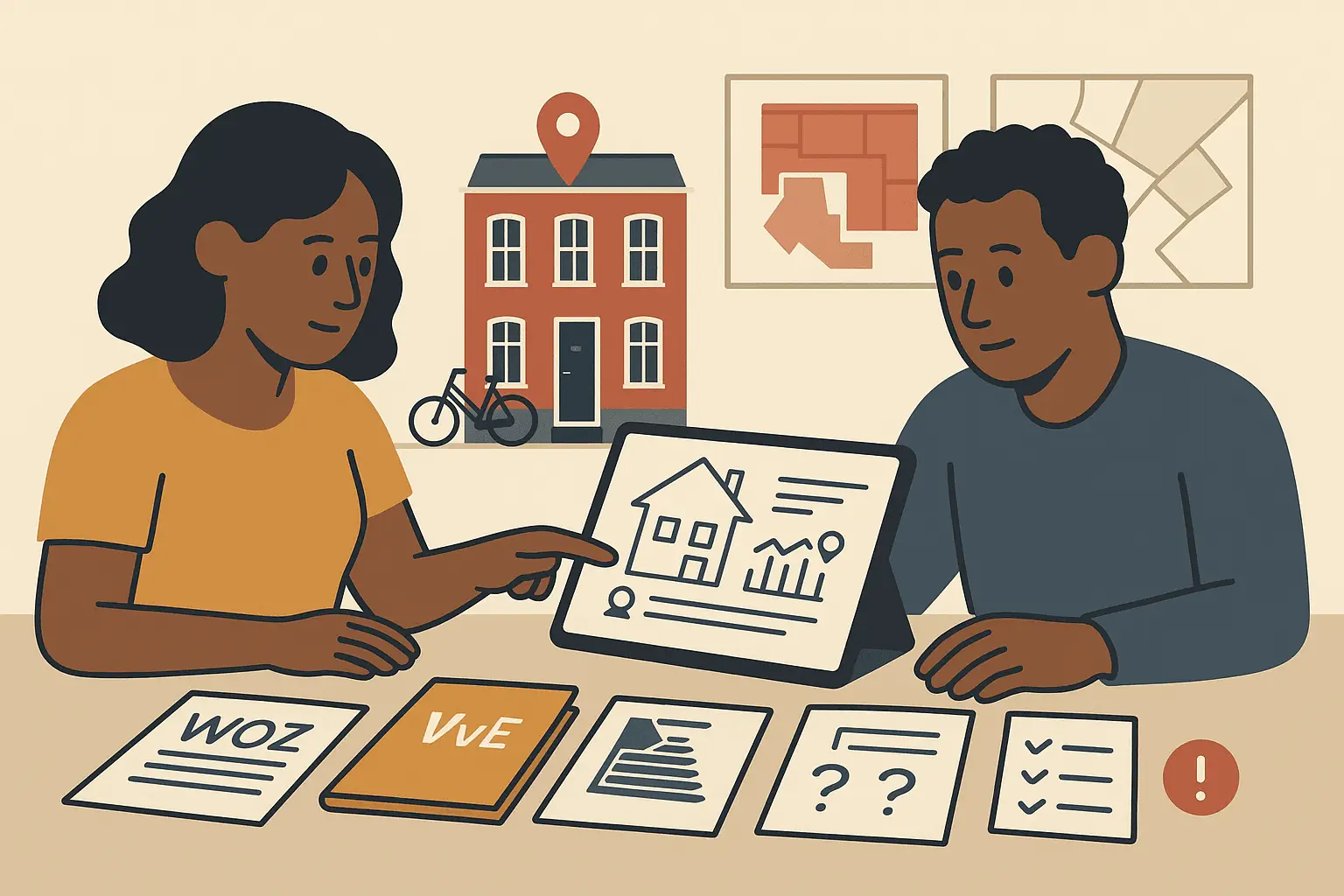
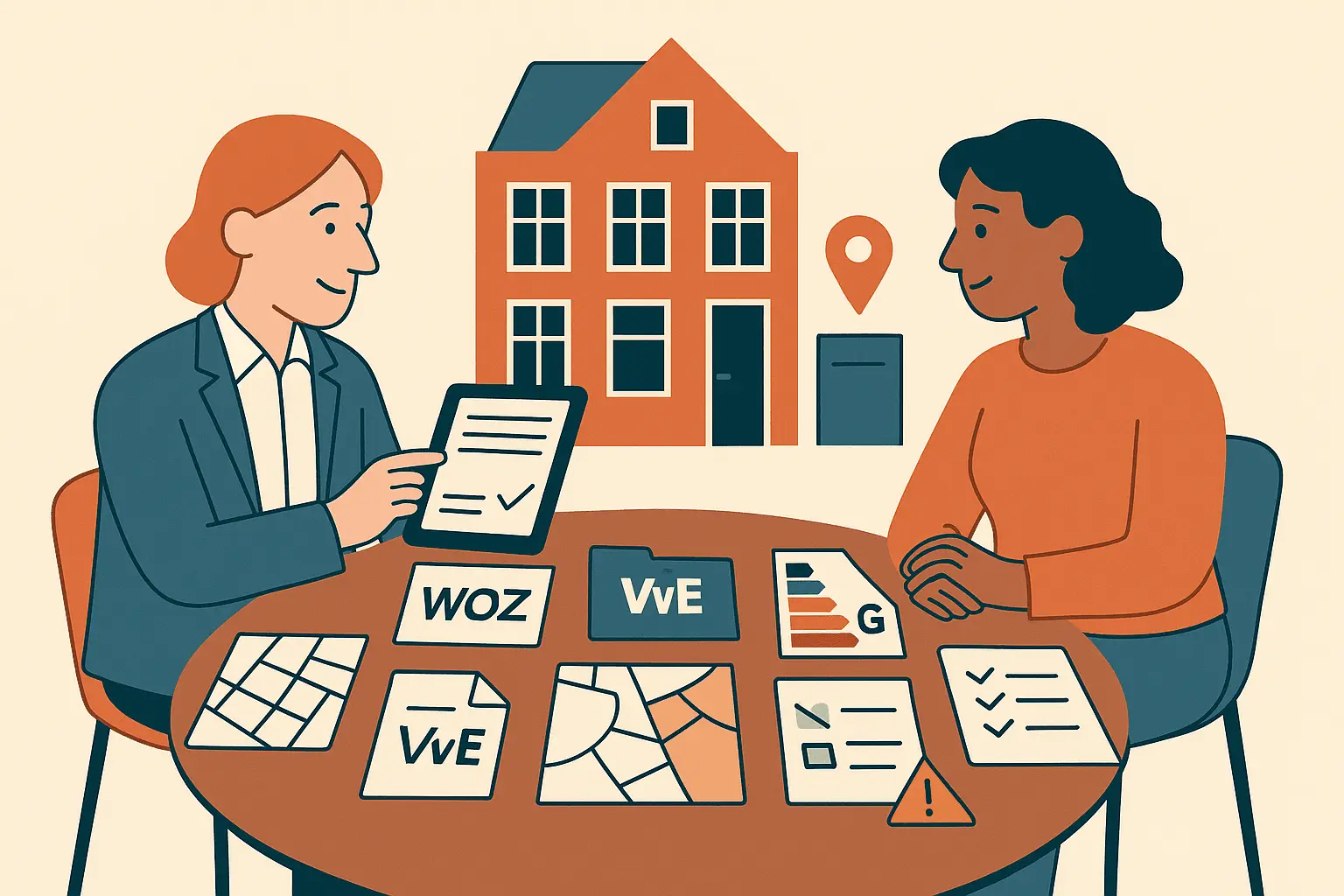
That is where Huisscan fits in. Huisscan helps you check a Dutch property before you bid by turning one Dutch address and uploaded documents into a clear pre-bid report with available property data, risk signals, document analysis, and practical buyer questions.
Considering a property? Check the address in Huisscan before you and your buyer agent discuss the offer.
Why buyers need more than a viewing
A viewing is useful, but it is not the same as due diligence. You may see the layout, light, street, and general condition, but many important points are in data sources and documents.
For example:
- Is the home on private land or erfpacht?
- Is there an active VvE for an apartment?
- Are there known defects in the seller’s questionnaire?
- Does the energy label match your renovation expectations?
- Are there planning, soil, water, or environmental signals nearby?
- Are any documents missing before the offer deadline?
For expats buying a house in the Netherlands, the challenge is often language and context. Dutch property documents can include terms that are normal for local buyers but unclear if you are new to the system.
A buyer agent can explain these points. Huisscan helps structure them before the bid conversation.
Where Huisscan fits in the buyer-agent workflow
Think of Huisscan as a practical pre-bid property check for the Netherlands. It does not replace a buyer agent, valuation, building inspection, mortgage advice, legal review, or notarial work. It helps the buyer and agent prepare better questions before deciding what to offer.
A buyer agent can use Huisscan at several moments:
Before the viewing
Run the address to see available Dutch property data and possible risk signals. This helps the agent and buyer focus during the viewing.After the viewing
Compare what you saw with the report. If the home looked well maintained but the documents mention moisture, foundation, asbestos, VvE issues, or permit uncertainty, those points deserve follow-up.When sales documents arrive
Upload available documents such as the brochure, seller questionnaire, VvE papers, energy label, draft purchase agreement, or inspection report. Huisscan can help identify relevant clauses, missing information, and buyer questions.Before the bid is submitted
Use the report to discuss price, conditions, and whether additional professional checks are needed.For client communication
Buyer agents can use the Huisscan pre-bid report to make the discussion clearer, especially for expats who want Dutch terms explained in plain English.
Dutch terms and documents a buyer agent can explain with Huisscan
A good buyer agent property report for the Netherlands should not only list data. It should help you understand what that data means before you bid.
Common Dutch terms include:
Aankoopmakelaar
A buyer agent who represents the buyer, not the seller.Kadaster
The Dutch land registry. It can show ownership-related information, parcel details, and registered rights.Erfpacht
Leasehold land. You may own the home but pay or have obligations for the land. Ask about the terms, payment structure, and future changes.VvE, Vereniging van Eigenaars
The homeowners’ association for an apartment building. Important documents include meeting minutes, financial statements, reserve funds, maintenance plans, and the splitsingsakte.Splitsingsakte
The deed that divides a building into apartment rights and describes rights and obligations.Vragenlijst
The seller’s questionnaire. It may mention known defects, renovations, disputes, permits, contamination, or nuisance.Energielabel
The official energy label. It gives a basic indication of energy performance, but it does not replace a technical inspection.Omgevingsplan or bestemmingsplan
Planning rules for the area. These may affect nearby development, permitted use, or future surroundings.WOZ-waarde
A municipal property value used for local taxation. It is not the same as market value or mortgage valuation.Bouwkundige keuring
A building inspection. Useful when condition, maintenance, moisture, roof, foundation, or structural questions matter.
Huisscan can help surface these topics so the buyer agent can explain which ones matter for the specific address.
Practical checklist: what to check before your agent advises an offer
Use this checklist before making a bid. Not every point will apply to every home, but each one can change the quality of your decision.
Address and basic property data
Does the address match the listing and documents?
Are the living area, plot size, building year, and property type consistent across sources?
Are there obvious differences between the listing and official or uploaded information?
Ownership and land
Is the property freehold or leasehold?
If there is erfpacht, what are the current and future obligations?
Are there registered rights or restrictions that need explanation?
Apartment and VvE
Is the VvE active?
Are there reserves for maintenance?
Do the minutes mention major repairs, disputes, leaks, or unpaid contributions?
Is there a multi-year maintenance plan?
Building condition
Are there signals around foundation, roof, moisture, asbestos, or outdated installations?
Did the viewing raise questions that need a building inspector?
Are renovation costs relevant for your maximum bid?
Energy and sustainability
What is the energy label?
Are insulation, heating, glazing, or ventilation likely to need upgrades?
Could energy improvements affect your budget or mortgage discussion?
Location and surroundings
Are there planning changes, environmental signals, water risks, noise sources, or soil concerns?
Is nearby development possible under local planning rules?
Documents
Has the selling agent provided the seller questionnaire, title documents, VvE papers, energy label, and draft contract where relevant?
Do the documents contain clauses that need professional explanation?
Are any important documents missing before the bid?
Offer strategy
Which risks justify a lower bid, extra condition, or further investigation?
Which uncertainties are acceptable to you?
Which points would make you walk away?
What Huisscan can help you check
Huisscan can turn one Dutch address into a practical pre-bid report. When you upload available documents, the report can become more specific.
Depending on data availability and the documents provided, Huisscan can help you review:
Available Dutch property data
Address details, property type, building year, area signals, land or apartment context, and other relevant public or supplied information.Property risks in the Netherlands
Possible signals around leasehold, VvE, environment, water, soil, planning, energy, monuments, foundation, or other address-specific topics.Uploaded documents
Sales brochure, seller questionnaire, VvE documents, energy label, draft purchase agreement, inspection reports, and other files you receive from the selling agent.Document inconsistencies
Differences between the listing, public data, and uploaded files that should be clarified before bidding.Buyer questions
Practical questions to ask the selling agent, buyer agent, mortgage advisor, inspector, or notary.
Huisscan is support for decision-making. It helps you see what deserves attention, but it is not a substitute for professional legal, building, mortgage, appraisal, or notarial advice.
How a Huisscan report can change the bid conversation
A pre-bid report is useful only if it helps you make a clearer decision. The goal is not to find reasons to panic. The goal is to know what you are accepting before you offer.
A Huisscan report can affect the conversation in three practical ways.
1. Price
If the report highlights maintenance, VvE repairs, leasehold obligations, or renovation needs, your buyer agent can help you decide whether the asking price still makes sense.
Example: if an apartment has a low VvE reserve and major roof work is discussed in the minutes, that may affect your comfort with the price.
2. Conditions
Some signals may lead you to discuss offer conditions. Common examples include financing, building inspection, valuation, or clarification of key documents. The exact wording should be handled with your buyer agent and, where needed, a legal or notarial professional.
Example: if an older home has foundation or moisture concerns, you may want a building inspection before committing fully.
3. Walk-away decision
Sometimes the best decision is not to bid. That may happen if important documents are missing, the risk is outside your budget, or the uncertainty is too large for your situation.
Example: if erfpacht terms are unclear and your mortgage advisor cannot assess the impact in time, waiting or walking away may be safer than bidding blind.
How buyers can ask their agent to use Huisscan
If you already work with a buyer agent, you can make Huisscan part of the pre-bid routine.
You might ask:
- “Can we run a Huisscan report before deciding our bid?”
- “Which findings affect the offer price?”
- “Which questions should we send to the selling agent?”
- “Do any points require a building inspector, mortgage advisor, notary, or other specialist?”
- “Which risks are acceptable, and which would make you advise against bidding?”
For buyer agents, Huisscan can help create a consistent process. Instead of relying only on a viewing, brochure, and quick email review, the agent can use one structured report to guide the client conversation.
That is especially helpful for expats, first-time buyers, and buyers comparing several homes in a short period.
FAQ
Can Huisscan replace a buyer agent?
No. Huisscan supports the pre-bid check, but it does not represent you in negotiations or give personal market advice. A buyer agent can interpret the findings, contact the selling agent, and help shape the offer strategy.
Is Huisscan useful if I already have a buyer agent?
Yes. Huisscan can give you and your agent a clearer starting point. It helps organise Dutch property data, uploaded documents, risk signals, and buyer questions before the offer discussion.
What documents should I upload?
Upload what you have received from the selling agent. Useful documents may include the sales brochure, seller questionnaire, energy label, VvE documents, maintenance plans, draft purchase agreement, inspection reports, and leasehold information if relevant.
Can a Huisscan report tell me what to bid?
No. Huisscan does not set your bid price. It helps identify information that may affect the bid, such as risks, missing documents, maintenance issues, or questions for your buyer agent.
Does Huisscan replace a building inspection or valuation?
No. A Huisscan pre-bid report can point to topics that may deserve further inspection or valuation input, but it does not replace a qualified building inspector, appraiser, mortgage advisor, lawyer, or notary.
Is Huisscan helpful for expats buying a house in the Netherlands?
Yes. Huisscan can help explain Dutch property terms, documents, and risk signals in a clearer way. This makes it easier to ask your buyer agent focused questions before bidding.
Check the address before you bid.