Hidden defects in Dutch home buying
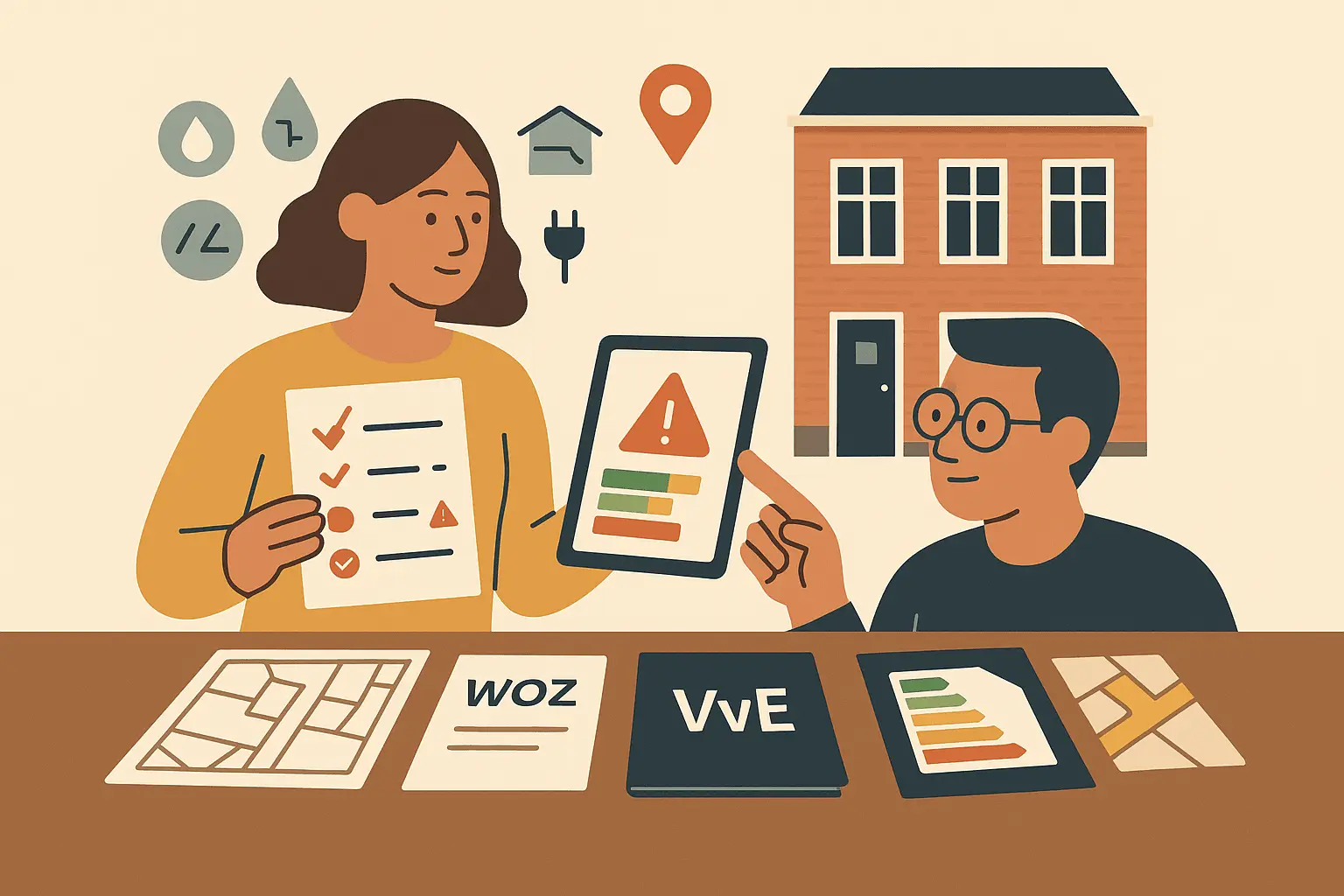
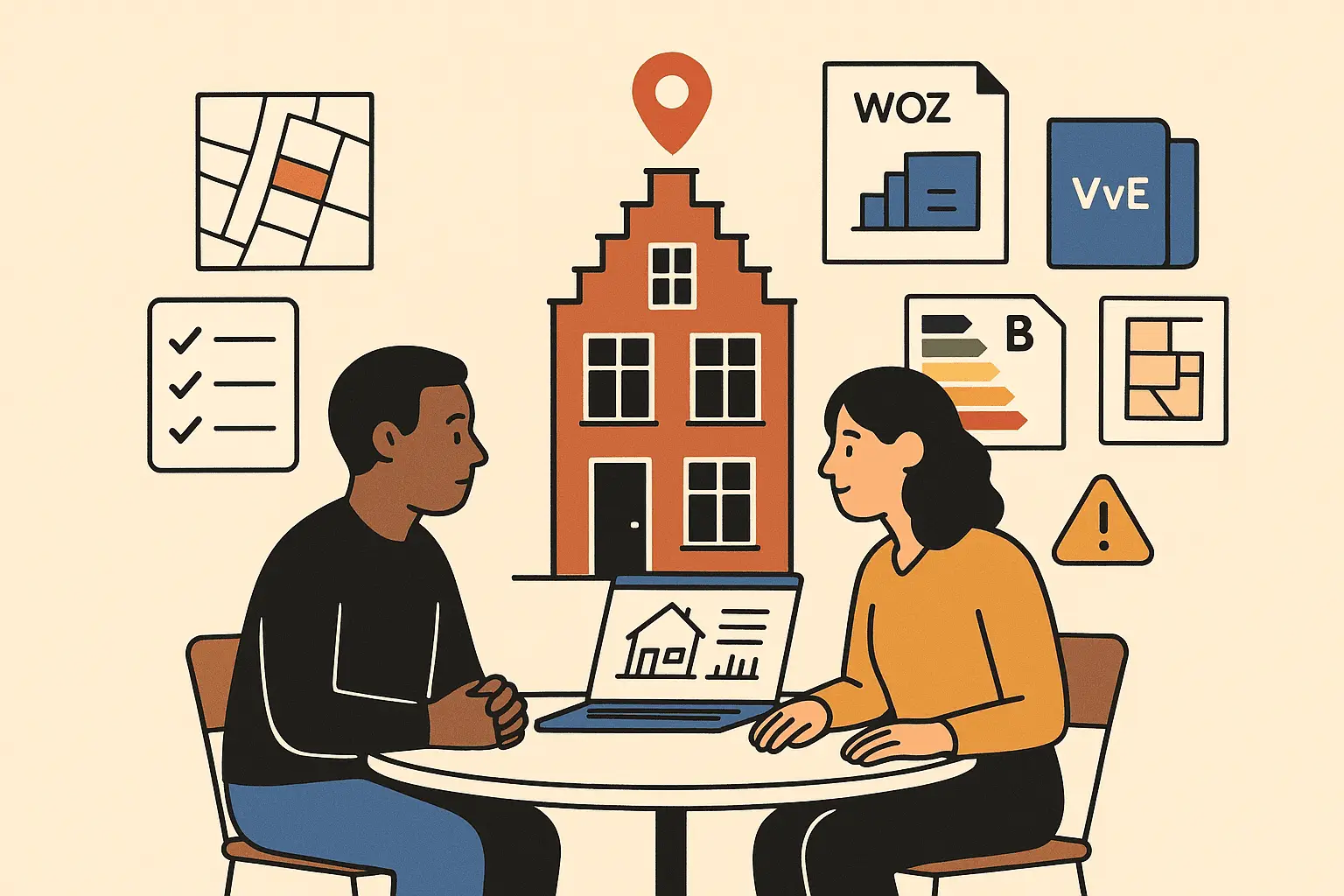
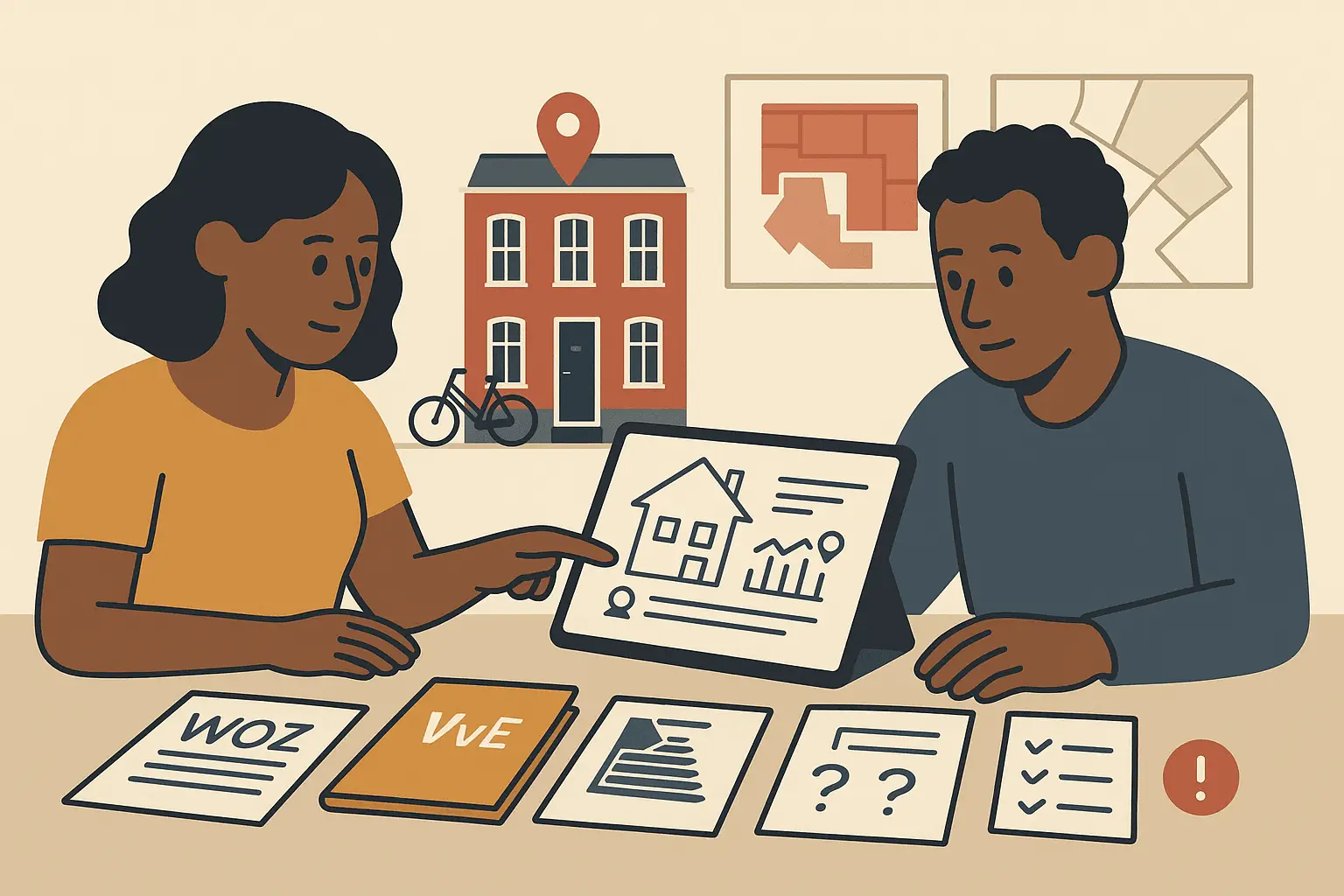
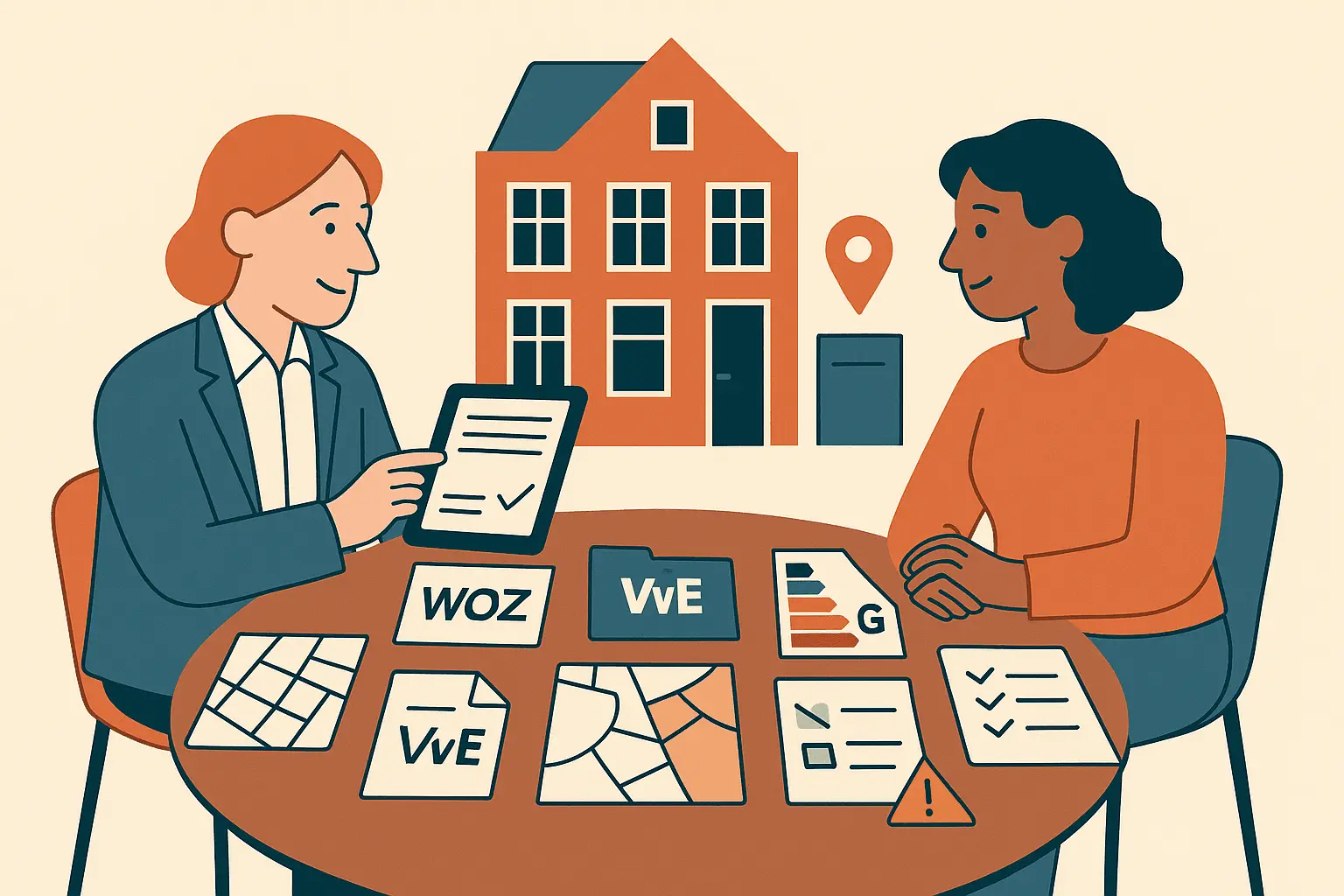
A hidden defect can turn a good-looking Dutch home into a difficult purchase decision. The issue is usually not the obvious cracked tile or dated kitchen. It is the roof leak mentioned vaguely in a document, the moisture smell in the crawl space, the old foundation risk, or the VvE maintenance problem you only notice after asking the right question.
For anyone searching for hidden defects house Netherlands buying, the practical goal is simple: understand the risk before you bid, so you can adjust your price, add conditions, ask for proof, or decide to walk away.
Considering a specific property? Check a Dutch property before you bid. With Huisscan, one Dutch address and uploaded documents can become a clear pre-bid report with available property data, risk signals, document analysis, and buyer questions.
What counts as a hidden defect in Dutch home buying?
In Dutch, a hidden defect is often called a verborgen gebrek. In simple terms, it means a problem with the property that was not reasonably visible or known to the buyer before purchase.
Common examples include:
- moisture or leakage behind walls or ceilings;
- rotten wooden frames hidden under paint;
- foundation problems;
- serious defects in the roof, sewer, or electrical system;
- asbestos-containing materials that were not clearly disclosed;
- apartment building defects that belong to the VvE but affect future costs.
Dutch home buying also involves two important duties:
- Mededelingsplicht: the seller’s duty to disclose relevant known information.
- Onderzoeksplicht: the buyer’s duty to investigate, inspect, and ask questions.
How these duties apply depends on the facts, the documents, and the purchase agreement. That is why hidden defects are not only a post-purchase legal issue. They are a pre-bid decision issue.
Why hidden defects matter before you bid
In the Netherlands, buyers often make an offer with limited time and incomplete information. Once your offer is accepted and the purchase agreement is signed, it can become harder to renegotiate unless your conditions or the law allow it.
A possible defect can affect your decision in several ways:
- Price: you may lower your bid to reflect repair risk.
- Conditions: you may include a voorbehoud bouwkundige keuring — a building inspection condition.
- Questions: you may ask the seller or selling agent for written clarification.
- Documents: you may request VvE minutes, invoices, permits, or earlier reports.
- Walk-away decision: you may decide the uncertainty is too large.
Example: if an apartment’s VvE minutes mention recurring roof leaks and a low maintenance reserve, the issue may not be visible during the viewing. But it can still affect future costs and your bid strategy.
Documents and Dutch terms to check
Before bidding, ask for the full document set and read it carefully. For expats buying a house in the Netherlands, the Dutch terms can be just as important as the numbers.
| Dutch term or document | Plain-English meaning | What to check |
|---|---|---|
| Vragenlijst verkoop woning or NVM vragenlijst | Seller’s questionnaire | Mentions of leakage, disputes, repairs, asbestos, foundation, pests, or defects |
| Verkoopbrochure | Sales brochure | Claims about renovations, insulation, extensions, floor area, and energy features |
| Bouwkundige keuring | Building inspection report | Structural issues, roof, moisture, installations, urgent repairs |
| Energielabel | Energy label | Efficiency indication, not a guarantee of building condition |
| Ouderdomsclausule | Age clause | Older-home risks may be shifted more to the buyer |
| Asbestclausule | Asbestos clause | Possible asbestos risk; ask what is known and whether reports exist |
| Niet-zelfbewoningsclausule | Non-owner-occupier clause | Seller may not know the property well because they did not live there |
| VvE-stukken | Homeowners’ association documents | Maintenance plan, reserve fund, minutes, planned works, disputes |
| Splitsingsakte | Deed of division for apartments | What belongs to your apartment and what belongs to the VvE |
| Kadasterinformatie | Land registry information | Ownership, parcel information, apartment rights, boundaries |
| Vergunningen or omgevingsvergunning | Permits | Whether extensions, dormers, conversions, or structural changes were permitted |
| Bodemrapport | Soil report | Possible soil contamination, former tanks, or environmental restrictions |
A pre-bid property check in the Netherlands is not about finding certainty on every detail. It is about spotting the questions that matter before your offer becomes serious.
Common risk signals in Dutch homes
Hidden defects are often connected to patterns. A single signal does not prove a defect, but it should guide your questions.
Moisture, leakage, and ventilation
Look for stains, mould smell, blistered paint, damp basements, or condensation. Ask whether there have been roof leaks, pipe leaks, or ventilation problems.
Useful question:
“Have there been any moisture, leakage, or mould problems in the property or building, and were they repaired?”
Foundation and settlement
Older homes in soft-soil areas can have foundation or settlement risks. Signs include sloping floors, cracks, sticking doors, or references to fundering in documents.
Useful question:
“Is anything known about the foundation, settlement, monitoring, or previous foundation reports?”
Roof, gutters, and façade
Roof problems can be expensive and may not be visible during a short viewing. For apartments, the roof is often a VvE responsibility.
Useful question:
“When was the roof last inspected or repaired, and are there planned works?”
Electrical system, sewer, and heating
Old wiring, outdated fuse boxes, sewer problems, and ageing heating installations can affect repair budgets.
Useful question:
“Are there recent invoices, maintenance records, or inspection reports for the electrical system, sewer, and heating installation?”
Asbestos and older materials
Older Dutch homes may contain asbestos-containing materials, especially in roofing, insulation, panels, ducts, or old floor layers. Do not guess based on appearance only.
Useful question:
“Is there an asbestos inventory report, or is any asbestos known or suspected?”
VvE risks for apartments
For apartments, defects may sit outside your front door: roof, façade, balconies, foundations, shared pipes, lifts, or fire safety works.
Useful question:
“Are there planned major repairs, special contributions, disputes, or maintenance backlogs in the VvE?”
Permits and renovations
A beautiful attic conversion or extension is not automatically problem-free. Missing permits, unclear construction quality, or unapproved changes can become buyer risks.
Useful question:
“Were all structural changes and extensions permitted, and can the seller provide permits, drawings, or completion documents?”
Questions to ask the selling agent before bidding
Ask clear questions and, where possible, ask for written answers. This is especially important if you are bidding quickly or cannot read Dutch documents confidently.
Use questions such as:
- Are the sellers aware of any defects, leaks, moisture issues, rot, pests, foundation issues, or asbestos?
- Have there been insurance claims or major repairs in recent years?
- Are there invoices, warranties, inspection reports, or maintenance records?
- Were all renovations, dormers, extensions, and structural changes permitted?
- Are there known issues with the roof, sewer, façade, windows, crawl space, or installations?
- For apartments: are there planned VvE works, special contributions, disputes, or low reserves?
- Are any clauses expected in the purchase agreement, such as an ouderdomsclausule, asbestclausule, or niet-zelfbewoningsclausule?
- Is the seller willing to accept a building inspection condition?
- Is there any information that would be important for a buyer to know before making an offer?
If the answer is “not known,” treat that as information too. It may simply mean the seller does not know, but it can also mean you need stronger conditions, a lower bid, or professional inspection.
Practical pre-bid checklist
Use this checklist before making an offer.
Before the viewing
- Check the address, building year, property type, and basic Dutch property data.
- Collect the brochure, seller questionnaire, energy label, and any available reports.
- For apartments, request VvE documents before bidding if possible.
- Note clauses mentioned by the selling agent or in draft documents.
- Search for signals around foundation, soil, flood, permits, or major maintenance where available.
During the viewing
- Look for stains, cracks, smells, uneven floors, condensation, and poor ventilation.
- Open cupboards, look near windows, check ceilings, and ask about the crawl space.
- Ask direct questions about leaks, repairs, asbestos, and installations.
- Do not rely only on fresh paint or staging.
- Take notes immediately after the viewing.
Before bidding
- Compare what the documents say with what you saw.
- List unknowns that could become expensive.
- Decide whether to ask more questions before bidding.
- Decide whether to include a bouwkundige keuring condition.
- Adjust your bid if repair risk is real but manageable.
- Walk away if the uncertainty is too large for your budget or timeline.
What Huisscan can help you check
Huisscan is built for the pre-bid moment: when you have an address, some documents, and not much time.
A Huisscan pre-bid report can help you:
- turn one Dutch address into a structured property overview;
- review available property data from relevant public and uploaded sources;
- identify risk signals that deserve attention before bidding;
- analyse uploaded documents such as the brochure, seller questionnaire, VvE documents, clauses, or inspection reports;
- highlight inconsistencies, missing information, and unclear wording;
- generate practical buyer questions for the selling agent, buyer agent, inspector, or advisor.
Huisscan does not replace a building inspector, appraiser, notary, mortgage advisor, lawyer, or tax professional. It helps you organise the available information and ask better defect questions before your bid.
That can make the difference between “we hope it is fine” and “we understand the risk and know what to ask next.”
FAQ
What is a hidden defect when buying a house in the Netherlands?
A hidden defect, or verborgen gebrek, is generally a problem that was not reasonably visible or known before purchase. Whether it creates a claim depends on the facts, the contract, seller disclosures, and buyer investigation. Before bidding, focus on finding risk signals and asking clear questions.
Can I claim against the seller after discovering a defect?
Sometimes, but it depends on the situation and the purchase agreement. You may need to show what the seller knew, what was disclosed, what you could reasonably have discovered, and whether the property can be used as expected. Ask a qualified legal professional for advice in a specific dispute.
Should I always include a building inspection condition?
Not always, but it is worth considering when the home is older, renovated, poorly documented, or shows risk signals. A bouwkundige keuring condition can give you more room to investigate structural and technical defects. Discuss the wording with your buyer agent or advisor.
What if the seller says they do not know about defects?
That can happen, especially with inherited properties, rentals, or sellers who did not live in the home. In Dutch contracts this may appear as a niet-zelfbewoningsclausule. If the seller has limited knowledge, your own investigation becomes even more important.
Are expats at higher risk of missing hidden defects?
Expats are not automatically at higher risk, but Dutch documents, terms, bidding speed, and local property risks can be unfamiliar. Translating key documents and checking Dutch property data before bidding can help you ask better questions.
Can Huisscan find every hidden defect?
No. Some defects require a physical inspection, specialist testing, or professional advice. Huisscan helps with a different but important step: reviewing available data and documents, flagging risk signals, and preparing better buyer questions before you bid.
Check the address before you bid.