
Groundwater risk before buying
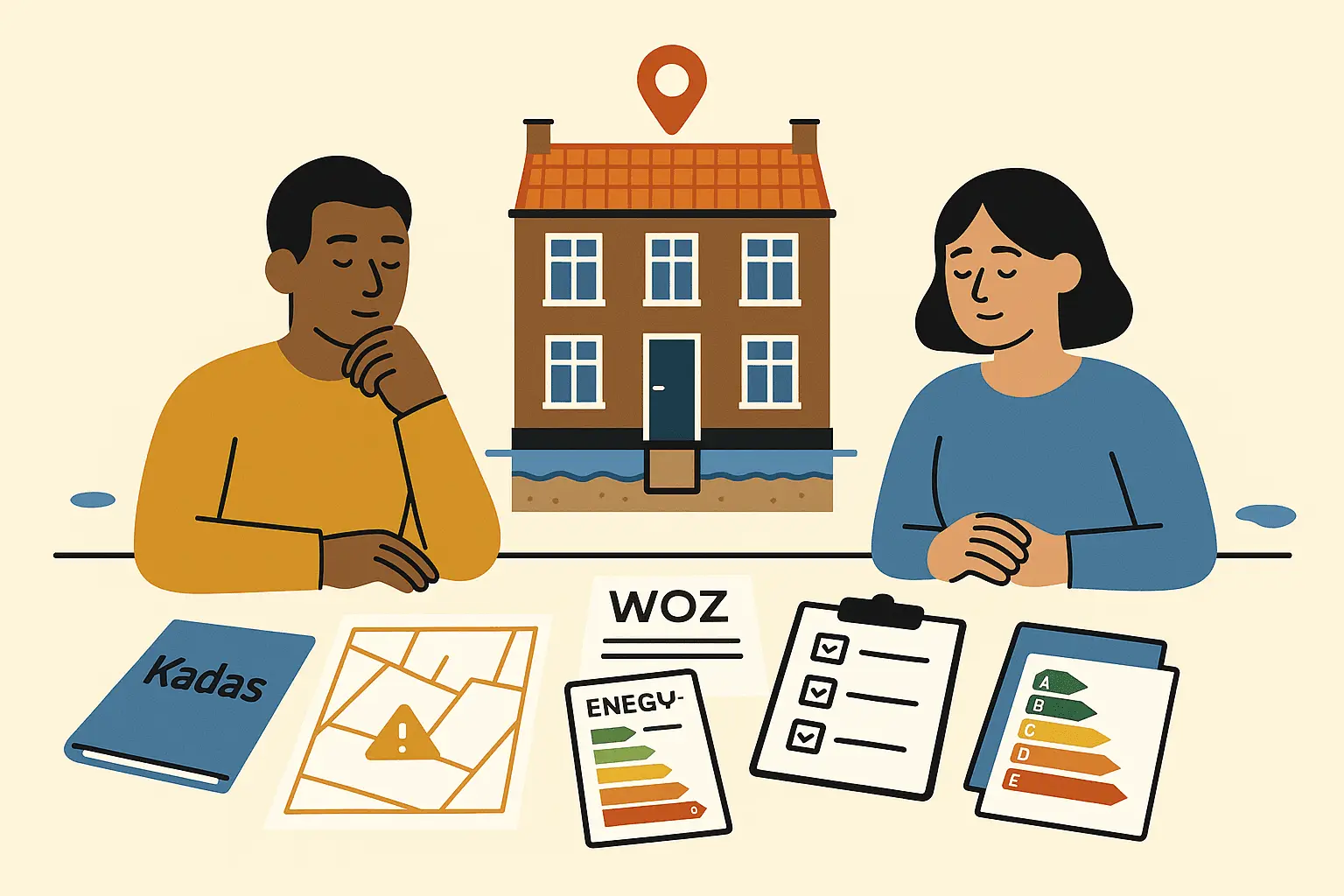
Groundwater risk is easy to miss when you are busy arranging viewings, financing, and a bid. But in the Netherlands, water below the surface can affect damp, basements, crawl spaces, foundations, gardens, maintenance costs, and resale questions.
If you are buying a house in the Netherlands, you do not need to become a water expert before every bid. You do need to know which signals matter, which Dutch documents to read, and what to ask before you commit.
Looking at a specific address? Huisscan can help you check a Dutch property before you bid by turning one Dutch address and uploaded documents into a clear pre-bid report with available property data, water-related risk signals, document analysis, and buyer questions.
Why groundwater risk matters before a bid
When buyers search for groundwater risk house Netherlands, they often expect a simple yes-or-no answer. In practice, groundwater risk is local and property-specific.
Two opposite problems can matter:
- High groundwater can contribute to damp crawl spaces, wet basements, mould smells, water in the garden, or pressure on cellar walls.
- Low groundwater can be relevant for older homes with wooden pile foundations, especially in areas with peat or clay soils. If wooden piles are exposed to air for long periods, foundation problems may develop.
Groundwater is not the same as river or sea flooding. A home can have limited flood exposure but still have a damp crawl space. Another home can sit in a managed polder with drainage and pumps, yet still require careful foundation checks.
The pre-bid question is not “Is there water nearby?” It is:
Does this specific property show signs of water-related risk that should affect my bid, conditions, inspection, or decision to walk away?
Dutch terms and signals to recognise
Dutch property documents and estate agent answers often use terms that are unfamiliar to expats. These are useful to know before bidding.
- Grondwater: groundwater.
- Grondwaterstand: groundwater level.
- Kruipruimte: crawl space under the ground floor.
- Kelder: cellar or basement.
- Souterrain: lower-ground or semi-basement level.
- Wateroverlast: water nuisance or water problems.
- Vochtproblemen: damp problems.
- Drainage: drainage system around or under the property.
- Funderingsrisico: foundation risk.
- Houten palen: wooden foundation piles.
- Paalrot: wood pile decay, often discussed in relation to low groundwater.
- Bodemdaling: land subsidence.
- Zetting: settlement of soil or structure.
- Waterschap: regional water authority.
- Gemeente: municipality.
- VvE: homeowners’ association for apartments.
- NAP: Dutch reference level for height, “Normaal Amsterdams Peil”.
During a viewing, look for practical signals:
- Musty smell in the hallway, crawl space, basement, or storage area.
- Peeling paint, salt marks, damp patches, or swollen skirting boards.
- A pump, drain, dehumidifier, or recent waterproofing works.
- Cracks, sloping floors, sticking doors, or uneven extensions.
- A very low garden compared with the street or neighbouring plots.
- A basement bedroom, office, or living space below ground level.
- Water stains in a shared apartment basement, bike storage, or garage.
One signal does not automatically mean “do not buy”. It means you should ask better questions before making an offer.
Data sources and documents to review
A good pre-bid property check Netherlands should combine the address, public data, and property documents. None of these sources gives a perfect answer alone, but together they help you see whether groundwater deserves attention.
Useful sources and documents include:
Seller and property documents
- Verkoopbrochure: the sales brochure may mention a basement, drainage, renovation, or “dry crawl space”.
- Vragenlijst verkoop woning: the seller’s questionnaire. Check answers about defects, moisture, flooding, foundation, repairs, insurance claims, and neighbour disputes.
- Bouwkundig rapport: a building inspection report, if available. Look for moisture readings, crawl space comments, basement notes, and foundation observations.
- Maintenance invoices: useful if drainage, waterproofing, pump systems, or foundation repairs were done.
- VvE minutes and MJOP for apartments: meeting minutes and the long-term maintenance plan can reveal recurring leaks, basement problems, garage drainage issues, or planned repairs.
Public and local data
- BAG and Kadaster data: useful for build year, building type, and address-level context.
- AHN elevation data: shows height differences. A low-lying plot, slope toward the house, or lower rear garden can be relevant.
- PDOK maps: a portal for many Dutch public geodata layers.
- Klimaateffectatlas: gives climate-related map layers, including water nuisance and related indicators.
- DINOloket / BRO: can contain soil and groundwater monitoring information in the area, where available.
- Bodemloket: soil contamination information. Soil and groundwater issues are different, but contamination history can be relevant to further questions.
- Municipality information: some municipalities publish groundwater, foundation, drainage, or sewer information.
- Waterschap information: water boards manage regional water systems and may publish water level areas, ditches, pumping areas, and local water management data.
Treat these as decision-support sources, not final proof. If the property shows serious signs, ask a qualified building, foundation, or water specialist.
Practical checklist before you make an offer
Use this checklist before bidding on a Dutch property where groundwater may matter.
- Check the build year and likely foundation type.
- Ask whether the home has wooden piles, shallow foundations, or known foundation repairs.
- Check whether there is a crawl space, basement, souterrain, or underground garage.
- Look for signs of damp during the viewing: smell, stains, peeling paint, mould, salt marks, pumps, or drains.
- Read the seller’s questionnaire carefully for moisture, flooding, drainage, foundation, and repair history.
- For apartments, review VvE minutes, the MJOP, insurance notes, and any basement or garage issues.
- Compare the property with available Dutch property data, elevation maps, water maps, and local authority information.
- Ask for invoices, reports, warranties, or photos of previous drainage, waterproofing, or foundation work.
- If the crawl space is inaccessible, ask why and whether inspection is possible before or after offer acceptance.
- Decide whether the risk affects your bid price, your need for an inspection condition, or your willingness to proceed.
This is the core of Groundwater risk before buying: not panic, but structured pre-bid questions.
Questions to ask before bidding
Ask direct, calm questions. If the answer is vague, ask for documents.
Ask the seller or estate agent
- Has there ever been water in the crawl space, basement, souterrain, garden, garage, or storage area?
- Are there known vochtproblemen or water stains?
- Is there a pump, drainage system, or waterproofing system? When was it installed and why?
- Are there maintenance invoices, warranties, photos, or inspection reports?
- Has the foundation ever been inspected?
- Are there known foundation issues in this street or neighbourhood?
- Have neighbours reported similar water or foundation problems?
- Has the seller made any insurance claim for water damage?
- Can a building inspector access the crawl space or basement?
Ask the municipality or water board where relevant
- Are there known groundwater complaints in this area?
- Is the street in a low-lying or drainage-sensitive zone?
- Are sewer, road, quay, canal, or drainage works planned nearby?
- Is there a local foundation desk, groundwater desk, or public map?
- Are there known soil subsidence issues in the area?
Ask the VvE for apartments
- Has the building had leaks or water in the basement, storage units, lift pit, or garage?
- Are repairs planned or budgeted in the MJOP?
- Are there repeated complaints in meeting minutes?
- Has the VvE discussed foundation, drainage, or structural moisture issues?
- Are there insurance exclusions or unpaid claims related to water damage?
How groundwater risk can affect your bid
Groundwater risk can affect the purchase decision in several ways.
Price
If there is uncertainty, you may decide to bid more conservatively. Waterproofing, drainage, basement repairs, and foundation investigations can be costly. Do not guess large numbers; ask for reports, quotes, or specialist input where needed.
Conditions
If your offer allows conditions, you may want to discuss an inspection condition with your buyer agent or legal adviser. In Dutch, this is often part of the wider discussion around ontbindende voorwaarden. The exact wording matters, so do not treat online examples as legal advice.
Possible areas to investigate include:
- Building inspection.
- Moisture assessment.
- Crawl space inspection.
- Foundation inspection.
- Review of missing VvE or maintenance documents.
Timing
In a competitive market, buyers sometimes skip checks to move faster. That can be risky if the property has a basement, older foundation, water stains, or unclear documentation. Even a short document review before bidding can help you ask sharper questions.
Walking away
Walking away may be sensible if several red flags combine, for example:
- Active water ingress and no clear explanation.
- Foundation warning signs without reports.
- Seller refuses reasonable access or documentation.
- VvE minutes show recurring water problems without budget.
- Repair costs are unknown and your budget has no room for surprises.
Groundwater risk is one of many property risks Netherlands buyers should review before making a binding decision.
What Huisscan can help you check
Huisscan is built for buyers, expats, mortgage advisors, buyer agents, and real estate professionals who want a clearer pre-bid view.
With one Dutch address and uploaded documents, a Huisscan pre-bid report can help you:
- Review available address-level property data.
- Highlight water, foundation, soil, and location-related risk signals where available.
- Analyse uploaded documents such as the sales brochure, seller’s questionnaire, building report, and VvE papers.
- Identify Dutch terms like grondwater, vocht, kruipruimte, kelder, drainage, and fundering.
- Flag missing or conflicting information.
- Turn unclear signals into practical buyer questions.
- Prepare a calmer discussion with the selling agent, buyer agent, inspector, mortgage advisor, or other professional.
Huisscan does not replace a building inspector, foundation specialist, appraiser, mortgage advisor, notary, lawyer, or water expert. It helps you organise the available information before you bid, so you can decide what needs professional follow-up.
FAQ: groundwater risk house Netherlands
Is groundwater risk the same as flood risk?
No. Flood risk usually refers to water from rivers, sea, heavy rainfall, or surface water. Groundwater risk concerns water below the surface. A property can have groundwater-related damp or foundation concerns even if major flood maps do not show an obvious issue.
Does high groundwater mean I should not buy the house?
Not automatically. Many Dutch homes function well in areas with high groundwater. The key questions are whether the property has damp, basement problems, poor drainage, foundation concerns, or recurring maintenance issues.
Can I find the exact groundwater level for one house?
Sometimes there are nearby monitoring points or local maps, but groundwater can vary by season, soil type, drainage, canals, and even by plot. Use public data as a signal, then ask for property-specific documents or professional inspection if needed.
Why does low groundwater matter for older houses?
Some older Dutch homes have wooden foundation piles. If groundwater stays too low, wooden piles may be exposed to oxygen, which can contribute to decay. If you suspect this, ask whether there is a foundation report and consider specialist advice.
Should I include an inspection condition if I am worried?
That depends on the property, market situation, and your risk tolerance. If there are water or foundation signals, discuss a suitable inspection condition with your buyer agent or qualified adviser before making the offer.
Can Huisscan tell me whether the property is safe to buy?
Huisscan can help you review available data, uploaded documents, risk signals, and buyer questions before bidding. It supports decision-making, but it is not a substitute for professional technical, legal, financial, mortgage, appraisal, or notarial advice.
Check the address before you bid.