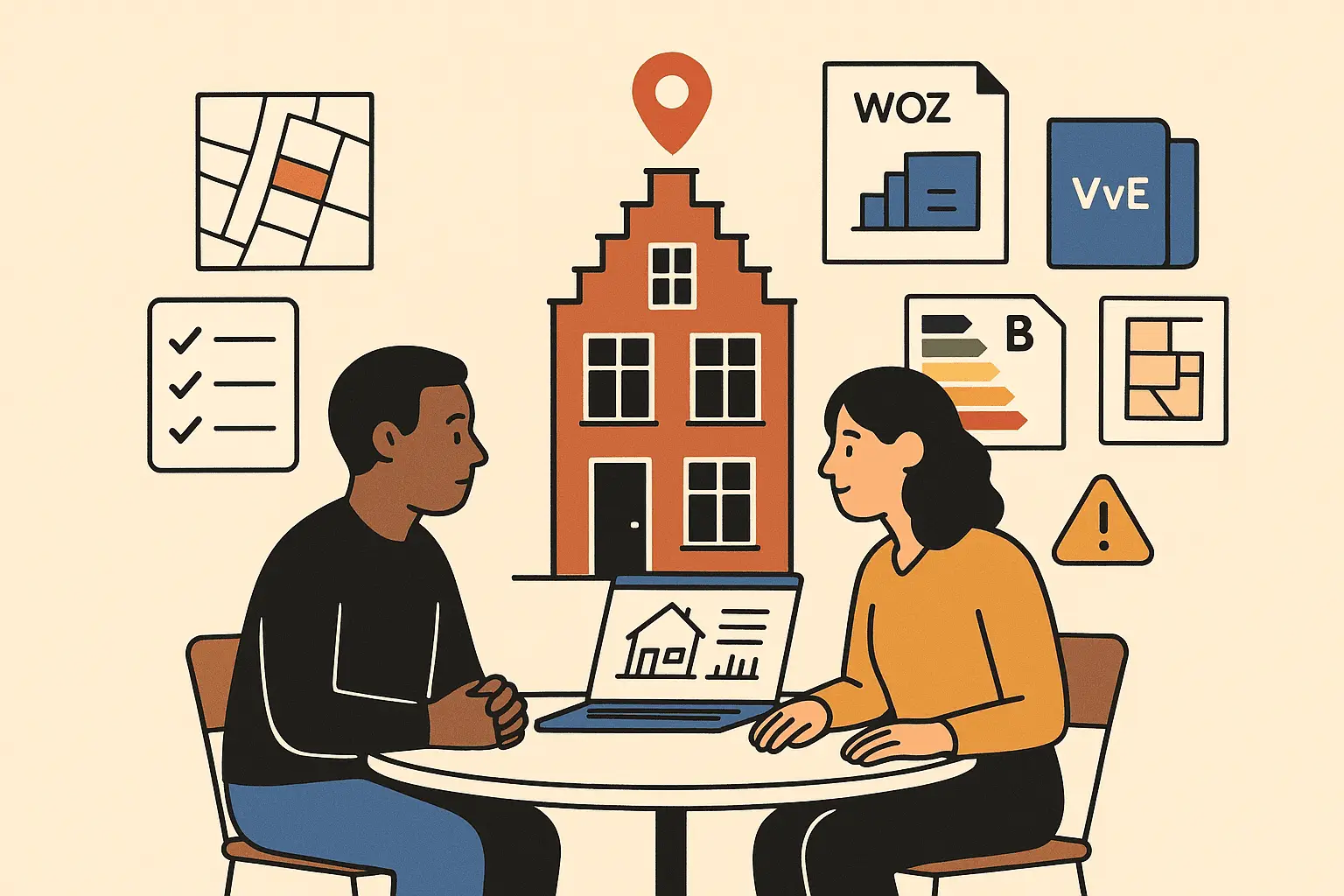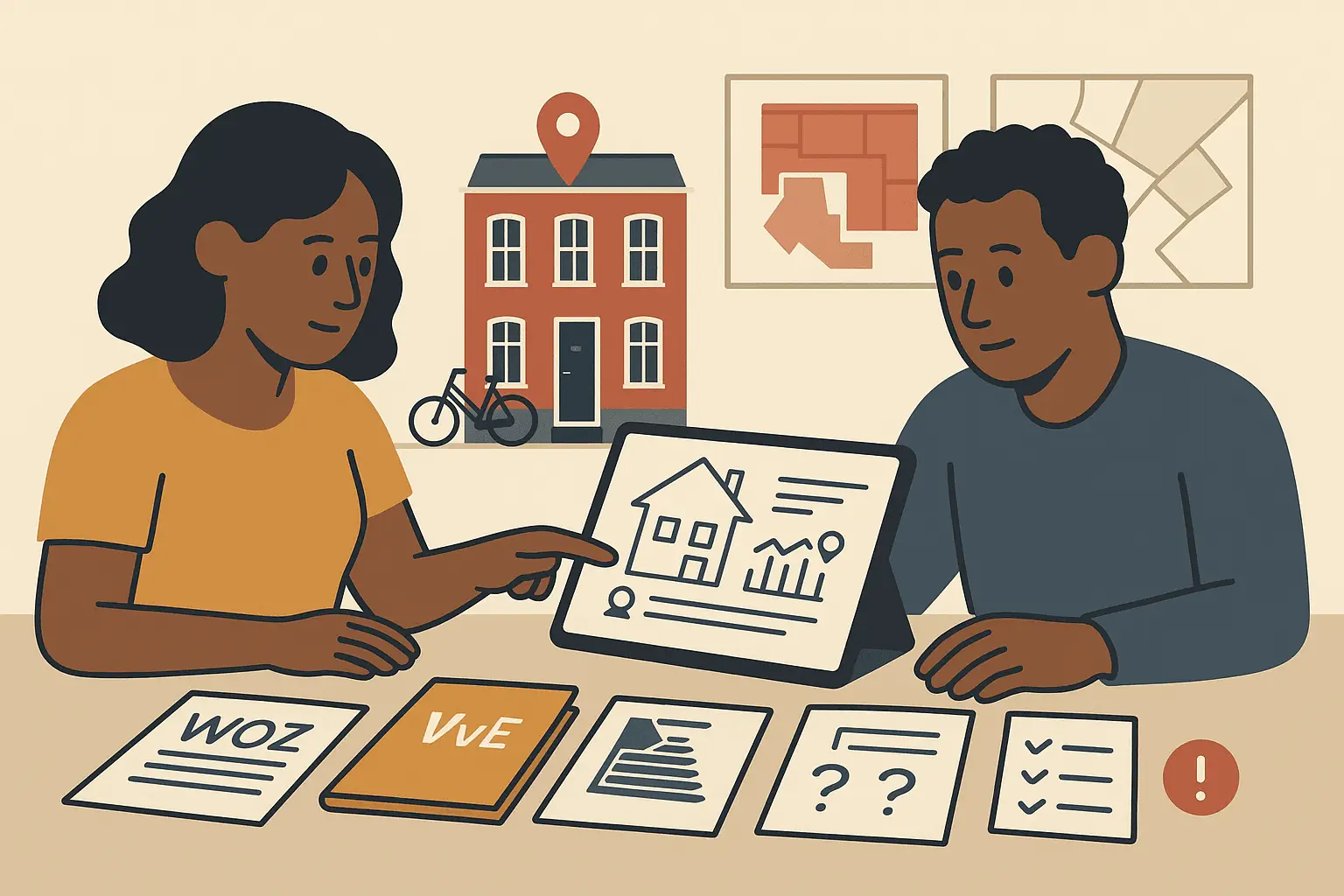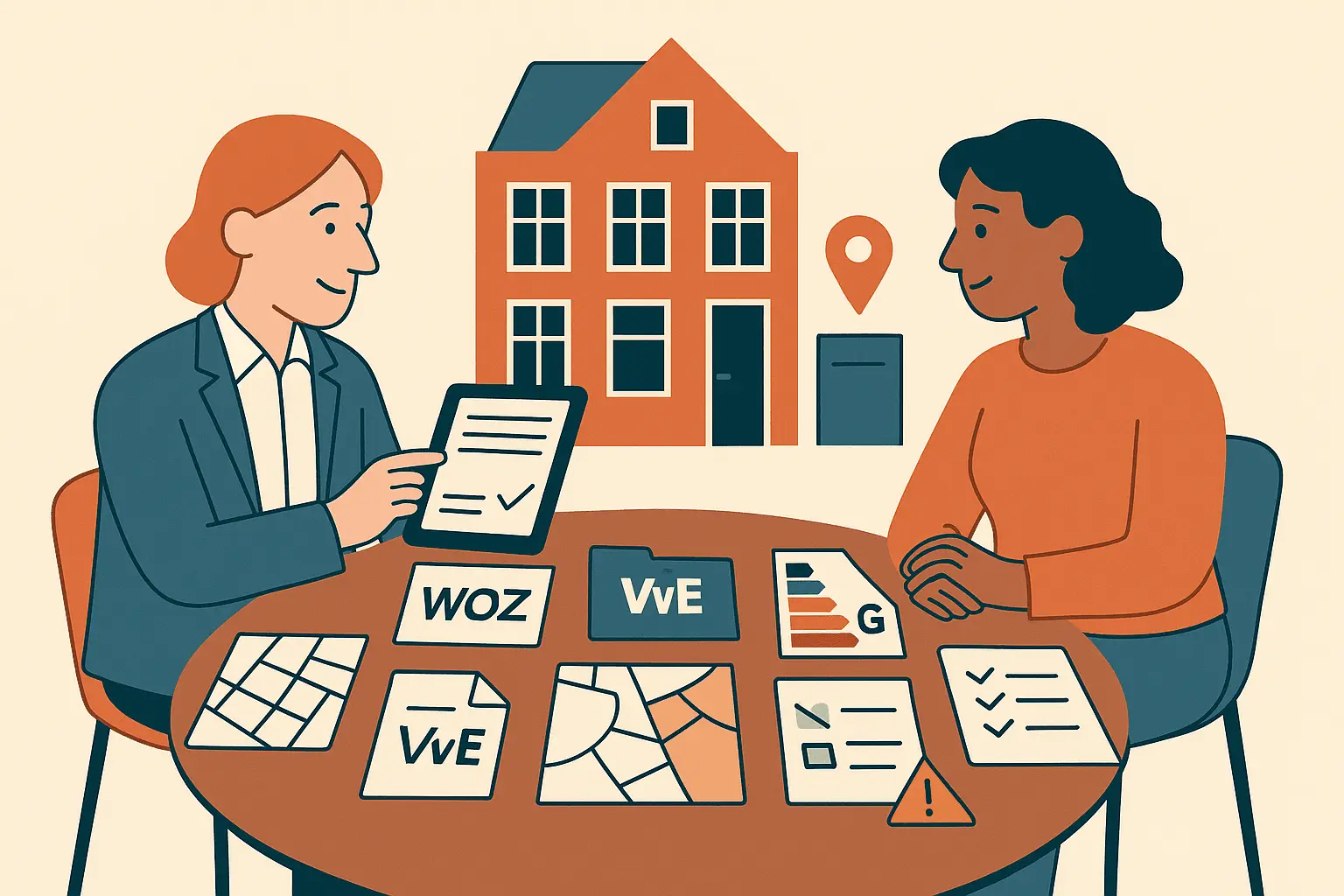
Erfpacht explained in plain English
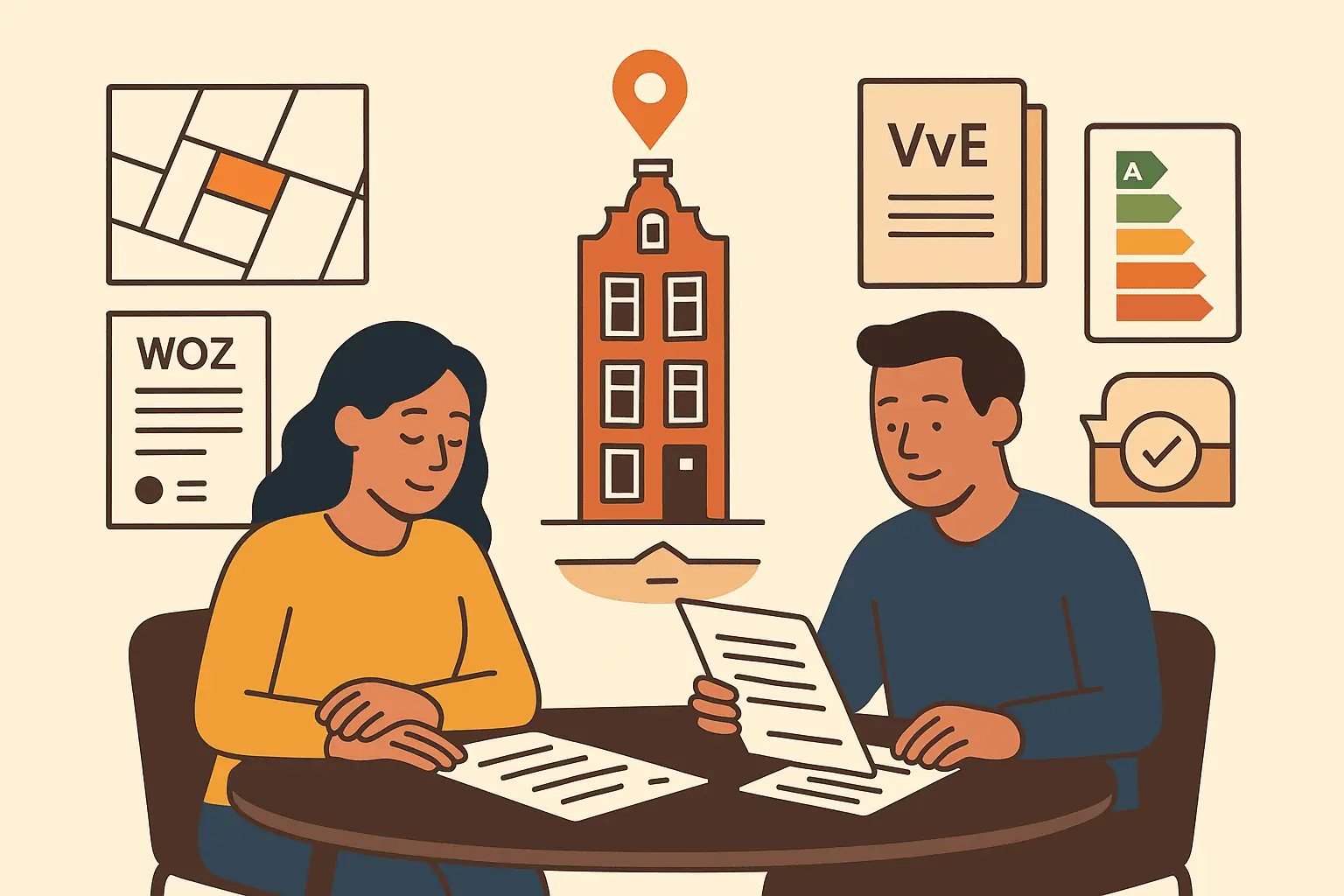
You have found a Dutch home and the listing says erfpacht, leasehold, or canon afgekocht. That one word can affect your monthly costs, mortgage discussion, resale expectations, and the maximum bid you feel comfortable making.
Erfpacht is not automatically a problem. But it is something you should understand before you bid, not after your offer is accepted.
Pre-bid check: Huisscan helps you check a Dutch property before you bid. Enter one address to create a clear pre-bid report with available property data, risk signals, document analysis, and practical buyer questions — including questions about erfpacht.
What erfpacht means when buying a house in the Netherlands
In plain English, erfpacht is a long-term right to use land that belongs to someone else. It is often translated as leasehold, ground lease, or ground rent.
With full ownership, often called eigen grond in Dutch listings, you buy the home and the land. With erfpacht, you buy a registered property right linked to the land, under specific conditions.
The landowner may be:
- a municipality, such as a city council;
- a private landowner;
- an institution, foundation, or housing-related organisation.
The person using the land under erfpacht is called the erfpachter. The landowner is sometimes called the bloot eigenaar, meaning the owner of the underlying land.
In daily language, people often say: “you buy the house, but not the land.” That is useful as a shortcut, but the legal reality depends on the notarial deeds and leasehold conditions. Always check the documents.
Why erfpacht matters before you bid
When you are buying a house with erfpacht, the asking price is only part of the picture. The leasehold conditions can influence your real cost and risk profile.
Before bidding, erfpacht matters because it may affect:
Your monthly or annual costs
You may need to pay a recurring ground rent, called canon.Your future costs
The canon may be indexed, reviewed, or recalculated after a certain period.Your maximum bid
A property on erfpacht is not always priced the same as a comparable home on eigen grond.Your mortgage options
Mortgage lenders may want to review the leasehold terms, especially with private or unusual erfpacht structures.Resale clarity
A future buyer will ask the same questions you are asking now.Your obligations as owner
The leasehold deed may include rules about use, transfer, renovation, or changes to the property.
A good pre-bid decision is not “erfpacht is good” or “erfpacht is bad”. The better question is:
Do I understand the costs, conditions, and future changes well enough to price this property correctly?
Dutch erfpacht terms in plain English
You will often see Dutch terms in listings, brochures, Kadaster information, and notarial documents. These are the main ones to recognise.
| Dutch term | Plain English meaning | What to check |
|---|---|---|
| Erfpacht | Leasehold or ground lease | What right are you buying, and under which conditions? |
| Eigen grond | Freehold land / owned land | Still check Kadaster and documents for other rights or restrictions. |
| Canon | Ground rent | How much is payable now, and how can it change? |
| Canon afgekocht | Ground rent bought off or prepaid | Until when? For a fixed period or permanently? |
| Afkoop | Buy-off / redemption of canon | What exactly has been paid off, and what remains? |
| Tijdvak | Leasehold period | When does the current period end? |
| Herziening | Review or recalculation | When can the canon or conditions be reviewed? |
| Voortdurende erfpacht | Continuing leasehold with periods | Check the current period and next review moment. |
| Eeuwigdurende erfpacht | Perpetual leasehold | Check whether canon is still payable or bought off. |
| Tijdelijke erfpacht | Temporary leasehold | Check what happens at the end of the term. |
| Algemene bepalingen | General leasehold conditions | Read which standard rules apply. |
| Bijzondere bepalingen | Special conditions | These may be specific to this property. |
| Akte van vestiging | Deed establishing the leasehold | Key legal source for the erfpacht right. |
| Akte van levering | Transfer deed | Shows what is transferred to the buyer. |
| VvE | Owners’ association for apartments | For apartments, check how erfpacht is handled within the building. |
Do not rely only on a short listing phrase such as “erfpacht afgekocht” or “leasehold bought off”. You need to know what has been bought off, until when, and under which conditions.
Pre-bid ownership signals: what to check in the documents
A leasehold Netherlands property can look simple online, but the important details are usually in the documents. These are the key pre-bid ownership signals to check.
1. The listing and sales brochure
Start with the listing text. Look for phrases such as:
- eigen grond
- erfpacht
- gemeentelijke erfpacht
- particuliere erfpacht
- canon afgekocht tot
- eeuwigdurend afgekocht
- voortdurende erfpacht
Treat the listing as a signal, not as proof. If the brochure says the canon is bought off, ask for the document that confirms it.
2. Kadaster ownership check
A Kadaster ownership check can help you see registered ownership information and whether rights such as erfpacht are linked to the property.
Kadaster information is useful because erfpacht is normally registered. But the registration alone may not explain all financial and practical details. For that, you need the underlying deeds and conditions.
3. Notarial deeds and leasehold conditions
Ask for the relevant documents, such as:
- the deed establishing the erfpacht;
- the latest transfer deed;
- general leasehold conditions;
- special conditions for the property;
- proof of canon payments or buy-off;
- any municipal or landowner correspondence about conversion or revision.
These documents answer the real questions: who owns the land, what has been agreed, what is paid, and what can change.
4. Municipality or landowner information
If the landowner is a municipality, check the municipality’s erfpacht portal or desk. If the landowner is private, ask the selling agent and notary how the current status is confirmed.
You want to verify:
- the current canon;
- whether the canon is paid yearly or bought off;
- the date or period until which it is bought off;
- the next review or recalculation moment;
- any available option to convert, renew, or change the leasehold terms;
- whether there are unpaid amounts or unresolved issues.
5. Apartment and VvE documents
For apartments, erfpacht can sit underneath the whole building or be allocated to apartment rights. Check the splitsingsakte and VvE documents.
Ask whether the canon is paid individually, through the VvE, or allocated in another way. Also check whether future erfpacht costs could affect the service charges or owner contributions.
Practical pre-bid checklist for erfpacht
Use this checklist before deciding your maximum bid.
- Does the listing say eigen grond or erfpacht?
- Who owns the land: municipality, private party, or another owner?
- What exact right is being sold?
- What is the current canon?
- Is the canon paid periodically, bought off, or partly bought off?
- If bought off, until when?
- What happens after the current period ends?
- When is the next review, indexation, or recalculation?
- Which general and special leasehold conditions apply?
- Are there restrictions on use, renovation, rental, or transfer?
- Are there unpaid canon amounts or administrative issues?
- If it is an apartment, how is erfpacht handled within the VvE?
- Has your mortgage advisor checked whether the erfpacht terms are acceptable for financing?
- Does your bid reflect the known and possible future costs?
- Do you have enough information to bid calmly, or should you ask more questions first?
A simple example:
If a listing says “canon afgekocht tot 2050”, that may be fine. But before bidding, you still need to ask: what happens after 2050, how is the new canon calculated, and is the current asking price taking that future cost into account?
What Huisscan can help you check
Huisscan is designed for the pre-bid stage: the moment when you need clarity quickly, but before you commit to an offer.
With one Dutch address, Huisscan can help turn available information into a clear pre-bid report, including:
- available property data linked to the address;
- ownership and leasehold-related signals where available;
- document analysis of uploaded brochures, seller documents, VvE documents, or leasehold information;
- missing-document signals;
- practical buyer questions to send to the selling agent, notary, mortgage advisor, or buyer agent;
- a calmer overview of what you know, what is unclear, and what should be checked next.
For erfpacht, Huisscan can help you spot questions such as:
- Does this property appear to be on erfpacht or eigen grond?
- Is the canon mentioned clearly?
- Is the canon bought off, and until when?
- Are the leasehold conditions included in the document set?
- Is there a future review or recalculation moment?
- Should the buyer ask the mortgage advisor about lender acceptance?
Huisscan does not replace a notary, mortgage advisor, appraiser, building inspector, tax advisor, or lawyer. It helps you prepare better questions before you bid.
Where to verify erfpacht information
Use multiple sources. One line in a listing is not enough.
Helpful sources include:
- Kadaster for registered property, ownership, and deed information.
- Notaris.nl for general explanations of Dutch notarial and property terms.
- The relevant municipality’s erfpacht page or erfpacht desk if the landowner is municipal.
- The selling agent’s document set, including the brochure, ownership information, and seller questionnaire.
- The notary, who can explain the transfer documents and registered rights.
- Your mortgage advisor or lender, who can assess financing implications.
- The VvE documents for apartments, including the split deed and relevant financial documents.
If the erfpacht is private, unusual, temporary, or unclear, do not guess. Ask for professional review before relying on the property in your bidding strategy.
FAQ
Is erfpacht the same as leasehold in the Netherlands?
Erfpacht is often translated as leasehold or ground lease, but the Dutch system has its own legal documents and terminology. If you know leasehold from another country, do not assume it works the same way in the Netherlands. Check the Dutch deeds, conditions, and payment structure.
Is buying a house with erfpacht a bad idea?
Not automatically. Many buyers purchase homes with erfpacht. The key is whether the costs and conditions are clear. A property with transparent, acceptable erfpacht terms may still be a good fit. A property with unclear future costs or missing documents needs more caution before bidding.
What does “canon afgekocht” mean?
It means the ground rent has been bought off or prepaid. But you must check the details. It may be bought off for a limited period, or under specific conditions. Even if no periodic canon is currently payable, the leasehold conditions can still apply.
How do I check if a Dutch property has erfpacht?
Start with the listing, then check the sales documents and Kadaster information. Ask for the relevant notarial deeds and leasehold conditions. If the landowner is a municipality, check the municipality’s erfpacht information as well. Huisscan can help organise these pre-bid ownership signals into clearer questions.
Can I get a mortgage for a property with erfpacht?
Often yes, but it depends on the leasehold conditions and the lender’s criteria. Private erfpacht, short remaining terms, unclear canon reviews, or unusual conditions may require extra review. Ask your mortgage advisor before making a bid that depends on financing.
What should I ask the estate agent before bidding?
Ask for the leasehold deed, general and special conditions, current canon amount, proof of any buy-off, the next review moment, and confirmation of who owns the land. If it is an apartment, also ask how erfpacht is handled within the VvE.
Erfpacht should make your bid more informed, not more emotional. If the documents are clear, you can decide whether the property still fits your budget and risk comfort. If the documents are missing or unclear, ask before you bid.
Check the address before you bid.