
Erfpacht explained in plain English
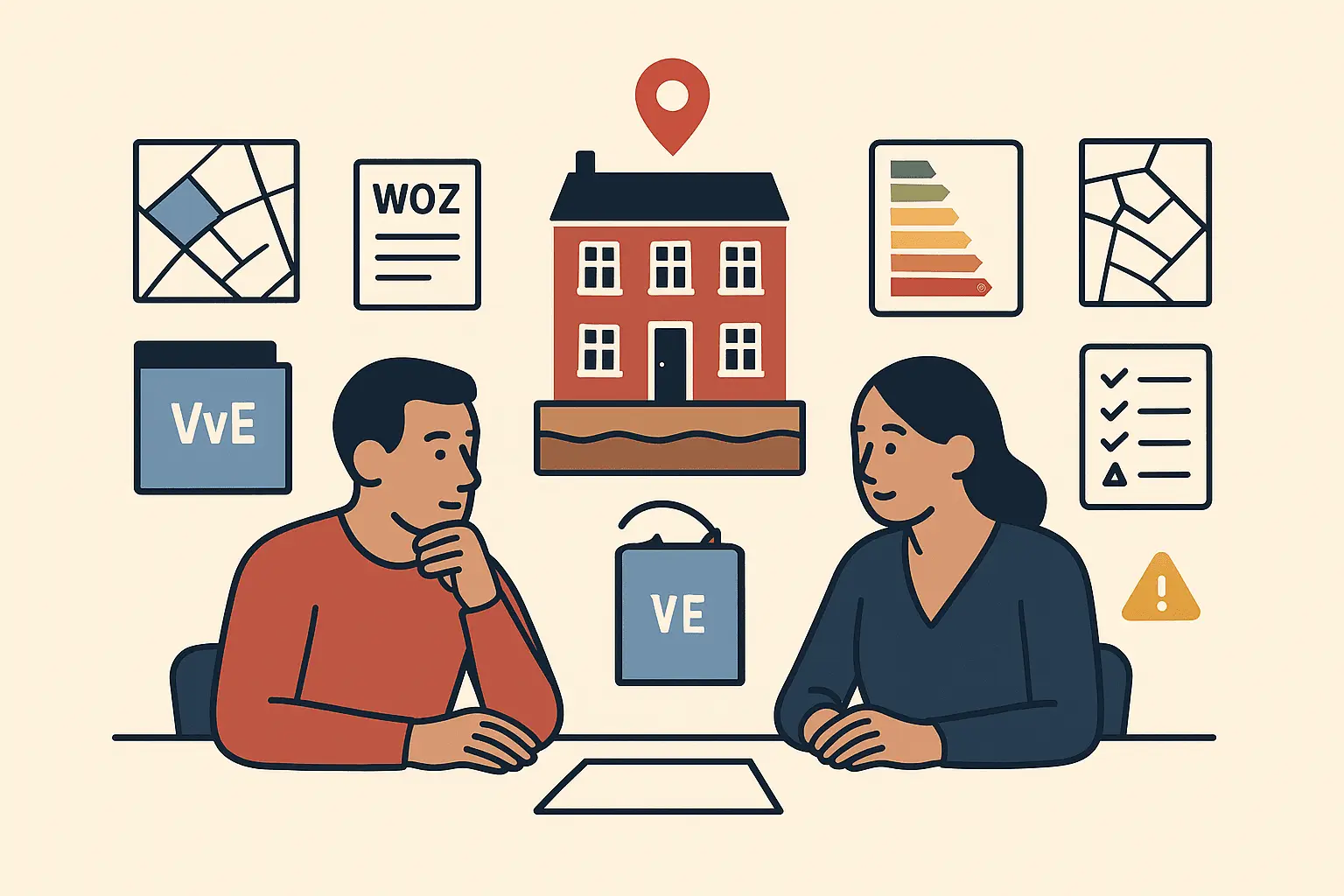
If you are buying a house in the Netherlands, you may see the word erfpacht in a listing, sales brochure, Kadaster extract, or deed. For many expats and first-time buyers, it is one of the most confusing Dutch property terms.
The key point is simple: with erfpacht, you may be buying the home or apartment right, but not the land outright. The land is owned by someone else, often a municipality or private landowner, and you have a registered right to use it under certain conditions. That can affect your monthly costs, mortgage options, resale value, and bidding strategy.
This practical guide to erfpacht Netherlands house buying explains what to check before you make an offer.
Planning to bid? Huisscan can help you check one Dutch address before you bid, using available Dutch property data, ownership and leasehold signals, uploaded documents, risk flags, and clear buyer questions.
What erfpacht means when buying a Dutch home
In plain English, erfpacht means leasehold or ground lease.
Instead of owning the land in full ownership, you hold a long-term property right to use the land. The landowner is called the grondeigenaar or bloot eigenaar. The buyer is the erfpachter.
In practice, an erfpacht property can often be sold, financed, and lived in much like other homes. But there are extra conditions to understand.
A listing may say:
- Eigen grond — freehold land; no erfpacht.
- Erfpacht — leasehold applies.
- Canon — ground rent may be payable.
- Canon afgekocht tot [date] — the ground rent has been prepaid until a certain date.
- Eeuwigdurend afgekocht — often means the ground rent has been bought off perpetually, but you still need to check the deed and conditions.
Erfpacht is not automatically a dealbreaker. But it is a property risk Netherlands buyers should understand before bidding, not after signing.
Dutch erfpacht terms you need to recognise
| Dutch term | Plain English meaning | What to check |
|---|---|---|
| Erfpacht | Leasehold / ground lease | Who owns the land, what conditions apply, and whether ground rent is due |
| Eigen grond | Freehold land | Check if the listing and Kadaster data agree |
| Canon | Ground rent | Current amount, payment frequency, indexation, and future changes |
| Afgekocht | Ground rent bought off / prepaid | Until what date, and what happens after that date |
| Eeuwigdurende erfpacht | Perpetual leasehold | Whether the canon and conditions are fixed or bought off |
| Voortdurende erfpacht | Continuing leasehold, often in periods | When the current period ends and whether the canon can be revised |
| Tijdelijke erfpacht | Temporary leasehold | Whether there is an end date and what that means for financing and resale |
| Akte van vestiging erfpacht | Deed establishing the leasehold | The core legal document setting out the leasehold right |
| Algemene bepalingen / voorwaarden | General leasehold conditions | Rules about use, transfer, changes, and payments |
| Splitsingsakte | Deed of division for apartments | Whether the apartment right is on leasehold land |
| VvE | Owners’ association | Whether leasehold costs or documents are handled through the VvE |
Do not rely only on the listing text. Listings are useful clues, but the documents matter.
Why erfpacht matters before you bid
Erfpacht can affect your pre-bid decision in several ways.
1. Your real monthly cost
If a yearly or monthly canon is due, it adds to your housing cost. Even if the canon is currently bought off, you need to know whether that is temporary or perpetual.
A home with a lower asking price may not be cheaper if significant ground rent applies later.
2. Your mortgage options
Many Dutch lenders finance homes on erfpacht, especially if the conditions are clear and acceptable. But some forms of erfpacht, especially private or temporary leasehold, may need extra review.
Before making an unconditional offer, ask your mortgage advisor whether the lender is likely to accept the specific erfpacht structure.
3. Your future resale position
A future buyer will ask the same questions you are asking now:
- Is the canon paid off?
- Until when?
- Can the canon increase?
- Are the documents clear?
- Will lenders accept it?
Unclear erfpacht terms can make a property harder to compare with similar homes on freehold land.
4. Restrictions and permissions
The leasehold conditions may include rules about use, renovation, transfer, rental, or changes to the property. These are not always visible in the sales brochure.
If you plan to renovate, rent out, split, extend, or use the property differently, check the conditions before bidding.
5. Negotiation and offer conditions
Erfpacht can influence your bid price or your offer conditions. For example, you may decide to:
- Bid lower to reflect future canon risk.
- Ask for all erfpacht documents before making an offer.
- Include a financing condition that allows your lender to review the erfpacht.
- Pause or walk away if the documents are missing or unclear.
Ask your buyer agent, notary, or legal professional how to phrase any conditions properly.
Where to check erfpacht information
Use more than one source. If the sources conflict, do not guess.
Sales listing and brochure
Look for terms such as eigen grond, erfpacht, canon, afgekocht, and gemeentelijke erfpacht.
Treat the listing as a starting point, not final proof.
Kadaster information
A Kadaster ownership extract can show registered rights and ownership information. It may indicate whether the property is full ownership, leasehold, or subject to other rights.
For apartments, the structure can be less obvious, so also check the apartment and VvE documents.
Deeds and leasehold documents
Ask for:
- The leveringsakte or previous transfer deed.
- The akte van vestiging erfpacht.
- The applicable algemene bepalingen or leasehold conditions.
- Any statement showing the current canon or buy-off status.
- Any conversion, renewal, or offer documents from the municipality or landowner.
VvE documents for apartments
For apartments, check whether the building is on leasehold land and whether costs are paid directly by owners or through the VvE.
Review the VvE documents, budget, minutes, and service charge explanation where relevant.
Municipality or landowner information
If the landowner is a municipality, there may be a municipal leasehold portal or statement. If the landowner is private, ask for clear documentation and check lender acceptance early.
Professional review
A notary, mortgage advisor, buyer agent, or legal professional can help interpret the documents. Huisscan can help you prepare better questions, but it does not replace professional advice.
Practical pre-bid checklist for erfpacht
Before you bid, check:
- Does the listing say eigen grond or erfpacht?
- Does the Kadaster information match the listing?
- Who owns the land: municipality, private party, foundation, church, or another owner?
- Is a canon currently payable?
- If the canon is bought off, until what date?
- What happens after the buy-off period ends?
- Is the erfpacht perpetual, continuing, or temporary?
- Are there upcoming review, renewal, or conversion moments?
- Are there restrictions on use, renovation, rental, or transfer?
- Will your intended mortgage lender accept this erfpacht structure?
- For apartments, do the VvE documents mention erfpacht costs or obligations?
- Are all relevant deeds and leasehold conditions available before bidding?
- Does the erfpacht change your bid price, conditions, or decision to continue?
A useful pre-bid property check Netherlands buyers can make is this: if you cannot explain the erfpacht in one or two clear sentences, you probably need more documents before making a strong offer.
Questions to ask before making an offer
Ask the selling agent:
- Is the property on eigen grond or erfpacht?
- Can you send the leasehold deed and applicable conditions?
- Is the canon currently payable, indexed, or bought off?
- If bought off, until what date?
- Are there any known future changes, renewal moments, or conversion options?
- For an apartment, is the canon paid individually or through the VvE?
Ask your mortgage advisor:
- Will lenders accept this specific type of erfpacht?
- Will the canon affect my borrowing capacity?
- Are extra documents needed before the lender can approve the mortgage?
- Is private erfpacht an issue for the lenders we are considering?
Ask the notary or legal professional:
- Do the listing, Kadaster data, and deeds match?
- Are there restrictions or consent requirements?
- Are there risks in the leasehold conditions that should be addressed before signing?
- Should any specific clause or condition be included in the offer or purchase agreement?
What Huisscan can help you check
Huisscan is designed around one practical promise: Check a Dutch property before you bid.
For erfpacht, a Huisscan pre-bid report can help turn one Dutch address and uploaded documents into a clearer view of what to ask next.
Huisscan can help you:
- Check available Dutch property data for ownership and leasehold signals.
- Review listing language for terms such as erfpacht, canon, afgekocht, and eigen grond.
- Analyse uploaded documents such as sales brochures, Kadaster extracts, VvE documents, deeds, and leasehold conditions.
- Highlight missing or conflicting information.
- Summarise key points such as landowner, canon, buy-off period, dates, and document references where available.
- Flag pre-bid risk signals, such as unclear canon terms, private leasehold, upcoming review moments, or missing documents.
- Generate practical buyer questions for the selling agent, mortgage advisor, notary, or buyer agent.
Huisscan supports decision-making before you bid. It is not a replacement for a notary, mortgage advisor, appraiser, building inspector, lawyer, or tax advisor.
FAQ
Is erfpacht the same as renting land?
Not exactly. Erfpacht is not an ordinary rental contract. It is a registered property right connected to the land. You may be able to sell and mortgage the right, but the land itself remains owned by the ground owner.
Is buying a house with erfpacht in the Netherlands a bad idea?
Not automatically. Many buyers purchase homes with erfpacht. The important question is whether the conditions, canon, buy-off period, and mortgage acceptance are clear before you bid.
What does “canon afgekocht” mean?
It usually means the ground rent has been prepaid or bought off. Always check whether it is bought off until a specific date or perpetually. “Afgekocht” without the date and conditions is not enough information.
Can I get a mortgage for a Dutch property with erfpacht?
Often yes, but it depends on the leasehold terms and the lender’s requirements. Private, temporary, or unclear erfpacht may need extra review. Ask your mortgage advisor before making an unconditional offer.
Where can I check if a property has erfpacht?
Start with the listing and sales brochure, then check Kadaster information, the transfer deed, the leasehold deed, applicable conditions, VvE documents for apartments, and any municipality or landowner statements.
What if the seller cannot provide the erfpacht documents?
Be careful. You can ask again, adjust your bid, include a suitable condition, wait for documents, or decide not to proceed. Discuss the best approach with your buyer agent, notary, or mortgage advisor.
Check the address before you bid.