Deed of division explained for apartment buyers
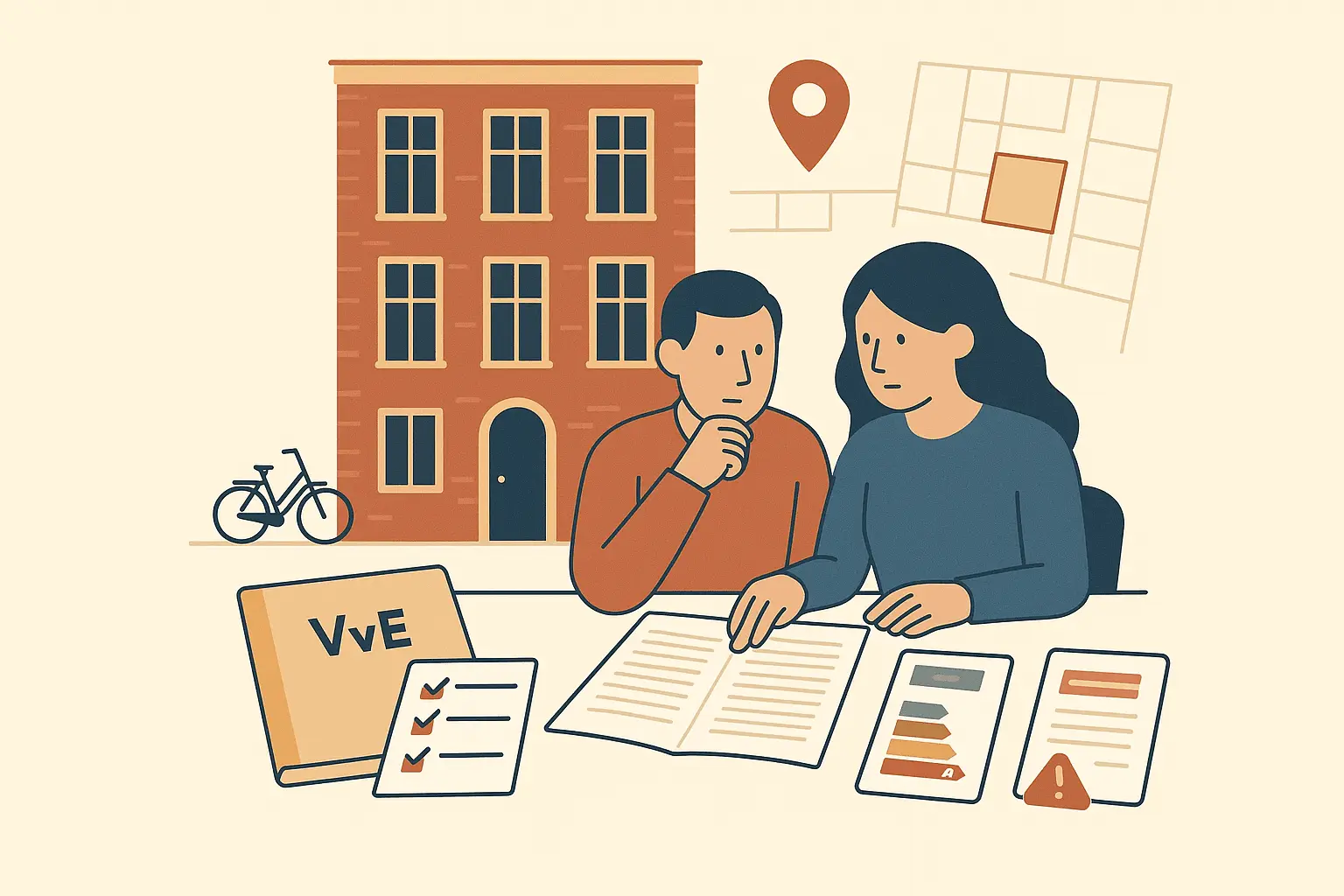
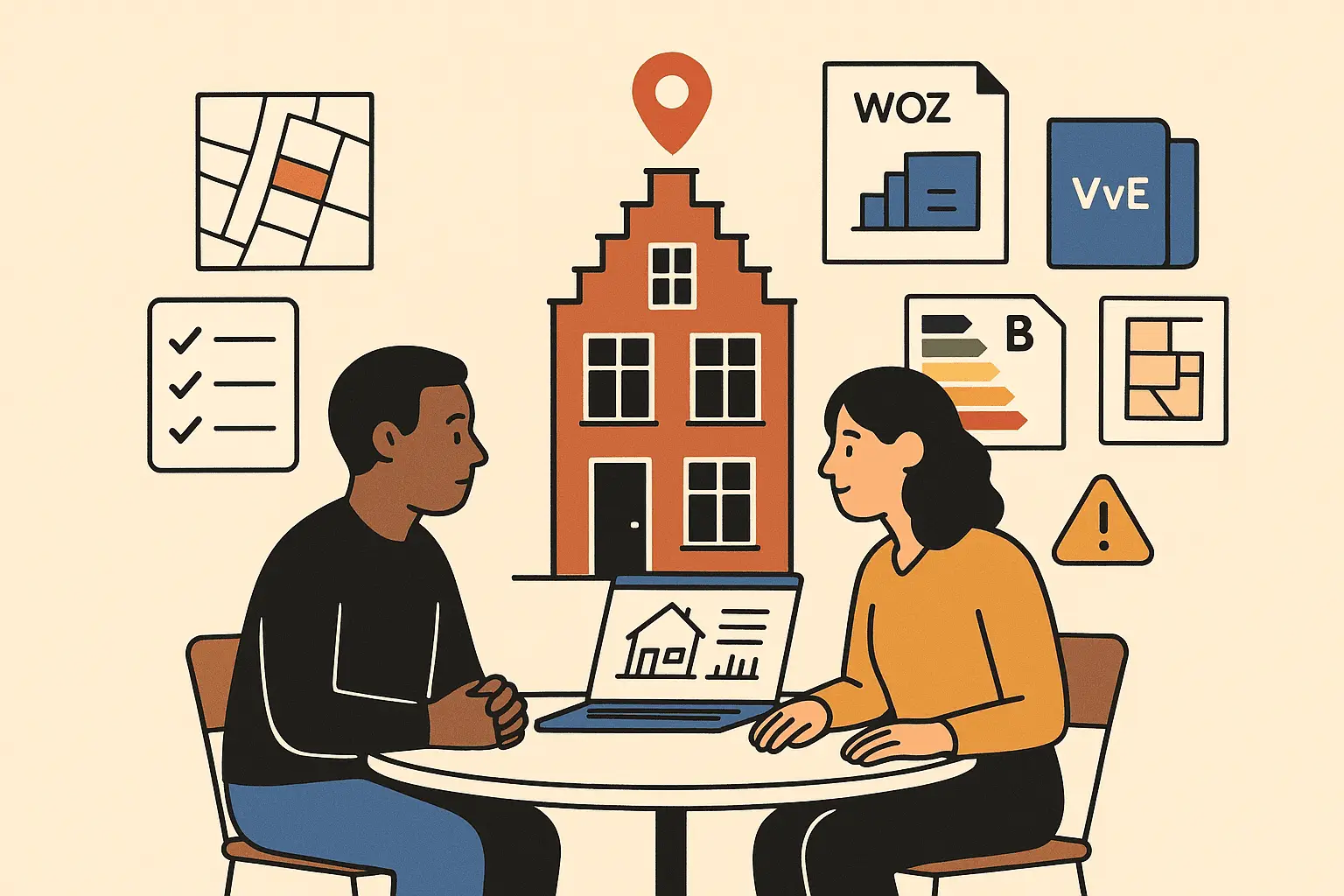
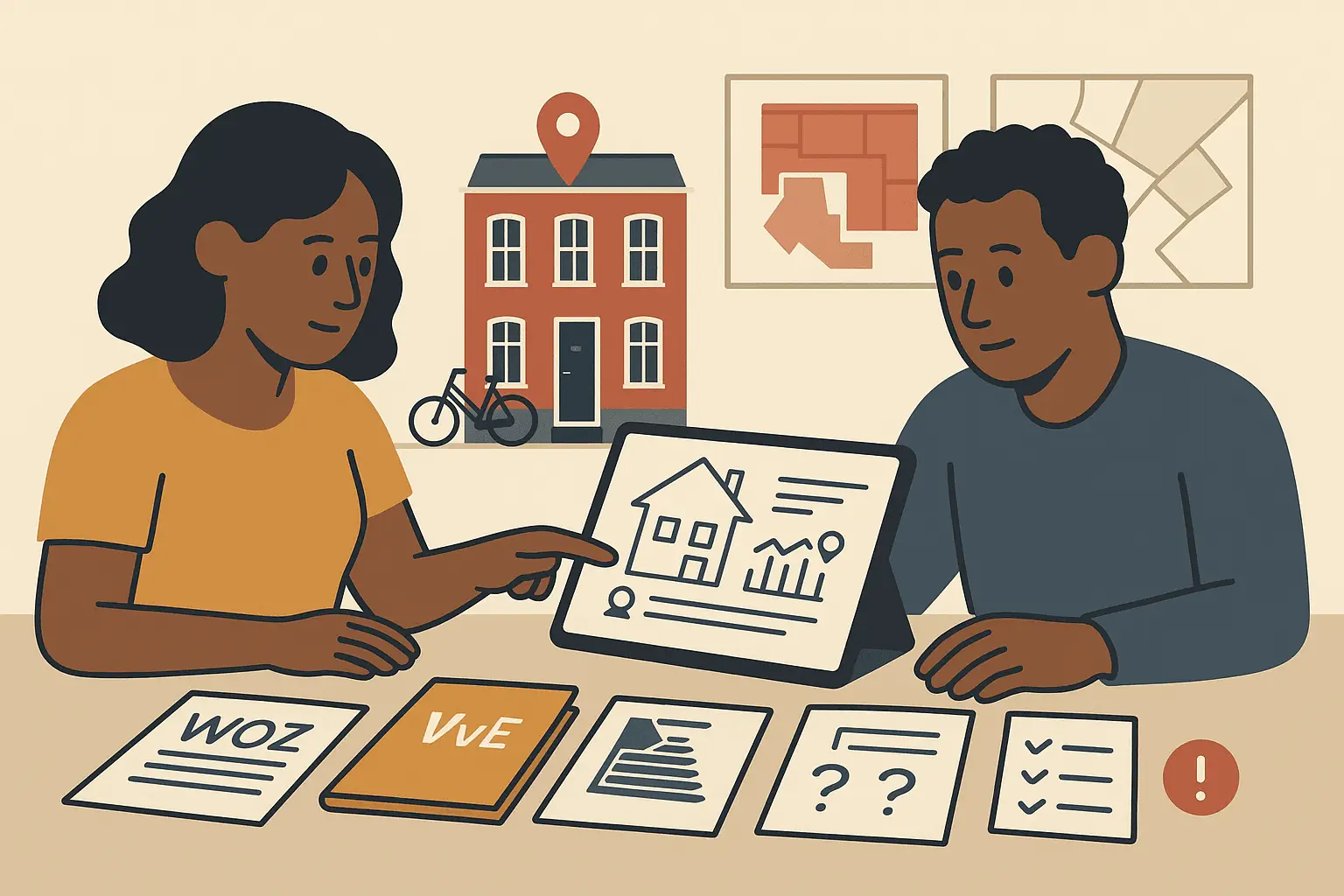
Buying an apartment in the Netherlands means buying more than the rooms you see during a viewing. You buy an appartementsrecht: an apartment right in a building, with private use of one part and shared ownership of common parts.
The deed of division tells you what that actually means. In Dutch, this document is usually called the splitsingsakte. For apartment buyers and expats, it can affect what you own, what you may use, what you pay to the VvE, and whether the listing matches the legal documents.
Looking at a specific apartment? Use Huisscan to check a Dutch property before bidding. Start with one address and upload the splitsingsakte, splitsingstekening, and VvE documents to get a clearer pre-bid view of available property data, risk signals, document points, and buyer questions.
Deed of division apartment Netherlands: what it means
A deed of division apartment Netherlands buyers should know is the Dutch splitsingsakte. It is a notarial deed, registered with the Kadaster, that splits a building and land into separate apartment rights.
For each apartment right, the deed usually explains:
- which part is for private use, the privégedeelte;
- which parts are shared, the gemeenschappelijke gedeelten;
- the apartment index number, often shown as A-1, A-2, or similar;
- each owner’s share in costs and voting, often called the breukdeel;
- the rules for the owners’ association, the VvE;
- any applicable modelreglement or additional division regulations;
- the official division drawing, the splitsingstekening.
For expats, the key point is this: you are usually not buying a fully separate “freehold unit” in the way some other countries describe apartments. You are buying an apartment right within a legally divided building.
That distinction matters before you bid.
Why this document matters before you bid
The listing may say “private roof terrace”, “storage included”, or “suitable for renting out”. The deed of division and division drawing help you check whether those statements are supported by the legal apartment documents.
It can affect your decision in several practical ways:
- What you own or may use: Is the balcony, garden, attic, storage room, or parking space part of your apartment right, shared space, or a separate right?
- What you pay: Your cost share can affect monthly VvE contributions and future maintenance costs.
- What you may do: The deed may restrict business use, short-stay rental, structural changes, or use of common areas.
- What the VvE controls: Windows, roofs, façades, balconies, pipes, and shared installations may fall under VvE responsibility.
- What needs permission: Some renovations require VvE consent, even inside the apartment.
Example: an apartment is marketed with a roof terrace. The division drawing shows the roof as common property, and the deed says changes to the roof need VvE approval. That does not automatically mean the roof terrace is unusable, but it is a question to resolve before you price your bid.
Documents to request for a Dutch apartment
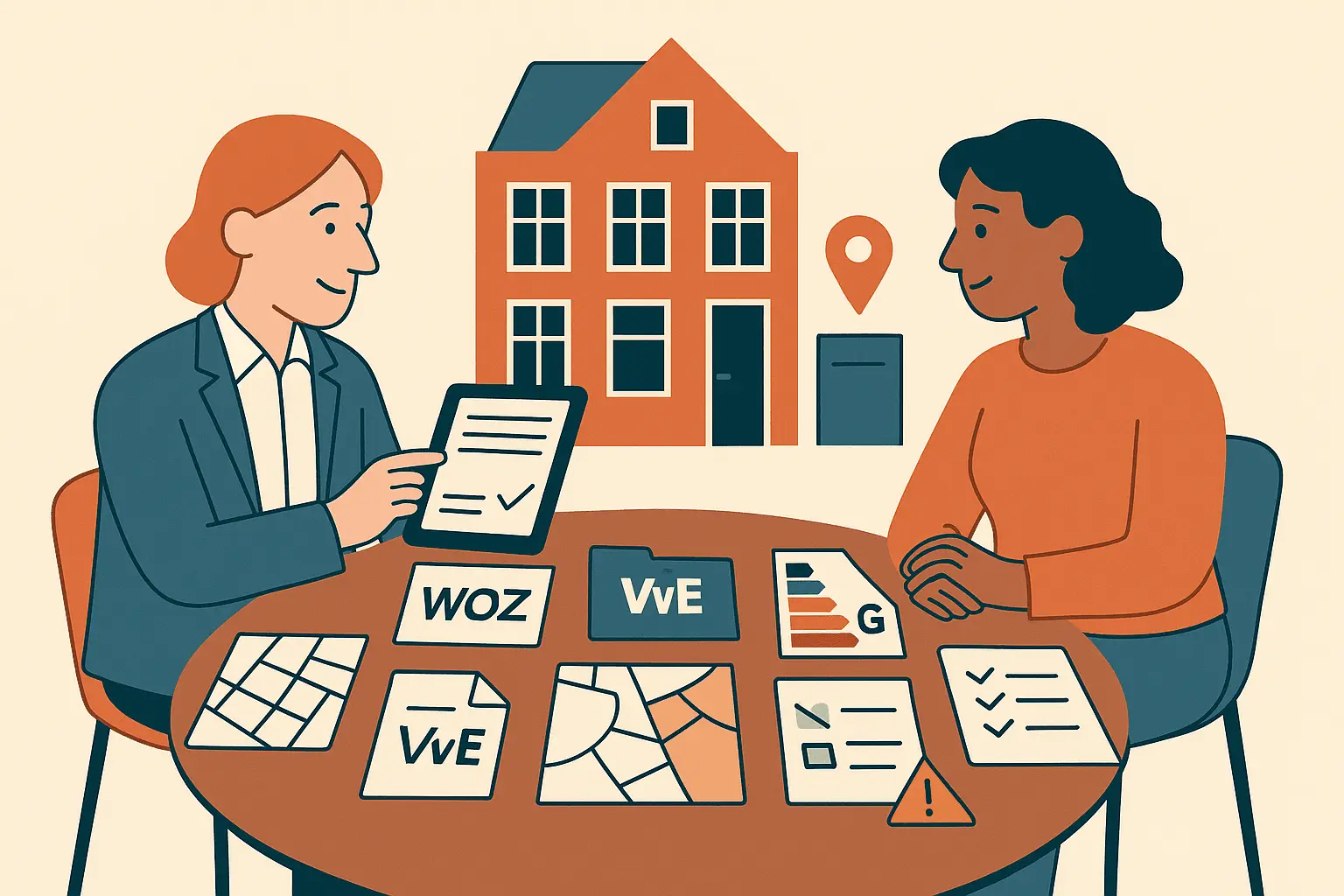
For a solid pre-bid property check Netherlands buyers should not rely on the brochure alone. Ask the selling agent for the apartment documents early.
Useful documents include:
- Splitsingsakte: the deed of division.
- Splitsingstekening: the official division drawing.
- Wijzigingsakte: any later amendment deed.
- Splitsingsreglement or modelreglement: the division regulations, sometimes included in or attached to the deed.
- Huishoudelijk reglement: house rules of the VvE.
- VvE minutes: minutes of recent owners’ meetings, often called notulen ALV.
- Annual accounts and budget: jaarrekening and begroting.
- Service charges: monthly VvE contribution, or servicekosten.
- Reserve and maintenance plan: reserve fund information and the MJOP / meerjarenonderhoudsplan.
- Kadaster information: cadastral ownership and registered apartment rights.
- Leasehold documents: if the property is on erfpacht.
- Seller questionnaire: often used in Dutch transactions to disclose practical property information.
Helpful Dutch property data sources can include the Kadaster, BAG building data, municipal information, VvE documents, and seller-provided files. The deed is only one piece of the puzzle, but for apartments it is a central one.
Key clauses and signals to read carefully
When reviewing the deed of division, focus on practical questions rather than trying to translate every legal phrase.
1. Does the apartment index match the listing?
Check that the address, apartment index, floor, storage, and parking space match the documents. A mismatch is not automatically a deal-breaker, but it should be clarified before bidding.
2. What is private and what is shared?
Look for the difference between:
- privégedeelte: private part;
- gemeenschappelijke gedeelten: common parts;
- exclusive use rights, sometimes granted for gardens, balconies, or roof terraces.
Pay special attention to storage rooms, balconies, gardens, roof terraces, attic spaces, and parking. These are common sources of confusion.
3. What are your cost share and voting rights?
The breukdeel may determine your share of VvE costs and voting rights. Sometimes the cost division is not simply based on floor area. A larger share can matter if major maintenance is planned.
4. What use is allowed?
The deed may state the permitted use, such as residential use, commercial use, storage, or parking. If your plan depends on renting out, short-stay use, a home office, or combining units, check the deed, VvE rules, municipal rules, mortgage conditions, and any leasehold terms.
5. Who maintains what?
Apartment buyers often underestimate this point. The deed and regulations may say who is responsible for:
- windows and window frames;
- balconies;
- roofs and roof terraces;
- façades;
- shared pipes and shafts;
- stairwells, lifts, and entrances;
- foundations and structural parts.
This can influence future costs and renovation options.
6. Are there restrictions on renovation?
If you plan to change the layout, open a wall, add insulation, install underfloor heating, place solar panels, or change windows, check whether VvE permission may be needed. Also check building rules and municipal requirements where relevant.
7. Is there leasehold or another special right?
In some cities, especially Amsterdam, apartments may be on erfpacht leasehold land. Leasehold is not always fully explained in the deed of division, so ask for the relevant leasehold documents and current conditions.
How it can affect your offer
The deed of division can affect price, conditions, or even your decision to walk away. The point is not to panic over every clause. The point is to know what you are bidding on.
| What you find | Possible pre-bid response |
|---|---|
| Listing says “private roof terrace”, but drawing shows common roof | Ask for proof of permission, VvE decision, or legal basis before valuing it as private space |
| Storage or parking is not clearly part of the apartment right | Ask whether it is owned, shared, rented, or separate |
| Cost share seems high compared with the apartment size | Check VvE budget, planned maintenance, and service charges |
| Deed restricts rental or short-stay use | Do not base your bid on rental plans without further checks |
| VvE documents show upcoming major works | Consider the impact on price and future cash needs |
| Apartment index or documents do not match the address | Pause and ask the agent, notary, or buyer adviser to clarify |
| Important apartment documents are missing | Ask for them before bidding or consider making your offer conditional on satisfactory review |
If a clause is unclear, do not try to solve it alone. Use it to ask better questions to the selling agent, VvE manager, purchase agent, notary, mortgage adviser, or another qualified professional.
Practical checklist before bidding
Use this checklist before making an offer on a Dutch apartment:
- Do the address, apartment index, and Kadaster information match the listing?
- Do you have the splitsingsakte and splitsingstekening?
- Are there any amendment deeds, wijzigingsaktes?
- Is the storage room included, separate, shared, or rented?
- Is the parking space included, separate, shared, or rented?
- Are balconies, gardens, or roof terraces private, shared, or exclusive-use areas?
- What is your breukdeel for costs and voting?
- Do the VvE service charges fit with the budget, reserve, and maintenance plan?
- Are there restrictions on rental, short-stay use, business use, or renovation?
- Who maintains windows, roofs, façades, balconies, and shared installations?
- Do VvE minutes mention disputes, overdue maintenance, leaks, foundation issues, or planned works?
- Is there erfpacht or another land-related condition?
- What must be clarified before you decide your bid price and conditions?
What Huisscan can help you check
Huisscan helps buyers turn one Dutch address into a clearer pre-bid report. For apartments, you can also upload documents such as the splitsingsakte, splitsingstekening, VvE minutes, annual accounts, service charge information, and MJOP.
A Huisscan pre-bid report can help you:
- connect available Dutch property data to the specific address;
- identify document gaps before you bid;
- surface relevant terms such as splitsingsakte, breukdeel, VvE, erfpacht, and modelreglement;
- review uploaded apartment documents for practical risk signals;
- compare listing claims with document points where possible;
- prepare specific buyer questions for the agent, VvE, notary, mortgage adviser, or building specialist.
Huisscan does not replace legal, notarial, mortgage, appraisal, or building advice. It helps you check Dutch property before bidding, organise the information, and ask better questions while there is still time to adjust your offer.
FAQ
Is the deed of division the same as the transfer deed?
No. The deed of division, or splitsingsakte, creates and defines the apartment rights in the building. The transfer deed is the notarial deed used to transfer your specific apartment right to you when you buy.
Both matter, but they serve different purposes.
Where can I get the deed of division?
The selling agent should usually be able to provide it with the apartment documents. It may also be available through the Kadaster, often for a fee. If you are unsure whether you have the complete set, ask the agent or notary.
What if the listing conflicts with the deed of division?
Do not assume the listing wins. Ask for clarification and supporting documents. If the difference affects value, use, costs, or renovation plans, consider adjusting your bid, adding a condition, or getting professional review before proceeding.
Does the deed show whether the VvE is financially healthy?
Not fully. The deed explains the legal division, cost shares, and rules. To assess the VvE’s financial position, also review the annual accounts, budget, reserve, MJOP, service charges, and recent meeting minutes.
Can I rent out or renovate the apartment if I own it?
Ownership does not automatically mean every use or renovation is allowed. Check the deed, VvE rules, municipal rules, mortgage conditions, insurance requirements, and any leasehold terms. If your plan is important to the purchase, get it checked before bidding.
Do expats need a translation of the deed?
A translation can help, but it is also important to understand the legal effect of the clauses. For material points, ask a notary, legal adviser, or experienced buyer agent to explain the implications in the context of your purchase.
Check the address before you bid.