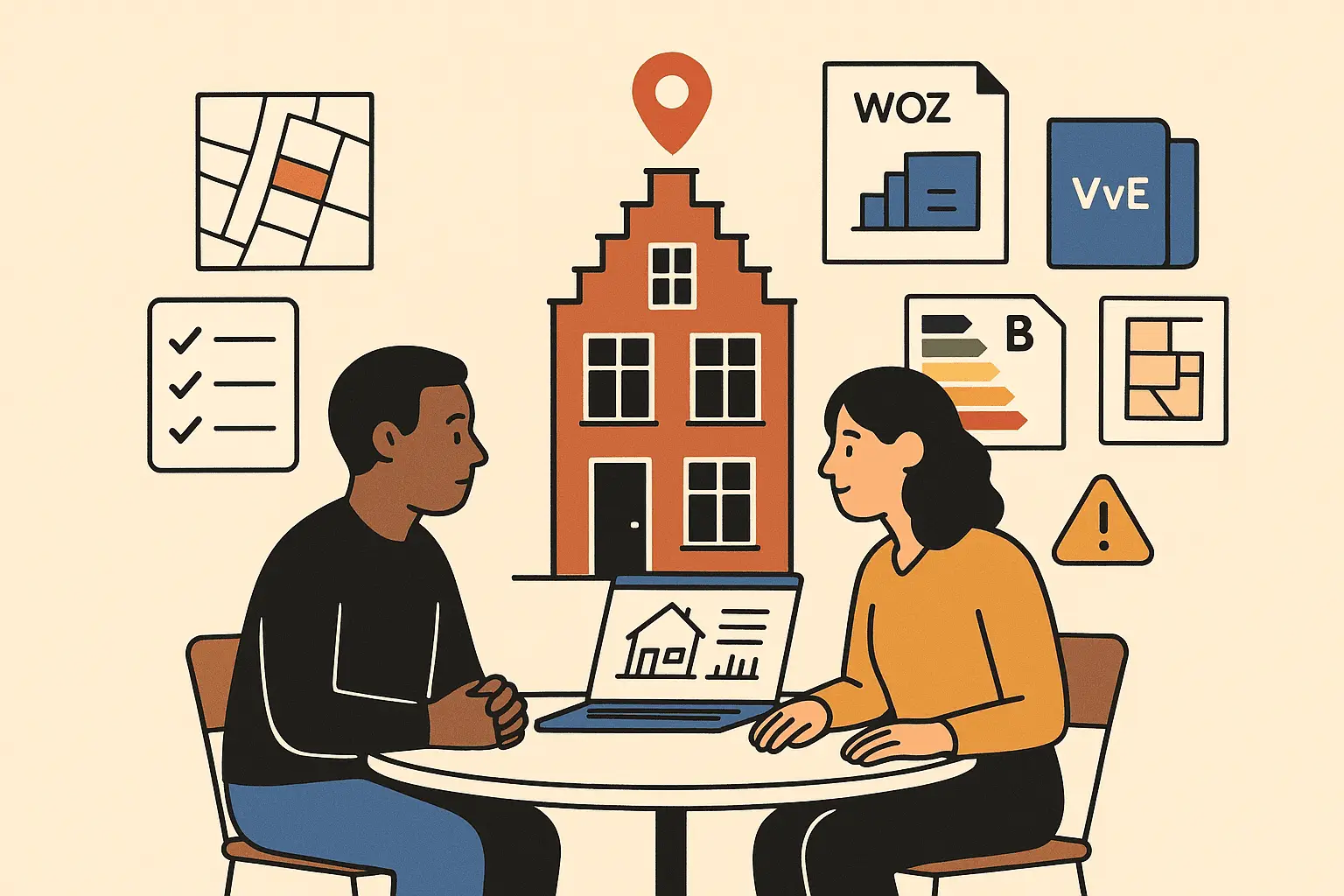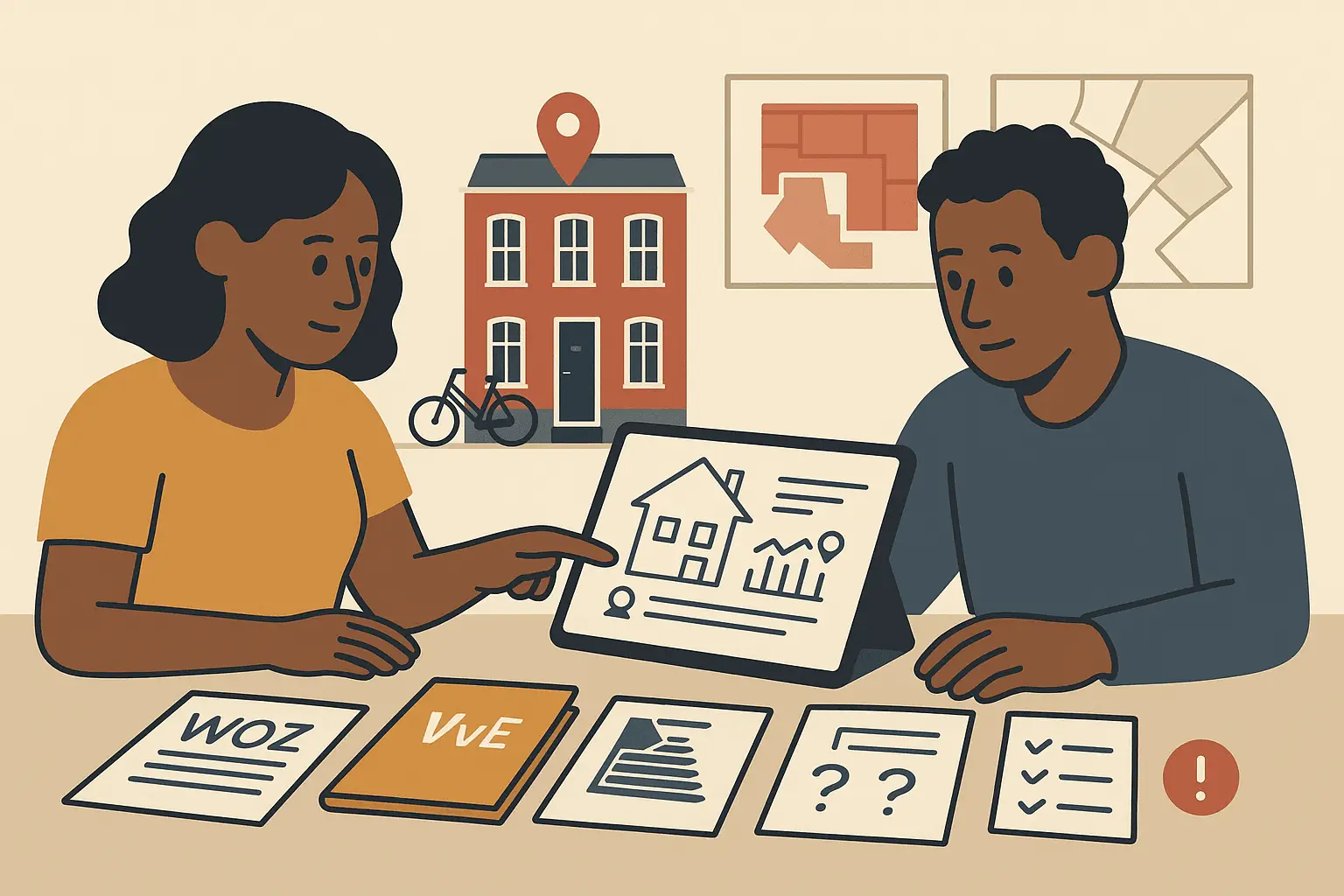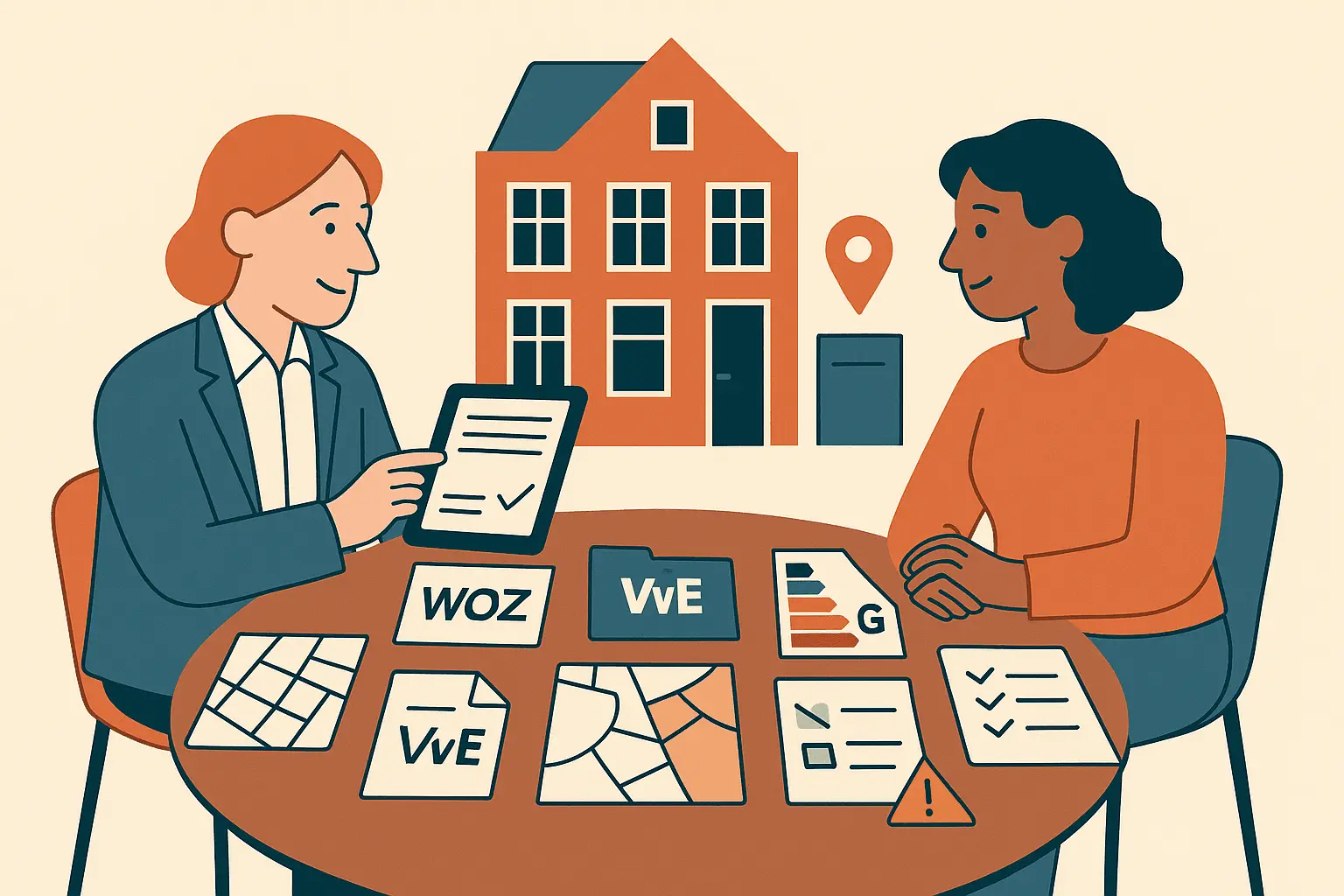
Buying near planned construction

A quiet street can look perfect during a viewing, but the empty plot, old school building, parking area, or road behind it may already have a future. When buying a house in the Netherlands, planned construction nearby can affect noise, traffic, daylight, views, privacy, parking, and resale expectations.
If you searched for “planned construction near house Netherlands”, the key pre-bid question is simple: are you buying the surroundings as they are today, or as they are likely to become?
Before you decide your maximum bid, check the future surroundings. With Huisscan, one Dutch address can become a clear pre-bid report with available Dutch property data, risk signals, document analysis, and buyer questions.
Check a Dutch property before you bid.
Why planned construction matters before you bid
Planned construction near a property is not automatically bad. A new school, tram stop, supermarket, or residential development may improve an area. But it can also create temporary disruption or permanent changes that are not obvious during a viewing.
Before bidding, think in two categories:
Temporary impact during construction
- Noise, dust, vibration, and construction traffic
- Reduced parking or road access
- Changed walking or cycling routes
- Working-from-home disruption
- Visual nuisance from cranes, fencing, or scaffolding
Permanent impact after completion
- Loss of open view, sunlight, or privacy
- More traffic or parking pressure
- Different neighbourhood character
- New commercial activity, hospitality, schools, or logistics
- Changed noise levels from roads, rail, or public space
The risk is not just “construction nearby”. The risk is bidding as if the current situation is permanent when public information suggests it may change.
First check: is it an idea, a plan, or a permitted project?
Not every future project has the same weight. A rumour from a neighbour is different from an issued permit. Before you adjust your offer, try to understand the status.
Common stages in the Netherlands include:
Informal idea or local rumour
Useful as a signal, but not enough on its own. Check official sources.Policy ambition
A municipality may describe future housing, mobility, greenery, or densification in an omgevingsvisie or gebiedsvisie. These are strategic documents, not always immediate building plans.Draft plan or project page
The municipality may publish a project page, participation documents, sketches, or planning updates. This can show direction, but details may still change.Rules in the omgevingsplan
The omgevingsplan contains local rules for land use and building possibilities. You may also still see the older term bestemmingsplan in documents and maps. Check what is allowed on neighbouring plots, not only the house you want to buy.Omgevingsvergunning applied or granted
An omgevingsvergunning is a permit for activities such as building or changing use. A permit application or granted permit is highly relevant before bidding.Construction planning
If a project has a contractor, phasing, or start date, the temporary nuisance risk becomes more concrete.
A useful pre-bid question is: what would need to happen before construction can actually start?
Dutch sources and terms to know
For a pre-bid property check Netherlands buyers often need to look beyond the listing. These are the main Dutch sources and terms to understand.
| Source or term | What it means | Why it matters before bidding |
|---|---|---|
| Omgevingsloket | National portal for environment and planning rules, permits, and location-based checks | Helps you check rules and permit information for the address and nearby plots |
| Regels op de kaart | Map view of applicable local rules | Useful for seeing allowed uses, building areas, and height rules |
| Omgevingsplan | Municipal planning rules for land use and building | Shows what may be allowed around the home |
| Bestemmingsplan | Older zoning term still found in many documents | Expats often see this in sales packs, older plan viewers, or municipal files |
| Omgevingsvergunning | Environmental/planning permit, often including building permits | A nearby permit can mean a project is more advanced |
| Officiële bekendmakingen | Official government announcements | Can reveal permit applications, decisions, and local procedures |
| Gemeente project pages | Municipal pages for neighbourhood redevelopment, infrastructure, or new-build plans | Often easier to read than formal planning documents |
| Omgevingsvisie / gebiedsvisie | Strategic vision for an area | Useful for understanding long-term direction, but not always a direct construction plan |
| Waterschap, provincie, Rijkswaterstaat | Water authority, province, and national infrastructure authority | Relevant for dike works, road changes, waterways, bridges, and major infrastructure |
| BAG, Kadaster, PDOK | Public address, building, parcel, and map data sources | Helps identify plots, buildings, and surrounding land accurately |
Public data can be technical and sometimes incomplete. Early-stage projects may not yet appear clearly in maps. That is why it is sensible to combine public data, seller documents, municipal information, and direct questions.
What to read in the seller and property documents
The sales brochure usually focuses on the property as it is now. For property risks Netherlands buyers should also look for what the documents say, or do not say, about the surroundings.
Check:
Sales brochure and listing text
Be careful with phrases like “free view” or “quiet location”. They may describe the current situation only.Seller’s questionnaire
In many Dutch transactions, the seller provides a questionnaire, often called a vragenlijst. Look for mentions of neighbourhood developments, nuisance, disputes, municipal letters, or known plans.VvE documents for apartments
If you are buying an apartment, read the VvE documents, meeting minutes, and maintenance plans. They may mention nearby projects, access issues, façade works, shared land, or communication from the municipality.Municipal letters or project information
Sometimes owners receive letters about participation, roadworks, redevelopment, or permit procedures. Ask whether the seller has received anything relevant.Deed, parcel, and boundary information
If the planned work is very close, check whether access rights, shared paths, easements, or neighbouring parcel boundaries matter. Ask a notary or legal professional if rights are unclear.
Good pre-bid questions for the selling agent include:
- Are the seller or agent aware of planned construction nearby?
- Has the seller received municipal letters or project updates?
- Which plot or building is involved?
- What is the current status: idea, plan, permit application, granted permit, or construction planning?
- What height, use, and access route are expected?
- Could the project affect parking, view, daylight, privacy, or noise?
- Are there objections, neighbour concerns, or unresolved procedures?
- Where can I verify the information officially?
Ask important questions in writing. That gives you a clearer record before deciding whether and how to bid.
How planned construction can affect your offer
Planned construction does not always mean “do not buy”. It can mean you need a more realistic bid and better conditions.
Possible pre-bid decisions include:
Proceed at your original bid
If the project is minor, temporary, or positive for the area.Lower your maximum bid
If the property’s current view, quietness, parking, or privacy is part of the price you were willing to pay.Ask for more information before bidding
Especially if there is a permit reference, unclear project page, or large empty plot nearby.Use conditions carefully
If you want a condition related to documents, permits, financing, appraisal, or further investigation, discuss the wording with a qualified professional. Vague conditions may not protect you.Walk away
If the uncertainty is too large, the expected impact is incompatible with your lifestyle, or you cannot verify key information before the bid deadline.
For mortgage advisors and buyer agents, planned construction can also be relevant to the buyer’s risk profile and assumptions. A Huisscan pre-bid report can support the conversation, but it is not a valuation, legal opinion, building inspection, mortgage advice, or notarial advice.
Practical checklist before bidding
Use this checklist when buying near planned construction.
- Search the exact address and look at neighbouring plots, not only the property itself.
- Check the Omgevingsloket for local rules and permit information.
- Look for an omgevingsplan, bestemmingsplan reference, or municipal project page.
- Search the municipality website for the street, neighbourhood, project name, and nearby plots.
- Check official announcements for permit applications or decisions.
- Identify whether the project is an idea, policy, draft plan, permit application, granted permit, or active construction project.
- Check likely impact on view, daylight, privacy, noise, traffic, parking, access, and daily routines.
- Read the seller’s questionnaire, brochure, VvE documents, and any municipal correspondence.
- Ask the selling agent direct written questions about known plans and received notices.
- Decide whether the risk changes your maximum bid, conditions, or willingness to proceed.
- If the impact is material, ask the municipality or a qualified professional before committing.
What Huisscan can help you check
Huisscan helps buyers check Dutch property before bidding by turning one address and uploaded documents into a clear pre-bid overview.
For planned construction near a house in the Netherlands, Huisscan can help with:
Available Dutch property data
Address, location, public data points, map-based signals, and relevant property context where available.Risk signals around the property
Possible indicators connected to surroundings, planning, environment, or other property risks Netherlands buyers may want to investigate further.Document analysis
Upload the brochure, seller’s questionnaire, VvE documents, planning extracts, or other files. Huisscan can help identify relevant wording, missing information, and topics to question.Buyer questions
A report can translate unclear signals into practical questions for the selling agent, municipality, buyer agent, mortgage advisor, appraiser, inspector, notary, or legal professional.A clearer pre-bid decision
The goal is not to predict the future perfectly. The goal is to avoid bidding blind when available data or documents suggest the surroundings may change.
Huisscan is decision support. It does not replace professional legal, building, appraisal, mortgage, tax, or notarial advice.
FAQ
How do I find planned construction near a house in the Netherlands?
Start with the Omgevingsloket, the municipality website, official announcements, and municipal project pages. Search the address, street, neighbourhood, and nearby empty plots or older buildings. A Huisscan pre-bid report can help organise available information and turn it into buyer questions.
Is planned construction nearby always a reason not to buy?
No. Some projects improve an area, add amenities, or have little effect on the specific property. The important question is whether the expected change affects the value you place on the home, and whether that is reflected in your bid.
What if there is only a plan, but no permit yet?
Treat it as uncertainty. A policy document or area vision may never become the exact project shown in early sketches. Still, it can show the direction of travel. Ask the municipality or a qualified advisor how concrete the plan is before relying on the current surroundings.
Can the seller be required to tell me about nearby construction?
Dutch property transactions involve both seller disclosure and buyer investigation. The details depend on the facts. Ask direct written questions before bidding, and get professional advice if you think important information was withheld or is unclear.
Can planned construction affect my mortgage or appraisal?
Possibly, if it affects market value, saleability, or the assumptions used by the appraiser. Discuss material surroundings risk with your mortgage advisor or appraiser. Huisscan can help surface questions, but it is not a valuation or mortgage advice.
Can I object to a project after buying?
That depends on the project status, procedure, and applicable rules. Do not rely on a future objection as your main protection. If the nearby project is central to your decision, investigate it before you bid and ask a legal professional where needed.
Check the address before you bid.