Buying in Zwolle: pre-bid checklist

Buying a house in Zwolle can move quickly. You may be comparing a 1930s house near Assendorp, an apartment in the historic centre, a family home in Stadshagen, or a property closer to the A28 or railway. Before you bid, the question is simple: what do you know about this specific address, and what still needs checking?
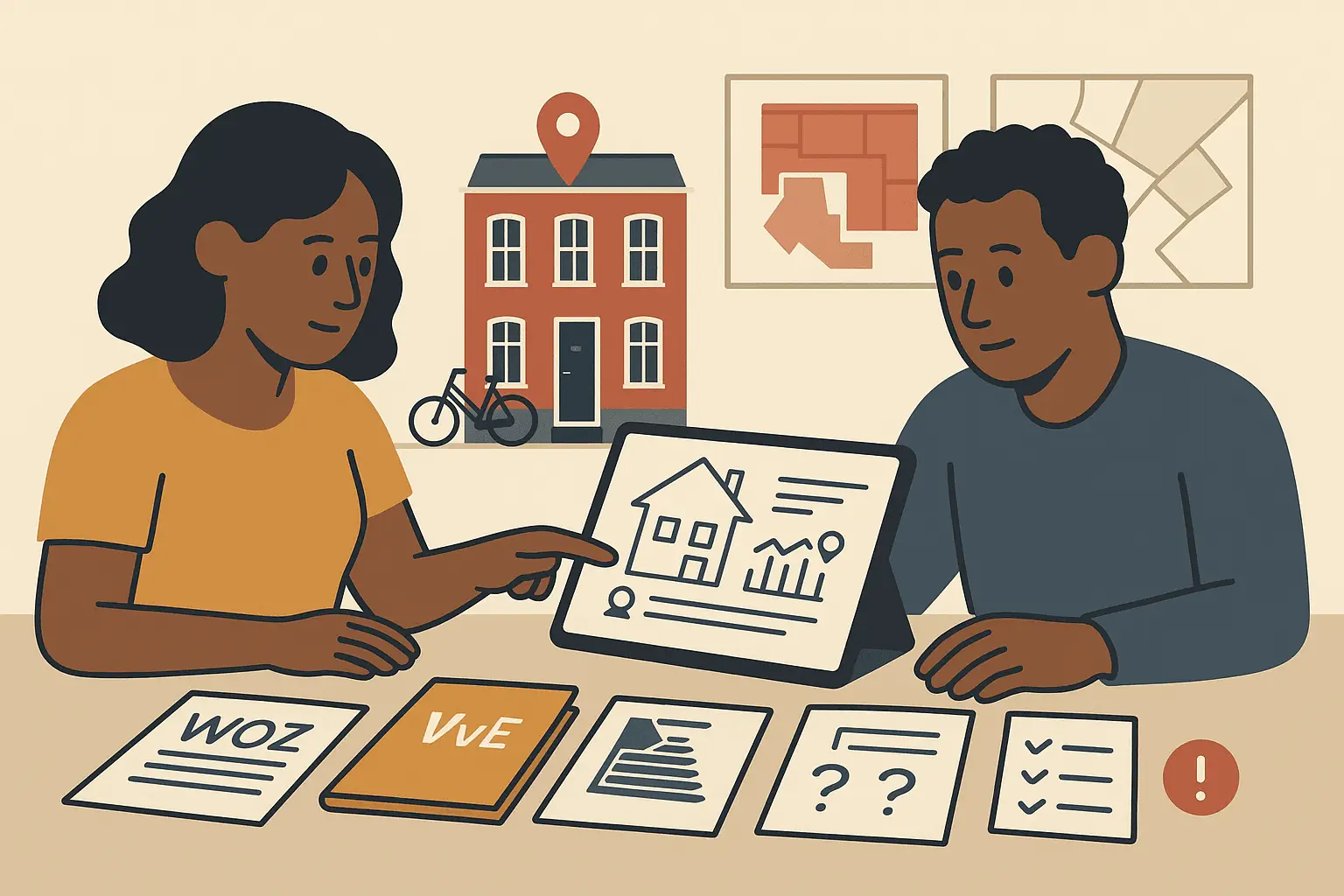
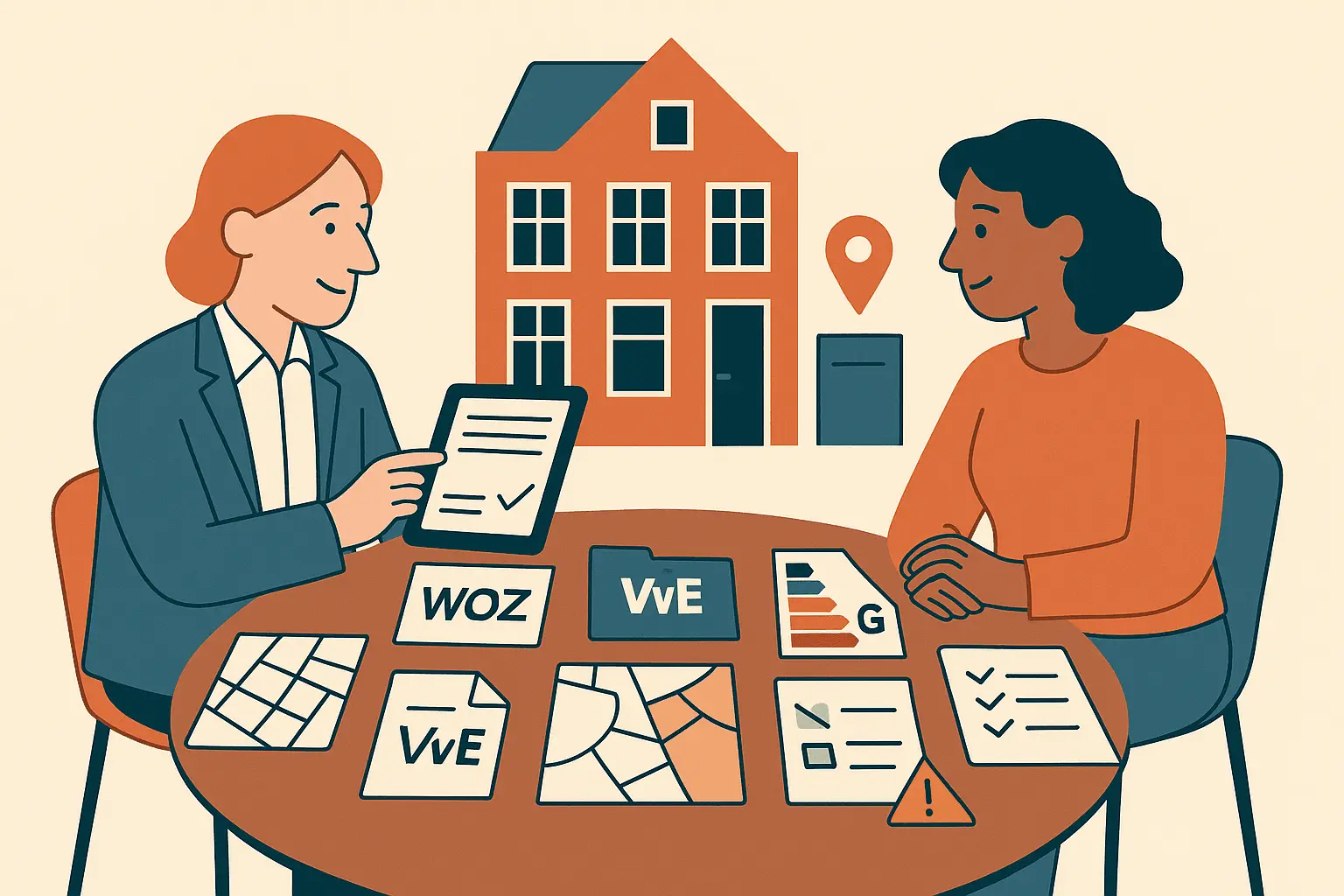
This buying house Zwolle checklist helps you review the property, documents, location risks, and Dutch terms that can affect your price, conditions, or decision to walk away.
Before you make an offer, you can use Huisscan to check the address. One Dutch address, plus any sales documents you upload, can become a clear pre-bid report with available property data, risk signals, document analysis, and buyer questions.
Why a Zwolle pre-bid check matters
Zwolle is attractive because it combines a historic city centre, good train connections, water, schools, and family neighbourhoods. That variety also means the checks differ per address.
For example:
- A canal-side or older inner-city property may need extra attention on maintenance, monument rules, moisture, and renovation limits.
- An apartment may depend heavily on the health of the VvE: the owners’ association responsible for shared maintenance.
- A home near the A28, railway, or busy access roads may have noise or air-quality considerations.
- A property near water or in lower-lying areas may require a closer look at flood and drainage information.
- A newer home may look low-risk, but you still need to check ownership, permits, energy performance, defects, and surroundings.
A pre-bid property check Netherlands approach is not about finding reasons to panic. It is about making your bid with clearer facts.
Key Dutch documents and terms to understand
When buying a house in the Netherlands, the listing is only the start. Ask the selling agent for the available documents before you bid.
Common documents and terms include:
- Vragenlijst verkoop woning: the seller’s questionnaire. This can mention defects, disputes, renovations, moisture, asbestos, foundation issues, or neighbour matters.
- Lijst van zaken: the list of items included or excluded from the sale, such as flooring, curtains, appliances, or garden items.
- Energielabel: the official energy label. Useful, but also check actual insulation, heating system, glass type, and expected improvement costs.
- Kadastrale informatie: Kadaster data showing plot boundaries, ownership details, and sometimes rights such as easements.
- Erfdienstbaarheid: an easement, such as a right of way over part of the plot.
- Erfpacht: leasehold. Less common than full ownership in many areas, but always check whether the land is fully owned or subject to ground lease.
- VvE-stukken: documents for apartments, including meeting minutes, service charges, reserve fund, insurance, and the MJOP — long-term maintenance plan.
- Bouwkundige keuring: a building inspection. This can be included as a condition in your offer or arranged before bidding if time allows.
- Ontbindende voorwaarden: conditions in your offer that may allow you to cancel the purchase if, for example, financing or a building inspection does not work out. Discuss wording with your agent, mortgage advisor, or legal professional.
- Koopakte: the purchase contract. Do not treat it as a formality; have questions answered before signing.
For expats, these terms can be easy to underestimate because they sound administrative. In practice, they can affect real costs and risk.
Zwolle-specific checks before you bid
A good buying house Zwolle checklist should combine national Dutch property data with local context. For Zwolle, pay attention to the following.
1. Water, drainage, and flood context
Zwolle is shaped by water, including the IJssel region, canals, and surrounding waterways. This does not mean every property has a flood problem, but it does mean water information is relevant.
Check:
- whether the address is in an area with known flood or water-management considerations;
- the position of the home compared with canals, ditches, or lower-lying land;
- signs of moisture in cellars, crawl spaces, walls, or ground floors;
- drainage in the garden or around extensions;
- whether previous water issues are mentioned in the seller’s questionnaire.
Useful sources can include municipal information, water authority information, and public maps. If you are unsure, ask a building inspector or local professional.
2. Older buildings, maintenance, and renovation limits
Zwolle has many older homes, especially in and around the historic centre, Assendorp, Dieze, Wipstrik, and other established areas. Older does not automatically mean risky, but it usually means you need a sharper maintenance review.
Check:
- roof age and roof covering;
- guttering and drainage;
- wood rot in frames, doors, and roof structures;
- damp, ventilation, and cellar condition;
- electrical installation and capacity;
- heating system age;
- insulation quality;
- whether renovations were done with permits where needed.
If the property is a municipal or national monument, or located in a protected cityscape, renovation options may be restricted. This can affect cost, timing, and what you are allowed to change.
3. Apartments and VvE health
For apartments in Zwolle, the apartment itself is only part of the purchase. You also buy into the financial and maintenance position of the VvE.
Before bidding, check:
- monthly service charges;
- reserve fund level;
- long-term maintenance plan, if available;
- recent meeting minutes;
- planned roof, facade, lift, balcony, or sustainability work;
- VvE insurance;
- arrears or disputes;
- whether short-term cost increases are likely.
A low monthly service charge can look attractive, but if the VvE has underfunded maintenance, you may face future contributions.
4. Noise, access, and daily living
Zwolle’s strong transport connections are a plus, but location details matter. Depending on the address, check distance and exposure to:
- the A28;
- railway lines and stations;
- busy roads into the centre;
- industrial or commercial areas;
- nightlife in or near the historic centre;
- schools, sports fields, or event locations.
Visit at different times if possible. A house can feel quiet during a daytime viewing but different during rush hour, evenings, or weekends.
5. Surrounding development and zoning
Do not only inspect the house. Check what may happen around it.
Look up the omgevingsplan or zoning information through official channels. This can help you understand whether nearby land is residential, commercial, mixed-use, green space, or planned for development.
Ask:
- Are there planned building projects nearby?
- Could a view, parking situation, or quiet street change?
- Are extensions, dormers, garden offices, or renovations likely to be allowed?
- Is the property affected by heritage, tree, or environmental restrictions?
For a pre-bid decision, you do not need to become a planning lawyer. But you do need to know whether the location has an obvious planning question.
Practical buying house Zwolle checklist
Use this checklist before you decide your bid level and conditions.
Address and ownership
- Check the exact address, house number addition, and cadastral plot.
- Confirm whether the property includes the garden, storage, parking, or separate plot.
- Check for easements, shared access, or rights of way.
- Ask whether the land is full ownership or leasehold.
Property condition
- Read the seller’s questionnaire carefully.
- Look for signs of damp, cracks, leaks, rot, poor ventilation, or overdue maintenance.
- Check roof, windows, facade, crawl space, and extensions.
- Consider a building inspection if defects or age justify it.
- Estimate immediate repair and improvement costs before you bid.
Energy and sustainability
- Check the official energy label.
- Ask about insulation, glass type, heating, ventilation, and solar panels.
- Check ownership or lease conditions for solar panels if present.
- Consider whether upgrades are technically and financially realistic.
- Ask a qualified advisor before relying on savings or subsidy assumptions.
Location and risks
- Check noise from roads, rail, businesses, and nightlife.
- Review water and flood context for the specific address.
- Check soil or contamination signals if the area has former industrial use.
- Visit the street at different times.
- Review nearby planning and zoning information.
Apartment and VvE
- Request VvE meeting minutes, accounts, reserve fund, and MJOP.
- Check service charges and planned maintenance.
- Ask whether major works or extra contributions are expected.
- Review rules on pets, rental, short-stay, renovations, and flooring.
- Check whether the VvE is active and properly insured.
Offer strategy
- Decide your maximum price before emotions take over.
- Decide which conditions matter: financing, building inspection, sale of own home, documents, or other relevant points.
- Ask your mortgage advisor what is financially realistic.
- Ask your buyer agent or legal professional how to phrase conditions.
- Walk away if the risk, uncertainty, or price no longer fits.
What Huisscan can help you check
Huisscan helps you check a Dutch property before you bid. It is designed for buyers, expats, mortgage advisors, and buyer agents who want a clearer view of one address before making or supporting an offer.
With a Huisscan pre-bid report, you can turn one Dutch address and uploaded documents into a practical overview, including:
- available Dutch property data for the address;
- key property and location signals;
- possible property risks Netherlands buyers often need to review;
- analysis of uploaded documents such as the seller’s questionnaire, list of items, VvE documents, or energy information;
- plain-English explanations of relevant Dutch terms;
- questions to ask the selling agent, VvE, building inspector, mortgage advisor, or notary;
- points that may affect bid price, conditions, or your decision to pause.
Huisscan does not replace a notary, appraiser, mortgage advisor, lawyer, or building inspector. It helps you prepare better questions and avoid bidding based only on the viewing and brochure.
Questions to ask the selling agent in Zwolle
Use the address-specific findings to ask direct questions. Examples:
- Are there known moisture, leakage, foundation, or structural issues?
- Were extensions, dormers, roof works, or internal changes done with required permits?
- Are there any disputes with neighbours or shared access arrangements?
- Is anything planned nearby that could affect noise, view, parking, or access?
- For apartments: are major VvE works planned, and is enough money reserved?
- Are there easements, leasehold arrangements, or special clauses in the draft purchase contract?
- Has there been previous damage from water, storm, fire, or subsidence?
- What items are included in the sale, and what will be removed?
- Are solar panels, heat pumps, or other installations owned, leased, or financed?
- Is the seller aware of asbestos or older materials that need specialist review?
Good questions do not weaken your position. They help you bid with a clearer view of what you are buying.
FAQ
Is Zwolle a good place to buy a house?
Zwolle can be attractive for buyers who want a historic city, strong train connections, family neighbourhoods, and access to nature and water. Whether a specific home is a good purchase depends on the address, condition, documents, price, and your financial situation.
What should expats check before buying a house in Zwolle?
Expats should pay extra attention to Dutch documents, bidding conditions, mortgage feasibility, VvE rules, energy costs, ownership rights, and the purchase contract. If Dutch is not your first language, have important documents explained before you bid or sign.
Do I need a building inspection before bidding?
Not always, but it can be useful for older homes, visibly renovated properties, houses with cracks or damp, or homes where maintenance is unclear. If you cannot inspect before bidding, discuss whether a building inspection condition is appropriate.
Which Dutch property data should I check before bidding?
Useful checks include Kadaster information, BAG property data, energy label, zoning or omgevingsplan information, flood or water context, WOZ information, and available sales documents. Huisscan can help bring available data and uploaded documents into one pre-bid overview.
Can Huisscan tell me what to bid?
Huisscan does not give personal financial, valuation, legal, or mortgage advice. It helps you understand the address, documents, and risk signals so you can ask better questions and make a more informed offer with your advisor or agent.
What if the checklist shows too many uncertainties?
Uncertainty does not always mean you should walk away. It may mean you lower your bid, add conditions, ask for documents, arrange an inspection, or take professional advice. If the unanswered questions are material and the seller cannot clarify them, walking away may be the calmest decision.
Check the address before you bid.