Buying in Nijmegen: pre-bid checklist

Buying in Nijmegen can move quickly. You may have one viewing, a stack of Dutch documents, and pressure to decide on a bid before you fully understand the property.
This buying house Nijmegen checklist helps you focus on the checks that can affect your price, conditions, or decision to walk away. It is especially useful if you are an expat buying a house in the Netherlands and need Dutch property terms explained in plain English.
Considering a specific home in Nijmegen? Huisscan can help you check a Dutch property before bidding. Enter one address, upload available documents, and receive a clear pre-bid report with available property data, risk signals, document analysis, and practical buyer questions.
Why Nijmegen needs a local pre-bid check
Nijmegen is not one uniform housing market. A pre-war upstairs apartment near the city centre has different risks from a newer family home in Lent or Nijmegen-Noord. A flat with a homeowners’ association has different documents from a freehold terraced house. A house near the Waal, railway, university area, or main roads can raise different questions again.
Before you bid, try to understand three things:
What exactly are you buying?
Plot, living area, ownership, apartment rights, garden, storage, parking, and any shared parts.What could cost money after purchase?
Maintenance, energy performance, VvE contributions, renovation limits, soil or water risks, and possible future neighbourhood changes.What should be reflected in your offer?
A lower price, a condition such as a building inspection, extra questions for the selling agent, or a decision not to bid.
A good pre-bid property check Netherlands is not about finding a perfect home. It is about reducing surprises before your offer becomes serious.
First checks before you fall in love with the house
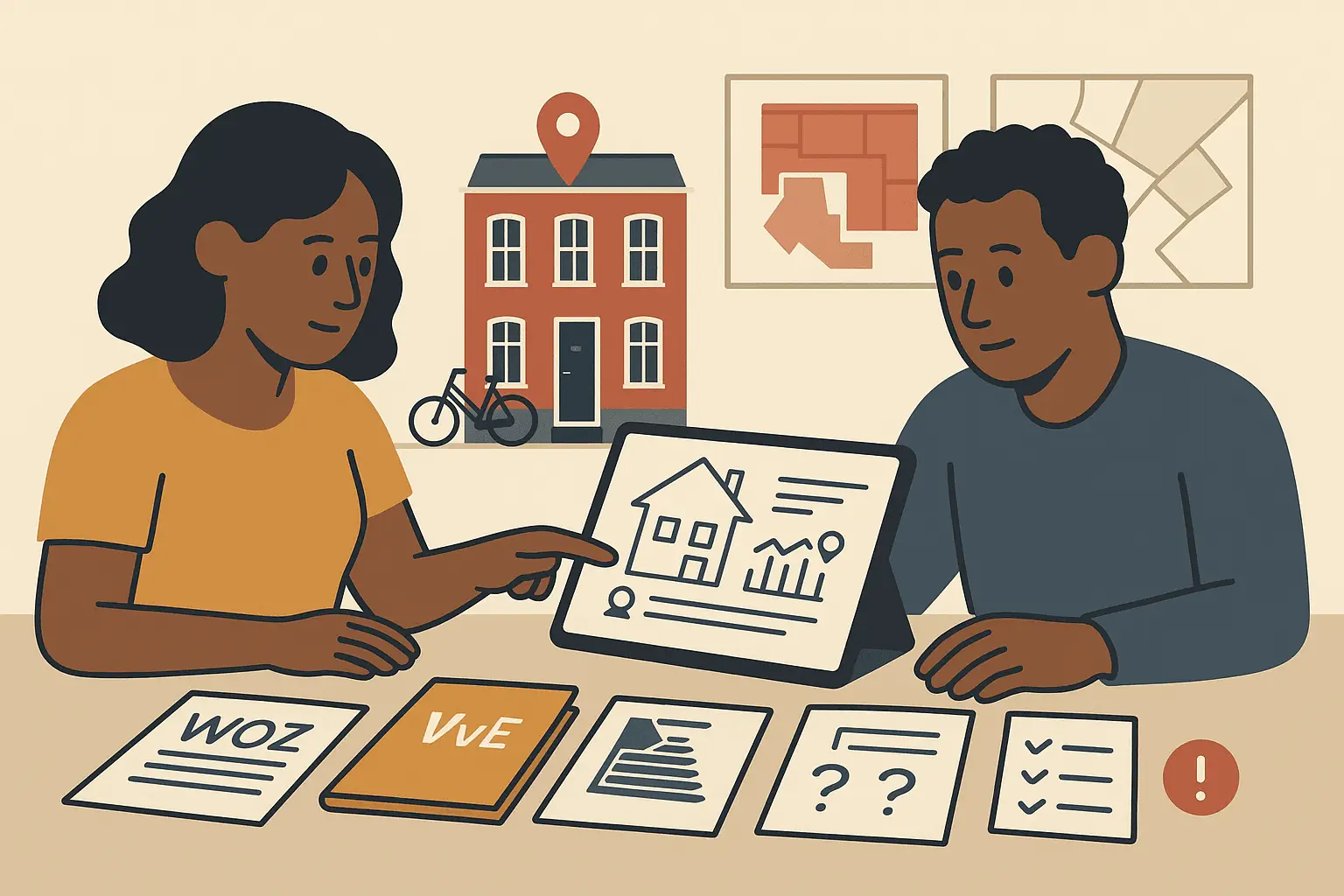
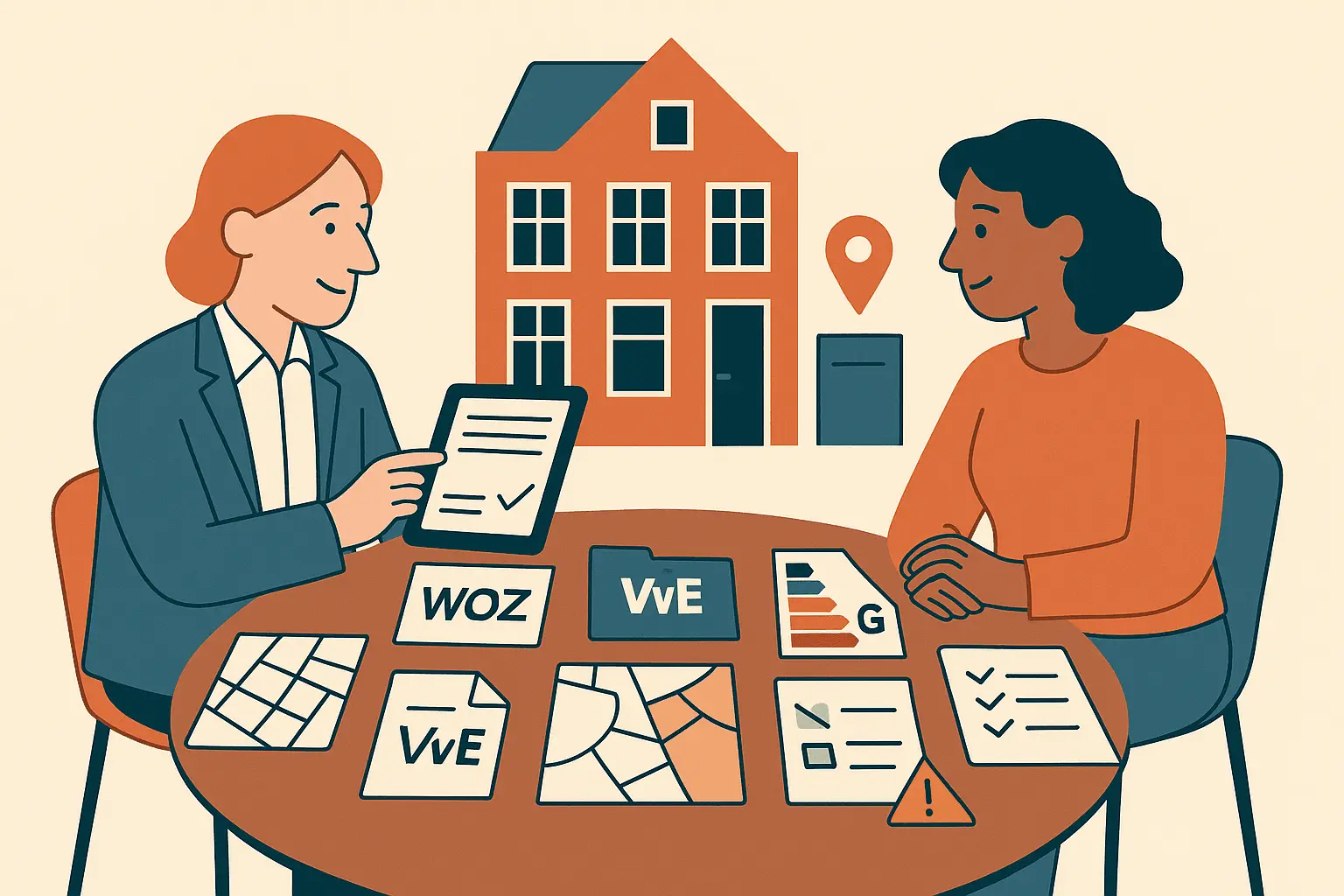
Start with the basics. These checks are not a substitute for an appraiser, building inspector, mortgage advisor, notary, or lawyer, but they help you ask better questions early.
Address and property data
Check whether the listing matches official Dutch property data:
- BAG: the official register for addresses, building year, and usable area.
- Kadaster: land registry information, plot boundaries, ownership structure, and registered rights.
- WOZ-waarde: municipal tax value. This is not the market value, but it gives context.
- Energielabel: the official energy label, useful for estimating comfort and improvement needs.
If the brochure says 112 m² but official data suggests something different, ask how the size was measured. Dutch listings usually refer to gebruiksoppervlakte wonen: usable living area measured under Dutch measurement guidelines.
Ownership type
Most buyers want to know whether the property is:
- Volle eigendom: full ownership of the land and building.
- Appartementrecht: apartment right, meaning you own a share in the building and have exclusive use of your apartment.
- Erfpacht: leasehold, where someone else owns the land and you may pay ground rent or have specific conditions.
If there is any leasehold or unusual ownership structure, ask your buyer agent or notary to explain the long-term financial and legal impact before bidding.
Asking price versus reality
Do not rely only on the asking price. Compare:
- Recent nearby sales where available.
- Similar homes by size, condition, energy label, and location.
- Required renovation or sustainability upgrades.
- VvE costs for apartments.
- Parking, outdoor space, and noise exposure.
A house can be “affordable” on the listing price and still expensive after maintenance, energy improvements, or VvE obligations.
Nijmegen-specific risks and questions
Nijmegen has older neighbourhoods, newer expansion areas, river landscapes, slopes, busy routes, and apartment blocks. The right questions depend on the location and building type.
Near the Waal and lower-lying areas
Nijmegen’s relationship with the Waal is part of the city’s appeal, but water context matters. For homes near the river, Lent, Nijmegen-Noord, or lower-lying areas, check:
- Flood and water information from public sources.
- Local drainage and past water nuisance if known.
- Whether basements, crawl spaces, or gardens show moisture issues.
- Any restrictions or responsibilities linked to dikes, water boards, or protected zones.
This does not mean a home is unsafe. It means water should be part of your pre-bid questions.
Older homes in the centre, Bottendaal, Oost, and similar areas
Older Nijmegen homes can be attractive, but look carefully at:
- Roof age and condition.
- Damp, ventilation, and insulation.
- Electrical system and fuse box.
- Old plumbing or sewer connections.
- Asbestos risk in older materials.
- Monument or protected cityscape status.
A rijksmonument or gemeentelijk monument can be beautiful, but it may limit what you can change. Renovation may require permits or specialist work.
Apartments and VvE risk
For apartments, the VvE is the homeowners’ association. It manages shared parts such as roof, façade, stairwell, lift, foundations, insurance, and reserves.
Before bidding on an apartment in Nijmegen, ask for:
- VvE annual accounts.
- Budget and monthly contribution.
- Minutes of recent meetings.
- Maintenance plan, often called MJOP.
- Reserve fund information.
- Building insurance.
- Rules in the splitsingsakte and huishoudelijk reglement.
A low monthly VvE fee can look attractive, but if there is little reserve and major maintenance is coming, you may face higher contributions later.
Newer areas such as Waalsprong, Lent, and Nijmegen-Noord
Newer homes can still need checks. Look at:
- Remaining builder warranties if applicable.
- Future development around the property.
- Parking rules and permit zones.
- Energy systems such as heat pumps, solar panels, or collective heating.
- Any obligations in deeds or neighbourhood agreements.
- Public transport and bridge or road access at busy times.
For newer districts, the question is often less “is the roof old?” and more “what is still changing around this address?”
Noise, traffic, and daily life
Nijmegen has railway lines, bridges, main roads, student areas, nightlife, events, and busy cycling routes. During a viewing, the street can seem calm. Check the address at different times if possible.
Ask yourself:
- Is there train, road, bridge, or nightlife noise?
- Is parking realistic for your household?
- Are there nearby cafés, student houses, schools, or delivery routes?
- Are future roadworks or planning changes visible in municipal sources?
These factors can affect comfort, resale, and how much you are willing to bid.
Documents to request before bidding
A selling agent may not provide everything immediately, but ask for the key documents early. For expats, it is worth translating or summarising the Dutch documents before deciding.
Important documents include:
- Verkoopbrochure: sales brochure with property description.
- Vragenlijst: seller’s questionnaire about defects, renovations, disputes, and known issues.
- Lijst van zaken: list of items included or excluded, such as curtains, appliances, flooring, or garden items.
- Eigendomsakte: deed of ownership, useful for rights, obligations, and past transfer details.
- Kadastrale informatie: land registry information.
- Energielabel: official energy label.
- Bouwkundige keuring if available: building inspection report.
- VvE documents for apartments.
- Splitsingsakte for apartments: deed of division explaining apartment rights and shared parts.
- Omgevingsplan information: planning and zoning information from the municipality or Omgevingsloket.
If a document is missing, do not assume everything is fine. Ask why it is missing and whether you can receive it before making or finalising your offer.
Practical buying house Nijmegen checklist
Use this checklist before you bid. You do not need perfect answers to every point, but you should know which uncertainties you are accepting.
Property and ownership
- Does the official address match the listing?
- Is the stated living area supported by measurement information?
- Is it full ownership, apartment right, or leasehold?
- Are plot boundaries, garden, storage, and parking clear?
- Are there registered rights such as rights of way or shared access?
Building condition
- What is the building year and construction type?
- Are roof, façade, windows, floors, and installations in reasonable condition?
- Is there visible damp, cracking, leakage, or poor ventilation?
- Is asbestos possible due to age or materials?
- Should your offer include a building inspection condition?
Energy and comfort
- What is the official energy label?
- Are heating, insulation, glazing, and ventilation clear?
- Are there solar panels, a heat pump, or collective heating contracts?
- What improvements may be needed soon?
- Could energy upgrades affect your budget after purchase?
Location and environment
- Is there potential noise from road, railway, nightlife, or student housing?
- Is the property near the Waal, lower ground, slope, or water-sensitive area?
- Are parking rules and permits acceptable?
- Are future building plans or zoning changes relevant?
- Does the neighbourhood fit your daily commute and lifestyle?
Apartment and VvE
- Is the VvE active?
- Are accounts, minutes, budget, and MJOP available?
- Is the reserve fund sufficient for planned maintenance?
- Are monthly contributions realistic?
- Are there upcoming works, disputes, or special contributions?
Bid strategy
- Which risks justify a lower bid?
- Which risks require conditions in the offer?
- Which questions must be answered before signing?
- What is your maximum price including renovation and transaction costs?
- What would make you walk away?
How your checks can change the bid
A pre-bid check is only useful if it changes a decision.
For example:
- If the energy label is low and insulation is poor, you may reduce your bid or reserve budget for upgrades.
- If the VvE has low reserves and major roof work is expected, you may ask more questions or bid more cautiously.
- If official property data conflicts with the brochure, you may ask for clarification before offering.
- If the home is in a noisy location, you may revisit at another time before deciding.
- If documents are incomplete, you may make your bid conditional on receiving and approving them.
- If the property has signs of structural issues, you may include a voorbehoud bouwkundige keuring: a building inspection condition.
Common Dutch bid conditions include voorbehoud van financiering: a financing condition, and voorbehoud bouwkundige keuring: a building inspection condition. Whether these are accepted depends on the seller and market situation. Ask your buyer agent, mortgage advisor, or legal professional what is appropriate for your situation.
Walking away is also a valid outcome. If the price only works when everything goes right, but the documents show several uncertainties, the risk may not fit your budget.
What Huisscan can help you check
Huisscan is built around one simple promise: Check a Dutch property before you bid.
For a Nijmegen address, Huisscan can help turn scattered information into a clearer pre-bid view. You can enter the address and upload documents such as the brochure, seller questionnaire, VvE papers, energy label, or deed information.
A Huisscan pre-bid report can help you review:
- Available Dutch property data linked to the address.
- Differences between listing details and public data where available.
- Building, energy, location, and document risk signals.
- VvE-related questions for apartments.
- Dutch terms that may be difficult for expats.
- Missing documents or unclear points.
- Practical questions to ask the selling agent, buyer agent, mortgage advisor, inspector, or notary.
Huisscan does not replace professional advice. It helps you prepare better questions and make a calmer pre-bid decision before you commit time, money, and emotion to a property.
FAQ
What should I check before buying a house in Nijmegen?
Check the official property data, ownership type, building condition, energy label, location risks, zoning or planning context, and all available seller documents. For apartments, also check the VvE documents carefully.
Is buying in Nijmegen different from other Dutch cities?
Yes, in practical ways. Nijmegen has older central neighbourhoods, newer expansion areas, river-related locations near the Waal, height differences, student areas, and many apartments. Each can create different pre-bid questions.
Which Dutch documents matter most before bidding?
Useful documents include the sales brochure, seller questionnaire, list of included items, energy label, ownership deed, Kadaster information, and for apartments the VvE accounts, minutes, MJOP, and deed of division.
Should I bid without a building inspection condition?
That depends on the property, market situation, and your risk tolerance. Older homes, visible defects, damp, cracks, roof concerns, or unclear renovations are reasons to consider a building inspection condition. Ask a qualified building inspector or buyer agent for guidance.
Can expats use public Dutch property data?
Yes, but many sources and documents are in Dutch. Terms such as VvE, erfpacht, splitsingsakte, energielabel, and omgevingsplan can be confusing. A structured pre-bid review helps translate these into practical buyer questions.
How can Huisscan help before I bid in Nijmegen?
Huisscan can turn one Dutch address and uploaded documents into a clear pre-bid report with available property data, risk signals, document analysis, and buyer questions. It helps you see what to ask before making an offer.
Check the address before you bid.