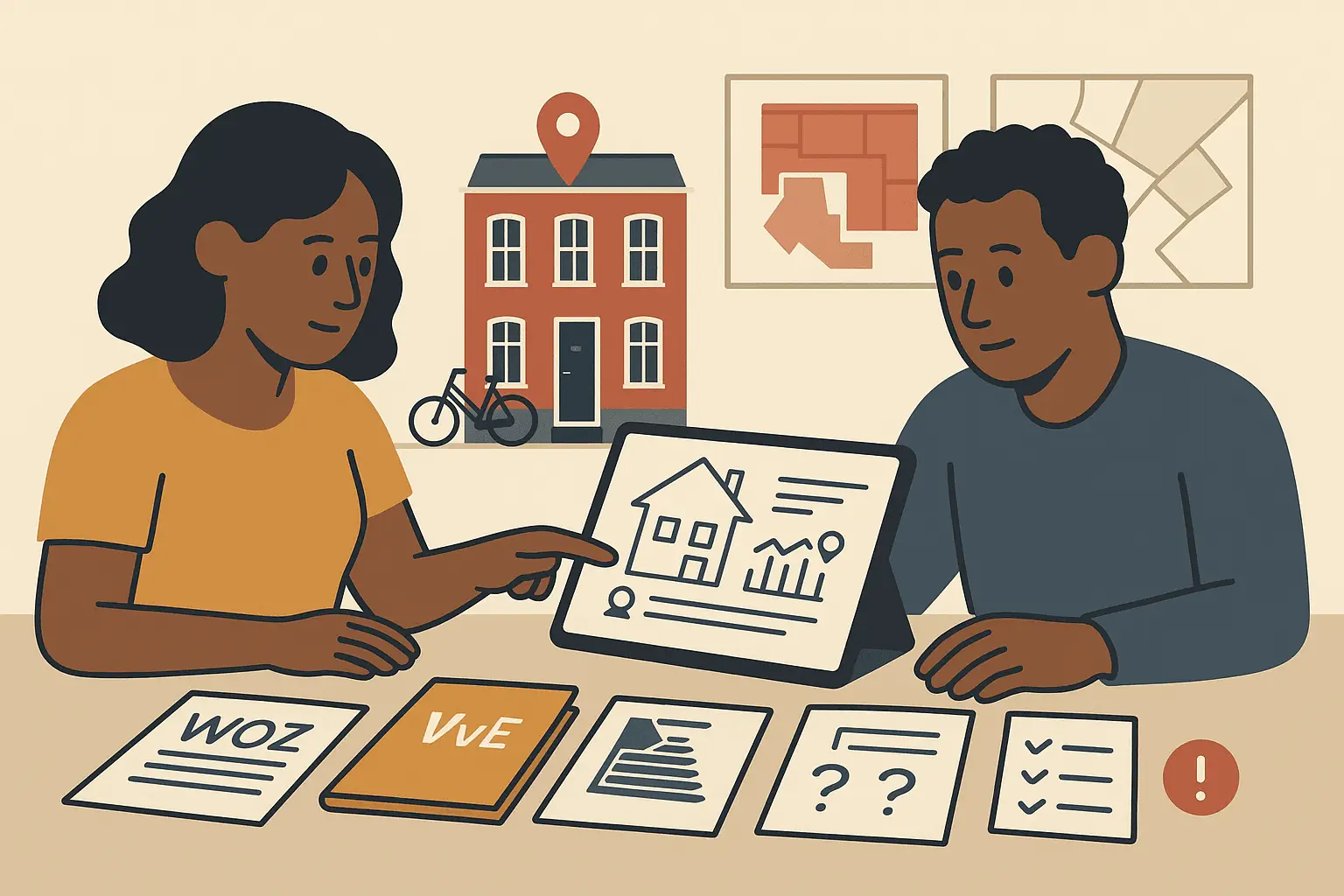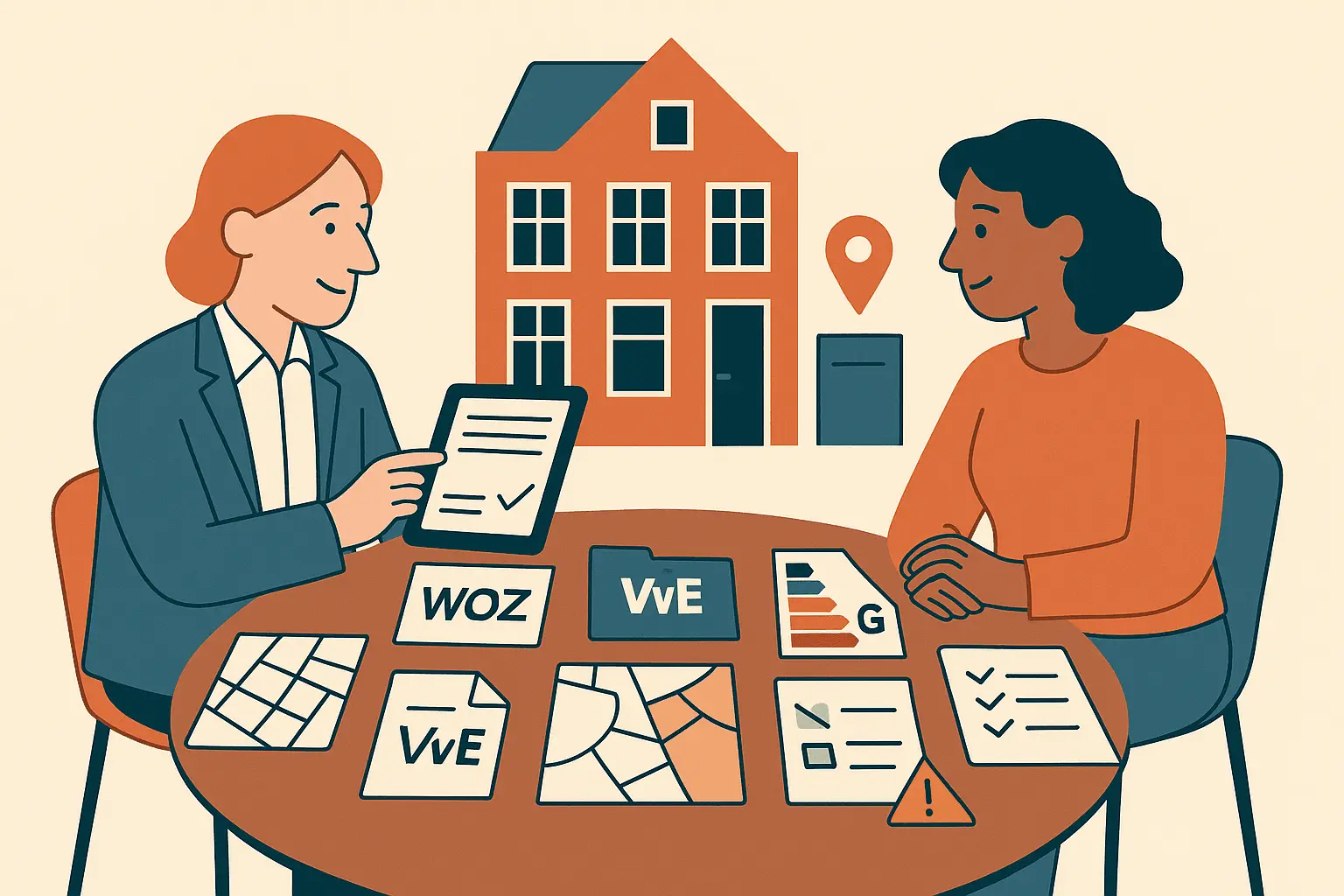
Buying in Eindhoven: pre-bid checklist

Buying in Eindhoven can move quickly, especially if you are looking near the city centre, Strijp-S, Woensel, Tongelre, Gestel, Stratum, Meerhoven, or commuting routes toward Veldhoven and the High Tech Campus. By the time you like a property, the selling agent may already expect a fast bid.
That is exactly when you need a calm check. Not a 40-page investigation after the offer, but a practical pre-bid property check Netherlands buyers can use to decide: bid, adjust the price, add conditions, ask better questions, or walk away.
Before you bid: check the address in Huisscan. One Dutch address, plus any uploaded sales documents, can become a clear pre-bid report with available Dutch property data, risk signals, document analysis, and buyer questions.
Why Eindhoven buyers should check before bidding
Eindhoven has a mix of property types: older family homes, post-war terraces, apartments with a VvE owners’ association, new-build developments, converted industrial buildings, and homes in expanding residential areas.
That variety is good for choice, but it also means the risks are different per address.
For example:
- An apartment in Strijp-S may depend heavily on VvE documents, service charges, maintenance planning, and building rules.
- A family home in an older neighbourhood may need closer attention to insulation, roof condition, moisture, and previous renovations.
- A home near busy roads, rail lines, business parks, or flight paths may raise questions about noise and future plans.
- A recently renovated property may look finished, but you still want to know whether permits, guarantees, and technical documents are available.
A strong buying house Eindhoven checklist helps you avoid bidding only on photos, styling, and pressure.
The first 10-minute screen: address, price, and property basics
Before arranging your bid strategy, start with the basics. These do not replace an appraisal, inspection, or professional advice, but they help you understand what you are actually bidding on.
Check:
- Address and object type: apartment, terraced house, corner house, semi-detached, detached, maisonette, or new-build.
- Living area: ask whether the size follows NEN 2580, the Dutch measuring standard used for homes.
- Plot or apartment right: for houses, look at land size; for apartments, check the share in the building and VvE.
- Construction year: not a quality score, but useful for likely materials, insulation level, and maintenance questions.
- Energy label: a quick indicator of energy performance, but not a full technical assessment.
- WOZ-waarde: the municipal tax value. Useful context, but not the same as market value.
- Kadaster information: Dutch land registry data can help confirm ownership, parcel details, and legal property boundaries where available.
- BAG data: the Dutch address and building registry can show official building and usage information.
If the brochure, selling agent, and public Dutch property data do not match, treat that as a question to resolve before bidding.
Buying house Eindhoven checklist: what to check before bidding
Use this checklist before you send an offer.
| Check | Why it matters | Question to ask |
|---|---|---|
| Living area and layout | A few square metres can affect price comparison | Is there a NEN 2580 measurement report? |
| Energy label and insulation | Impacts comfort, monthly costs, and renovation plans | What insulation has been added, and is documentation available? |
| Technical condition | Helps decide whether to add an inspection condition | Are there known issues with roof, moisture, cracks, installations, or windows? |
| Renovations | Nice finishes can hide missing documentation | Were permits required, and are invoices or guarantees available? |
| VvE documents | Critical for apartments | Is the VvE active, financially healthy, and planning major maintenance? |
| Service charges | Affects affordability | What is included, and are increases expected? |
| Legal restrictions | Can affect use, renovation, or resale | Are there easements, leasehold, building restrictions, or special clauses? |
| Surroundings | Noise, traffic, and future plans affect living quality | Are there known municipal plans nearby? |
| Asking price vs comparables | Helps avoid bidding blindly | How does this property compare with similar sold homes? |
| Bid conditions | Protects your decision if key checks are unresolved | Should the offer include financing, inspection, or document-related conditions? |
For expats buying a house in the Netherlands, the most important point is simple: the brochure is not the full property file. Dutch documents and legal terms matter, even when the sales pitch is in English.
Documents to request and read before your offer
Ask for the sales file early. If the selling agent says some documents will follow later, decide whether you are comfortable bidding without them.
Common documents include:
- Vragenlijst verkoop woning: the seller’s questionnaire with known issues and property information.
- Lijst van zaken: the list of items included or excluded, such as appliances, curtains, flooring, or garden items.
- Energielabel: the official energy label.
- Eigendomakte or leveringsakte: previous deed of transfer, often containing legal details.
- Kadastrale informatie: land registry information.
- Meetrapport: measurement report, preferably using NEN 2580.
- Bouwkundig rapport: a building inspection report, if already available.
- Permits and renovation documents: especially for extensions, dormers, structural changes, or major works.
- For apartments: splitsingsakte: the deed that divides the building into apartment rights.
- For apartments: VvE minutes and accounts: meeting minutes, annual accounts, budget, and reserve fund information.
- MJOP: multi-year maintenance plan for an owners’ association.
Plain-English explanation of key Dutch terms:
- VvE: Vereniging van Eigenaars, the owners’ association for an apartment building.
- Splitsingsakte: legal document that explains how an apartment building is divided and what each owner owns or shares.
- MJOP: Meerjarenonderhoudsplan, a long-term maintenance plan.
- Erfpacht: leasehold. You may own the building but not the land, depending on the arrangement.
- Erfdienstbaarheid: easement, such as a right of way across the property.
- Bestemmingsplan / omgevingsplan: municipal planning rules for what can be built or used in an area.
If you do not understand a document, ask your buyer agent, notary, legal adviser, or another qualified professional before relying on it.
Eindhoven-specific risks and buyer questions
A good city guide should not say every home has the same risk. Eindhoven is local, street-by-street, building-by-building. Still, these are common pre-bid themes to consider.
Apartments and VvE strength
Eindhoven has many apartment buildings, from older complexes to newer developments. For apartments, the VvE can be just as important as the apartment itself.
Ask:
- Is the VvE active?
- Are the reserves sufficient for planned maintenance?
- Is there an MJOP?
- Are there disputes, overdue payments, or large upcoming works?
- Are short-stay rentals, pets, flooring, or renovations restricted?
A low service charge is not automatically good if the building is underfunded.
Renovated homes and hidden assumptions
Many homes are marketed as “instapklaar” — ready to move in. That is not a technical guarantee.
Ask:
- Which works were done, and by whom?
- Were structural changes made?
- Were permits needed?
- Are guarantees transferable?
- Are electrical, heating, roof, window, or insulation upgrades documented?
A polished finish can support value, but missing documentation may affect your confidence or bid conditions.
Energy and comfort
Energy performance matters in Dutch homes because heating, ventilation, insulation, and glazing affect monthly comfort and costs.
Check:
- Energy label and underlying measures
- Type and age of heating system
- Ventilation
- Double, HR, or triple glazing
- Roof, wall, and floor insulation
- Solar panels, including ownership or lease arrangements
Do not assume a good-looking interior means low energy use.
Noise, access, and surroundings
Eindhoven buyers often compare commute convenience: city centre, station, ring roads, High Tech Campus, Veldhoven, ASML area, TU/e, or Eindhoven Airport. Convenience can be valuable, but also check the daily living impact.
Ask:
- Is there road, rail, nightlife, school, sports, or aircraft noise?
- What is the parking situation at different times of day?
- Are there municipal plans nearby?
- Is the street calm during viewing hours but busy at peak times?
Try to visit the street more than once, not only during a scheduled viewing.
Soil, environment, and redevelopment history
Some Dutch locations have past industrial, commercial, or redevelopment use. That does not automatically mean there is a problem, but it can justify extra questions.
Ask:
- Is soil information available?
- Has the property or nearby land had commercial or industrial use?
- Were environmental reports made for redevelopment?
- Are there restrictions on digging, building, or garden use?
If anything is unclear, seek specialist advice before making the issue part of your bid decision.
How findings affect your bid, conditions, or decision to walk away
A pre-bid check is useful only if it changes a decision.
Your findings can affect:
1. Price
If the home needs roof work, VvE contributions, insulation upgrades, or technical repairs, your maximum bid may change. You do not need to prove every euro before bidding, but you should know which costs are plausible.
2. Conditions
In the Netherlands, buyers may include conditions such as:
- Voorbehoud financiering: subject to financing.
- Voorbehoud bouwkundige keuring: subject to a building inspection.
- Document-related conditions, depending on what is missing or unclear.
The right conditions depend on your situation and the market. Discuss them with your mortgage advisor, buyer agent, or legal professional.
3. Questions before the deadline
Sometimes the best move is not changing the price yet, but asking sharper questions:
- “Can you provide the VvE minutes before the bidding deadline?”
- “Is the extension permitted?”
- “Are there known moisture issues?”
- “Is the living area measured under NEN 2580?”
- “Are any major maintenance works planned?”
4. Walking away
Walking away is not a failure. It can be the clearest decision if key documents are missing, the risks do not match your budget, or the seller cannot answer reasonable questions.
What Huisscan can help you check
Huisscan is built around one practical promise: Check a Dutch property before you bid.
With one address, and any documents you upload, a Huisscan pre-bid report can help you structure your decision using available Dutch property data and document analysis.
Huisscan can help you:
- Review available property facts for the address.
- Highlight possible mismatches between documents, listings, and data.
- Summarise key points from uploaded sales documents.
- Identify risk signals that deserve buyer questions.
- Explain Dutch terms in plain English.
- Organise VvE, energy, legal, and building-related signals.
- Produce a practical list of questions to ask the selling agent, buyer agent, mortgage advisor, inspector, or notary.
Huisscan does not replace a building inspector, appraiser, mortgage advisor, lawyer, or notary. It helps you become better prepared before the bid, so professional advice can be more focused and your decision clearer.
FAQ
What should I check before buying a house in Eindhoven?
Check the address, living area, energy label, construction year, ownership details, VvE documents if it is an apartment, seller’s questionnaire, renovation documents, surroundings, and any legal restrictions. Use a buying house Eindhoven checklist before deciding your price and bid conditions.
Is buying in Eindhoven different for expats?
The process is the same, but expats may face more unfamiliar Dutch terms, documents, and bidding customs. Pay close attention to VvE rules, financing conditions, measurement standards, and legal documents. If anything is unclear, ask a qualified professional before bidding.
Should I always include a building inspection condition?
Not always, but you should consider it when the property is older, visibly renovated, technically unclear, or when you cannot assess maintenance risk. Ask your buyer agent or building inspector what is sensible for the specific address.
Can Huisscan tell me exactly what to bid?
No. Huisscan helps you check the Dutch property before bidding by organising available data, risk signals, document findings, and buyer questions. Your final bid should also consider your budget, financing, advice from professionals, and your own risk tolerance.
What if documents are missing before the bid deadline?
Ask for them immediately and decide whether the missing information affects your offer. You may adjust your bid, add a condition, delay if possible, or walk away. Missing VvE or legal documents can be especially important for apartments.
Check the address before you bid.