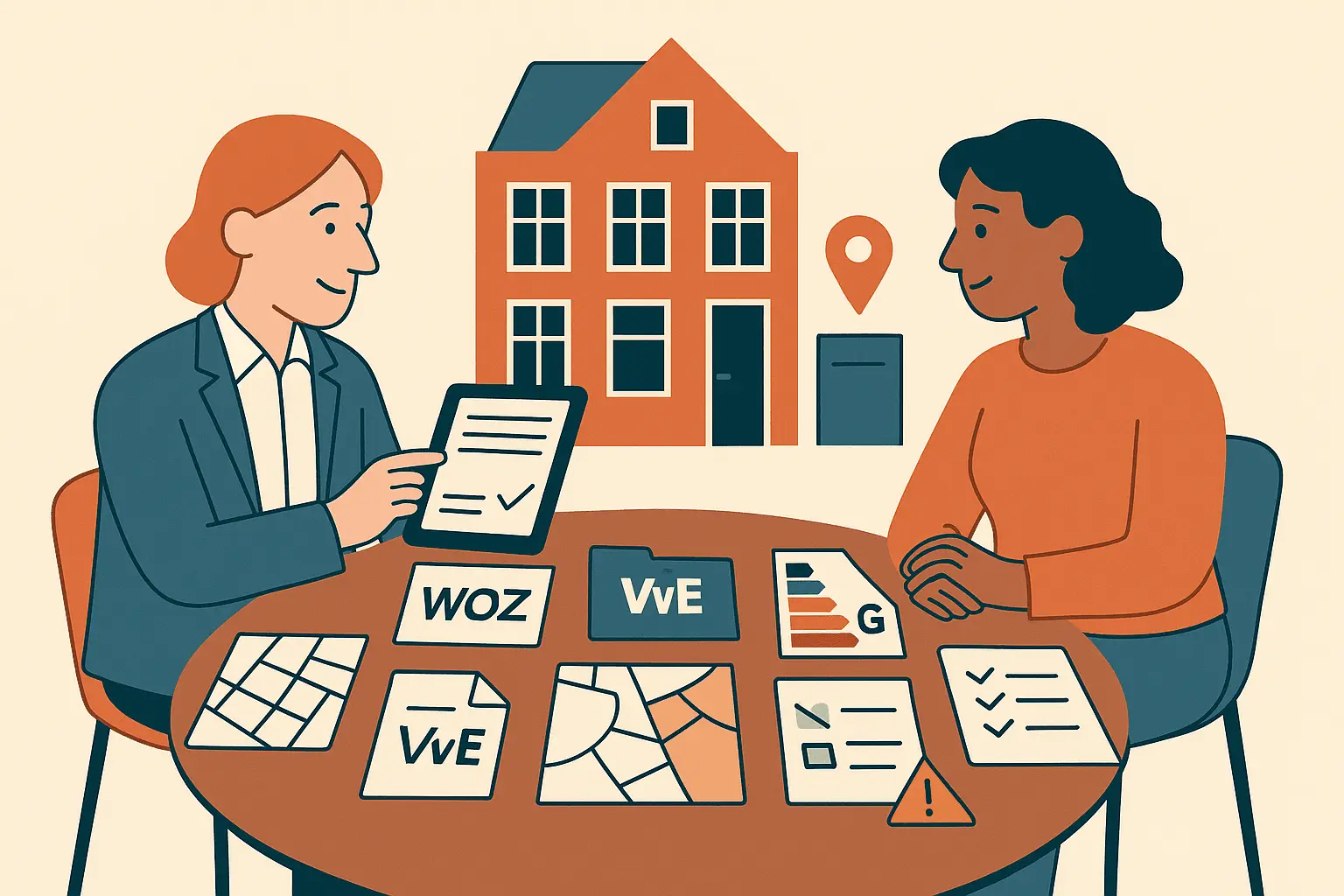
Buying in Breda: pre-bid checklist

Buying in Breda can move quickly, especially when a well-located house or apartment attracts multiple bidders. Before you decide your offer, you need more than a viewing, a brochure, and a feeling for the neighbourhood.
A good buying house Breda checklist helps you check the address, documents, building signals, local risks, and questions that may affect your price, conditions, or decision to walk away.
Have an address in Breda in mind? Huisscan can help you check a Dutch property before you bid by turning one address and uploaded documents into a clear pre-bid report with available property data, risk signals, document analysis, and buyer questions.
Why Breda needs a local pre-bid check
Breda is attractive for many buyers because it combines a historic centre, family neighbourhoods, apartments near the station, green areas, and good connections to other Dutch cities and Belgium. But every address is different.
A pre-bid check is useful because the asking price does not tell you:
- whether the usable floor area matches the listing;
- whether the property has renovation, moisture, roof, or insulation issues;
- what the homeowners’ association, or VvE, looks like for an apartment;
- whether there are nearby zoning plans, traffic routes, or development projects;
- whether Dutch documents contain clauses that shift risk to the buyer;
- whether your offer should include conditions, such as financing or a building inspection.
For expats buying a house in the Netherlands, the extra challenge is language. Terms like erfpacht, splitsingsakte, ouderdomsclausule, and bestemmingsplan can materially affect the decision, but they are easy to miss if you only rely on the sales brochure.
Start with the address: data to check before bidding
A proper pre-bid property check Netherlands starts with the address. The goal is not to predict everything, but to identify the facts and open questions before you bid.
Important Dutch property data to review includes:
- Kadaster information: land registry data, parcel boundaries, ownership structure, and rights registered on the property.
- BAG data: official building information, such as year of construction, use function, and registered surface data.
- WOZ value: municipal property value used for local taxation. It is not the same as market value, but it can provide context.
- Energy label: gives an indication of energy performance, but does not replace a technical inspection or energy advice.
- Omgevingsplan / bestemmingsplan: zoning and permitted use. Many people still use the old term bestemmingsplan, while the broader planning system is now part of the Omgevingswet.
- Monument status: national or municipal monument protection can affect renovation freedom, permits, and maintenance.
- Flooding, water, and soil signals: relevant for long-term use, insurance questions, renovation, and maintenance expectations.
For example, a house in a historic part of Breda may be charming but may also need closer checks on insulation, structural alterations, roof maintenance, and renovation permissions. An apartment near the station may be convenient but needs careful review of the VvE, noise, shared maintenance, and future area development.
Breda-specific risks to screen
Breda is not one uniform housing market. A pre-bid decision should reflect the location, age, and property type.
Before bidding, pay attention to these local risk themes.
Older houses and historic areas
In parts of the centre, Ginneken, Princenhage, Zandberg, and other established neighbourhoods, you may find older homes with character. That can also mean:
- older roofs, floors, pipes, or electrical systems;
- possible moisture or ventilation issues;
- previous renovations that need checking;
- monument or protected-area rules;
- energy upgrades that may be harder or more expensive.
Ask whether extensions, dormers, wall removals, or major renovations were permitted and documented.
Apartments and VvE health
If you are buying an apartment, the VvE can affect your future costs and resale value. Check:
- recent VvE meeting minutes;
- the maintenance plan, often called MJOP;
- reserve fund level;
- monthly service charges;
- planned major works, such as roof, façade, lift, balconies, or sustainability upgrades;
- insurance and internal rules.
A low monthly service charge is not automatically good. It may mean the VvE is not saving enough for future maintenance.
Noise, roads, rail, and surroundings
Breda has busy roads, rail connections, and neighbourhoods close to commercial or redevelopment areas. Check the surroundings, not just the living room.
Look for:
- proximity to railway lines, highways, busy roads, or nightlife;
- parking pressure;
- planned construction nearby;
- school, sports, hospitality, or business activity;
- future changes in the zoning plan.
A property may still be a good buy, but these factors can affect price, comfort, and your offer strategy.
Soil, water, and previous land use
Some addresses may require extra attention because of former industrial use, garages, workshops, fuel storage, or nearby water. Public sources may show soil-quality signals, but they do not always give a simple yes-or-no answer.
If there is a soil or water signal, ask targeted questions before bidding:
- Has soil research been done?
- Are there restrictions on digging or renovation?
- Has the municipality or environmental service issued relevant information?
- Could this affect a future extension, garden work, or financing?
For serious concerns, use a qualified specialist. Huisscan can help flag the question, but it does not replace environmental, legal, or technical advice.
Documents to read before setting your offer
The selling agent may provide documents through a digital data room. Read them before you set your final bid.
Key documents include:
- Vragenlijst: the seller’s questionnaire about known issues, renovations, defects, neighbours, and utilities.
- Lijst van zaken: the list of items included or excluded, such as curtains, appliances, flooring, or garden items.
- Meetrapport NEN 2580: measurement report showing usable residential area. This helps you compare price per square metre more fairly.
- Energielabel: official energy label and related notes.
- Bouwkundige keuring, if available: building inspection report. If there is none, consider whether you want an inspection condition.
- Eigendomssituatie: ownership details, rights, restrictions, or leasehold if applicable.
- VvE documents, for apartments: annual accounts, budget, minutes, MJOP, insurance, house rules, and division deed.
- Concept koopovereenkomst, if available: draft purchase agreement, including clauses and conditions.
Watch for clauses such as:
- Ouderdomsclausule: an age clause. This often limits the seller’s liability for issues related to the age of the property.
- Niet-bewoningsclausule: a non-occupancy clause. Used when the seller has not lived in the property and may know less about defects.
- Asbestclausule: asbestos clause. Relevant for many older homes.
- Bouwkundige keuring voorbehoud: building inspection condition.
- Financieringsvoorbehoud: financing condition.
These clauses are common in the Netherlands, but they matter. They can change your risk, your bid level, and the conditions you include.
Practical buying house Breda checklist
Use this checklist before making an offer.
Address and property facts
- Check Kadaster ownership, parcel, and registered rights.
- Compare BAG data with the listing.
- Check the usable living area against the NEN 2580 report.
- Review the WOZ value for context.
- Confirm whether the property is freehold, leasehold, apartment right, or has other rights attached.
Location and surroundings
- Check nearby roads, rail, nightlife, schools, businesses, or sports facilities.
- Look for planned building projects or zoning changes.
- Review parking situation and permits if relevant.
- Check water, soil, and environmental signals.
- Visit at a second time of day if the location is uncertain.
Building and maintenance
- Look at roof, windows, façade, floors, ventilation, damp, and insulation.
- Ask about recent maintenance and invoices.
- Check whether extensions or renovations were permitted.
- Consider a building inspection if the property is older, visibly renovated, or technically unclear.
- Estimate near-term maintenance costs before deciding your bid.
Energy and sustainability
- Review the energy label.
- Check heating system, insulation, glazing, ventilation, and solar panels if present.
- Ask about monthly energy use, but remember usage depends on the occupants.
- Consider whether upgrades are realistic under local rules or VvE approval.
Apartment and VvE
- Read VvE minutes, budget, accounts, and MJOP.
- Check reserve fund and planned works.
- Confirm monthly service charges and possible increases.
- Review house rules and division deed.
- Ask whether there are disputes or overdue contributions.
Bid strategy
- Decide your maximum price before emotional bidding starts.
- Check whether your mortgage estimate still works at that price.
- Decide whether to include financing and inspection conditions.
- Adjust your offer for maintenance, risks, missing documents, or uncertainty.
- Be ready to pause or walk away if key information is missing.
How checks can change your bid, conditions, or decision
A pre-bid check is only useful if it influences your decision.
Examples:
- If the VvE has little reserve and major roof work is planned, you may lower your bid or ask more questions before proceeding.
- If the listing shows more living space than the measurement report supports, you may reassess the price per square metre.
- If an older Breda home has visible damp and no recent inspection, you may include a building inspection condition.
- If zoning shows a possible development next door, you may reconsider the value or ask the municipality and selling agent for clarification.
- If documents contain strong risk-shifting clauses, you may ask your buyer agent, legal adviser, or notary to explain the implications before signing.
The point is not to find a perfect house. It is to understand what you are accepting before you bid.
What Huisscan can help you check
Huisscan is built for buyers who want a clearer pre-bid view of one Dutch address.
With a Huisscan pre-bid report, you can turn an address in Breda and uploaded documents into a structured overview with:
- available Dutch property data;
- address, building, and ownership signals from public sources where available;
- risk signals related to the property and surroundings;
- document analysis of brochures, questionnaires, VvE documents, clauses, and reports;
- plain-English explanations of Dutch terms;
- practical buyer questions to ask the selling agent, VvE, mortgage advisor, inspector, notary, or buyer agent.
Huisscan helps you organise the information before bidding. It does not replace professional legal, building, valuation, mortgage, tax, or notarial advice. For complex findings, use the right qualified professional.
FAQ
What should I check before buying a house in Breda?
Check the address data, Kadaster information, zoning, energy label, maintenance history, measurement report, seller questionnaire, and any VvE documents. Also review local surroundings such as roads, rail, parking, water, soil, and future development plans.
Is Breda risky for property buyers?
Breda is not “risky” as a whole. The risks depend on the specific address, property age, construction type, apartment VvE, location, and documents. A historic house, a renovated family home, and a station-area apartment need different checks.
What Dutch documents should expats understand before bidding?
Important documents include the vragenlijst, lijst van zaken, NEN 2580 meetrapport, energielabel, VvE documents, and the draft purchase agreement. Expats should pay extra attention to clauses such as ouderdomsclausule, niet-bewoningsclausule, and financieringsvoorbehoud.
Should I include a building inspection condition in Breda?
That depends on the property. Older homes, heavily renovated houses, visible defects, damp signals, or unclear maintenance history may justify a building inspection condition. Discuss the strategy with your buyer agent or relevant professional before bidding.
Can Huisscan tell me what to bid?
Huisscan does not tell you the exact bid or replace an appraiser or mortgage advisor. It helps you understand available property data, risk signals, documents, and buyer questions so you can make a more informed pre-bid decision.
Check the address before you bid.