
Buying a top-floor apartment: checklist
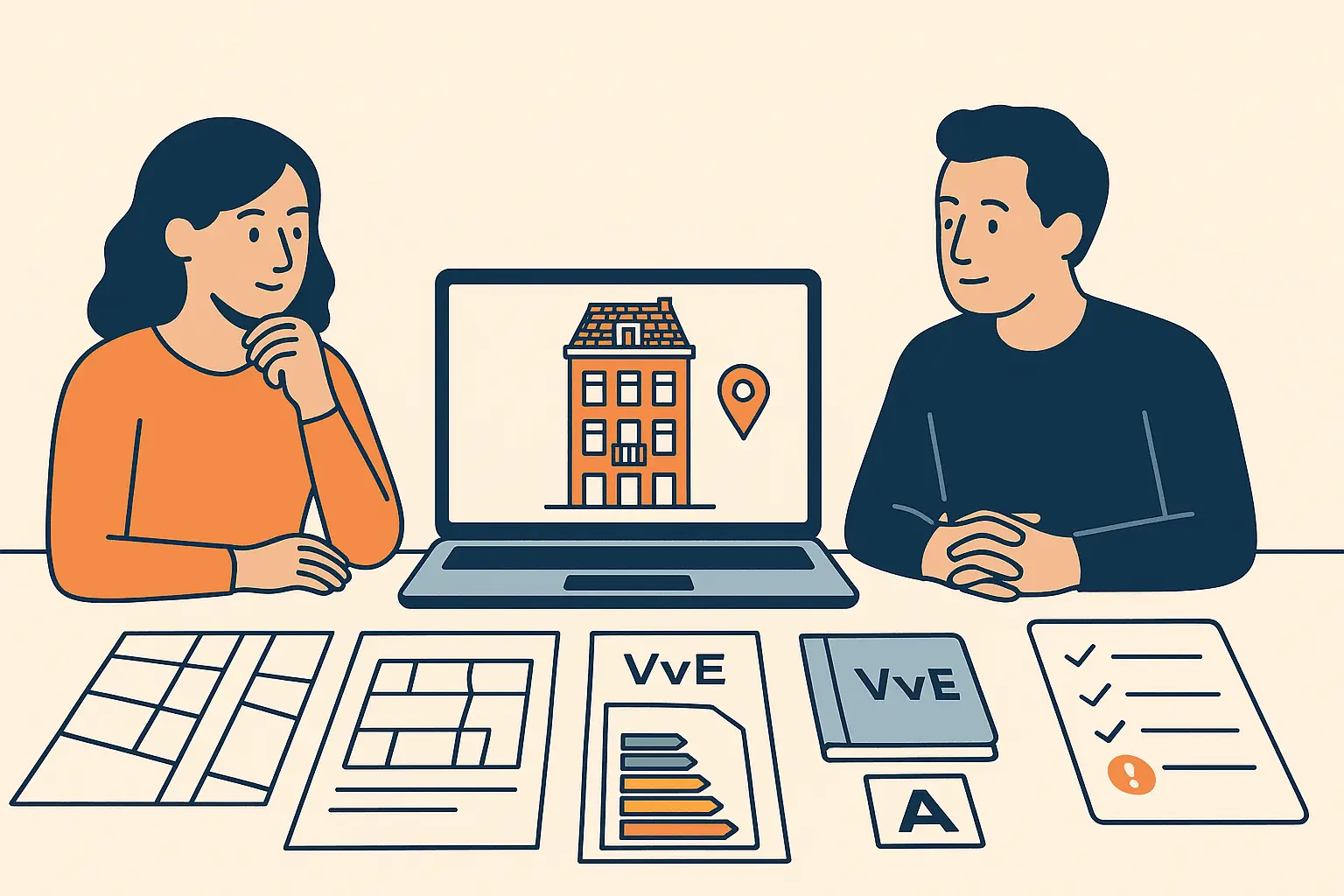
A top-floor apartment can feel like the best of both worlds: more light, fewer upstairs neighbours, and often a better view. But before you bid, the main question is not only “Do I like the apartment?” It is also: “What sits above, around, and behind this apartment legally and financially?”
In the Netherlands, buying a top-floor apartment usually means dealing with roof maintenance, insulation, the VvE and shared building responsibilities. These can affect your bid, your conditions, and sometimes your decision to walk away.
Looking at a specific address? Huisscan helps you check a Dutch property before you bid. Enter one Dutch address, upload the sales brochure and VvE documents, and get a clear pre-bid report with available property data, risk signals, document analysis, and buyer questions.
Why a top-floor apartment needs a different pre-bid check
When buying an apartment in the Netherlands, you usually buy an appartementsrecht: the right to use your private apartment plus a share in the common parts of the building. Those common parts are managed through the VvE — the Vereniging van Eigenaars, or owners’ association.
For a top-floor apartment, the roof is the key issue. It may not be “yours” privately, but it can directly affect your comfort, repair risk, and future costs.
A top-floor pre-bid check should focus on:
- the condition and maintenance plan for the roof;
- signs of leaks or poor insulation;
- whether the VvE has enough planning and reserves;
- legal rights for roof terraces, attic space or rooftop extensions;
- comfort issues such as heat, ventilation, stairs and lift access;
- whether risks should affect your offer price or bidding conditions.
This is especially important for expats buying a house in the Netherlands, because Dutch apartment ownership relies heavily on documents and shared decision-making.
Roof, leaks and insulation: what to verify
For a top-floor apartment, the roof is not just a technical detail. It is the part of the building most likely to affect your apartment directly.
At the viewing, look for practical signals:
- water stains on ceilings or walls;
- freshly painted patches near the roofline;
- mould, damp smells or bubbling paint;
- warped window frames or swollen skirting boards;
- condensation around skylights or dormer windows;
- visible cracks near roof edges or terraces.
Ask the selling agent clear questions:
- When was the roof last repaired or replaced?
- Is roof replacement included in the MJOP?
- Have there been leaks in this apartment or neighbouring top-floor units?
- Are there recent roof inspection reports, invoices or warranties?
- Who is responsible for skylights, dormers, chimneys or roof hatches?
- Are there planned works that may lead to an extra VvE contribution?
The MJOP means meerjarenonderhoudsplan: a long-term maintenance plan. It should show expected maintenance for shared building parts, including the roof, façade, stairwell and sometimes installations.
Insulation also matters. A top-floor apartment may be warm in summer and lose heat in winter if the roof is poorly insulated. The energielabel is useful, but do not treat it as the full answer. Ask what roof insulation is actually present and whether improvements are planned.
VvE documents: where many roof risks show up
A strong top-floor apartment can still be risky if the VvE is weak, inactive or underfunded. The VvE decides and pays for shared maintenance. If the roof needs work, the VvE’s planning and finances matter.
Before bidding, ask for these VvE documents:
| Dutch term | Plain English meaning | Why it matters |
|---|---|---|
| Splitsingsakte | Deed of division | Defines private and shared parts of the building |
| Splitsingstekening | Division drawing | Shows which areas belong to which apartment right |
| VvE-reglement | Owners’ association rules | Explains rights, obligations and voting rules |
| MJOP | Long-term maintenance plan | Shows expected building maintenance and timing |
| Notulen | Meeting minutes | Reveals discussions, disputes and upcoming works |
| Jaarrekening | Annual accounts | Shows VvE income, costs and reserves |
| Begroting | Budget | Shows expected service costs and planned spending |
| Opstalverzekering | Building insurance | Covers the building structure, subject to policy terms |
Read the meeting minutes carefully. Search for words such as:
- dak / roof;
- lekkage / leakage;
- isolatie / insulation;
- balkon or dakterras / balcony or roof terrace;
- schilderwerk / painting;
- gevel / façade;
- lift;
- achterstallig onderhoud / overdue maintenance;
- extra bijdrage / extra contribution;
- juridische kwestie / legal issue.
A low monthly VvE contribution is not automatically good. It may mean the VvE has not been saving enough for major maintenance. A high contribution is not automatically bad either, if it reflects realistic planning and a healthy reserve.
For a top floor apartment Netherlands buying decision, the question is simple: does the VvE look prepared for the building it manages?
Legal and use details: roof terraces, storage and renovations
Top-floor apartments often come with attractive extras: a roof terrace, attic storage, skylights, a dormer window or even the possibility of a rooftop extension. Do not assume these are automatically included or permitted.
Check the documents for:
- Dakterras: Is the roof terrace legally part of the apartment right, or only used informally?
- Exclusive use: Does the deed or VvE regulation give exclusive use of part of the roof?
- Berging or zolder: Is attic storage private, shared or simply used by habit?
- Dakopbouw: Is a rooftop extension allowed, and was it permitted?
- Dakkapel: Was a dormer window approved by the VvE and municipality if required?
- Omgevingsvergunning: Is there a building or planning permit where relevant?
- Erfpacht: Is the property on leasehold land, and what are the conditions?
- Monument or protected area: Are there restrictions on alterations?
A roof terrace is a common example. The sales brochure may show it as a major selling point, but the legal situation may be more nuanced. You want to know whether the terrace is included in the apartment right, whether the VvE has approved it, and whether municipal rules are relevant.
If something is unclear before bidding, ask the seller or agent for written clarification. If it remains unclear, consider whether your offer should include conditions or whether you need professional legal or notarial advice.
Comfort and daily-life checks before you fall in love
The top floor can be quiet and bright, but daily comfort still needs a practical check.
Consider:
- Stairs and lift: Is there a lift? If not, are the stairs manageable for daily life, moving furniture, children or guests?
- Lift maintenance: If there is a lift, is maintenance included in the VvE planning and budget?
- Heat: Does the apartment overheat in summer? What shading or ventilation is possible?
- Ventilation: Are there proper vents, windows or mechanical systems?
- Noise: There may be no upstairs neighbours, but check roof installations, lift machinery, street noise and wind noise.
- Water pressure: Test taps and shower pressure if possible.
- Fire escape and common areas: Is the stairwell clear, maintained and practical?
- Storage: Is there enough private storage, and is it legally included?
Visit at least once with these practical questions in mind, not only with the floorplan and photos. A bright top-floor apartment can still be difficult if the access is steep, the roof is poorly insulated or the VvE has unresolved maintenance issues.
Practical checklist before bidding
Use this checklist before making an offer on a top-floor apartment in the Netherlands.
Documents to request
- Sales brochure and property questionnaire.
- Energy label.
- VvE meeting minutes.
- VvE annual accounts and budget.
- MJOP or maintenance plan.
- Splitsingsakte and splitsingstekening.
- VvE regulations.
- Building insurance summary if available.
- Information on leasehold, permits or monument status if relevant.
Roof and building questions
- When was the roof last replaced or repaired?
- Are there known leaks or insurance claims?
- Is roof maintenance included in the MJOP?
- Are there quotes for upcoming roof work?
- Are skylights, dormers or roof terraces maintained privately or by the VvE?
- Is there visible damp, staining or recent repainting?
VvE questions
- Is the VvE active and holding meetings?
- How much is in the reserve fund?
- Are service costs likely to change?
- Are there unpaid contributions by owners?
- Are major works planned?
- Have there been disputes about roof, terrace or maintenance issues?
Legal and use questions
- Is the roof terrace legally documented?
- Is attic space private, shared or not included?
- Were renovations approved where required?
- Are there restrictions from the VvE, municipality, leasehold or monument rules?
- Does the apartment description match the legal division drawing?
Bid decision questions
Before bidding, decide:
- What roof or VvE risk should be priced into your maximum offer?
- Do you need a building inspection condition?
- Do you need more documents before making a final decision?
- Are the monthly VvE costs comfortable within your budget?
- Is there a risk that your mortgage advisor, appraiser or notary may raise questions?
- Is any issue serious enough to walk away?
A pre-bid property check Netherlands buyers can actually use should lead to a clearer decision: bid, bid lower, add conditions, ask more questions, or stop.
What Huisscan can help you check
Huisscan is designed for one practical purpose: helping you check Dutch property before bidding.
For a top-floor apartment, Huisscan can help turn one address and uploaded documents into a clear pre-bid report with:
- available Dutch property data, such as address, building and public-register signals where available;
- energy label and basic property information;
- document analysis of the brochure, VvE documents, MJOP, minutes and financials;
- risk signals around roof maintenance, VvE reserves, document gaps, leasehold, permits or unusual ownership details;
- plain-English explanations of Dutch terms;
- buyer questions to send to the agent, seller, VvE manager, mortgage advisor or buyer agent.
Huisscan does not replace a building inspector, appraiser, mortgage advisor, lawyer, notary or tax specialist. It helps you organise the information earlier, so you can ask better questions before your bid is on the table.
FAQ
Is a top-floor apartment in the Netherlands a good idea?
It can be. Many buyers like the light, privacy and lack of upstairs neighbours. The key is to check the roof, insulation, VvE documents and legal use of any roof terrace or attic space before bidding.
Who pays for roof repairs in a Dutch apartment building?
Often the roof is a shared building part managed by the VvE, but the exact answer depends on the splitsingsakte, VvE regulations and the specific situation. Always check the documents before assuming who pays.
What is the most important VvE document for a top-floor apartment?
The MJOP is very important because it shows planned maintenance, including roof works if properly included. Also read the meeting minutes and annual accounts, because they show whether roof issues, disputes or funding problems are already being discussed.
Is a roof terrace automatically included when I buy the apartment?
No. A roof terrace should be checked carefully. Confirm whether it is included in the apartment right, whether there is exclusive use, whether the VvE approved it, and whether permits or municipal rules are relevant.
Should I do a building inspection before bidding?
For a top-floor apartment, a building inspection can be useful, especially if there are signs of leakage, poor maintenance, roof age, damp or unclear VvE planning. Ask a qualified inspector what they can and cannot assess before relying on it.
How can Huisscan support my pre-bid check?
Huisscan can analyse one Dutch address and uploaded documents to create a Huisscan pre-bid report with available property data, risk signals, document findings and practical buyer questions. It helps you prepare, but it is not a replacement for professional advice.
A top-floor apartment can be a strong purchase when the roof, VvE and legal details are clear enough for your decision. Use the documents, viewing and available data to decide what to ask, what to price in, and whether the apartment still fits your risk level.
Check the address before you bid.