
Buying a corner house: what to check
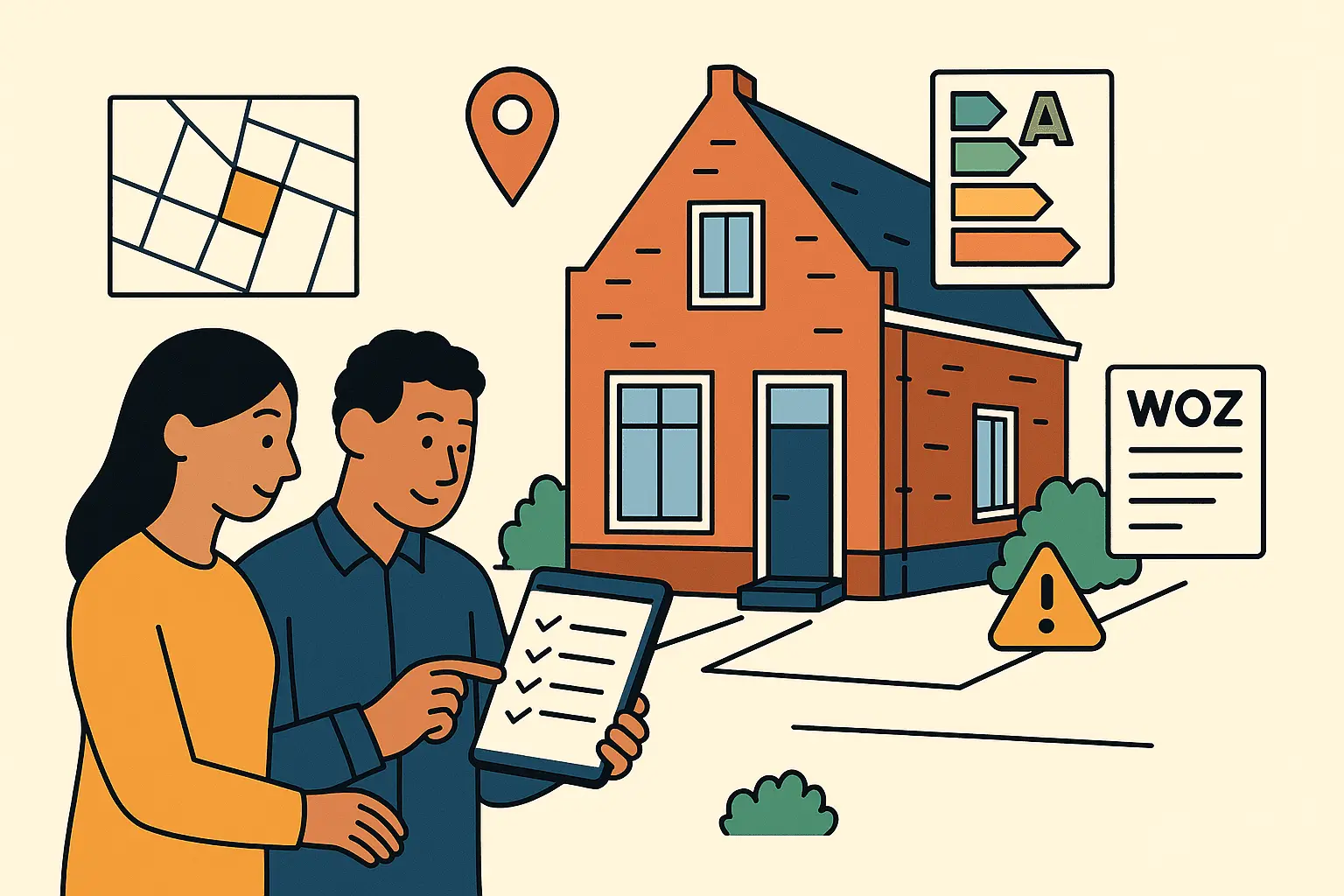
A corner house, or hoekwoning, can look like the ideal middle ground: more light than a terraced house, often a larger garden, and only one direct neighbour. But before you bid, the “corner” also raises extra questions about the plot, side wall, maintenance, privacy, traffic, and legal use of land.
The goal is not to decide whether corner houses are good or bad. The goal is to know what you are actually buying, what could cost money later, and whether your offer should change.
Have a specific corner house in mind? Huisscan helps you Check a Dutch property before you bid. Enter one Dutch address and upload the available documents to get a clear pre-bid report with property data, risk signals, document analysis, and buyer questions.
Why a corner house deserves a separate check
A hoekwoning is usually an end-of-row family house. Compared with a tussenwoning — a mid-terrace house — it may have:
- A side garden or wider plot
- More windows and daylight
- Side access to the garden
- Fewer shared walls
- More visible street frontage
Those are real advantages. But they can also create pre-bid risks.
A corner house may have more exposed exterior wall, more fencing, extra guttering, more street contact, or a side strip of land that is not as straightforward as it looks during the viewing. If you are buying a house in the Netherlands as an expat, these details can be easy to miss because the Dutch documents use specific terms.
Before bidding, focus on three questions:
- Is the plot exactly what you think it is?
- Does the maintenance match your budget?
- Does the corner location improve daily life, or create nuisance?
These answers can affect your bid price, your conditions, or your decision to walk away.
Plot and boundaries: check what is really included
The most important corner house check is the plot.
A corner house often has a side garden, side path, hedge, fence, garage, shed, or parking space. But the visible garden line is not always the same as the legal plot boundary.
Key Dutch terms:
- Perceel: the plot or parcel of land.
- Kadastrale grens: the cadastral boundary recorded by Kadaster.
- Kadaster: the Dutch land registry.
- Snippergroen: small pieces of municipal land sometimes used as garden by homeowners.
- Erfdienstbaarheid: an easement, such as a right someone else has over the land.
- Recht van overpad: a right of way, for example a neighbour’s right to use a path.
- Mandeligheid: shared ownership or shared maintenance, often of a wall, path, fence, or alley.
- Erfpacht: leasehold land instead of full ownership of the land.
For a corner house, check whether the side strip, fence line, parking area, or garden extension is legally part of the property. If it is municipal land, shared land, or subject to a right of way, it may still be useful — but it is not the same as fully private land.
Ask the selling agent:
- Does the full side garden belong to the property?
- Does the Kadaster plot match the current fence or hedge?
- Is any municipal land being used as garden?
- Are there rights of way for neighbours or utility access?
- Who owns and maintains the side fence, wall, alley, or gate?
- Is the property on eigen grond — owned land — or erfpacht?
If the plot is one of the reasons you want the house, do not treat it as a bonus until you have checked it.
Maintenance, energy and moisture checks
A corner house has one side exposed to wind and rain. That does not automatically mean it has problems, but it does mean you should look carefully at the outside shell of the house.
During the viewing, pay attention to:
- Cracks in the side wall or around window frames
- Damaged brickwork or poor voegwerk — pointing between bricks
- Damp patches on interior side walls
- Older single or double glazing on the exposed side
- Roof edges, gutters, and downpipes
- Flat roofs on side extensions or garages
- Drainage around the side garden
- Fences, gates, retaining walls, and paving
Also check the energielabel. A corner house can lose more heat through its extra outside wall than a mid-terrace house, especially if insulation is limited. The energy label is a starting point, not a full inspection. Ask what insulation has actually been installed: roof, floor, glass, cavity wall, and any extension.
For older houses, consider a bouwkundige keuring — a building inspection. This is especially useful if you see cracks, damp, roof issues, old windows, or signs of deferred maintenance. If repair costs are uncertain, you may want to discuss a building inspection condition with your buyer agent or adviser before bidding.
Maintenance does not mean you should avoid the house. It means you should price the house realistically.
Street position, privacy and everyday use
The corner location can be a major plus. It can also change how the house feels day to day.
A corner house may sit next to:
- A crossing or busier road
- A footpath or bicycle route
- Parking spaces
- A school route
- Waste containers
- A playground or public green area
- A side street with headlights shining into rooms
Try to visit the street at more than one time if possible. A quiet viewing moment does not always show school traffic, evening parking pressure, or weekend activity.
Check:
- Noise from traffic, scooters, buses, or deliveries
- Headlights into side windows or bedrooms
- Privacy in the side garden
- Whether pedestrians can easily see into living spaces
- Where bins, bikes, and visitors will go
- Whether parking is private, permitted, or informal
- Garden orientation and sunlight
Also check the omgevingsplan through the municipality or Omgevingsloket. This shows planning rules and may reveal nearby development possibilities. If you are paying extra because the location feels open and green, check whether that setting is likely to remain.
Documents and Dutch data sources to review
Before making an offer, gather as many available documents as possible. A pre-bid property check Netherlands buyers can use should combine public Dutch property data with seller documents.
Useful sources include:
| Source or document | What to check | Why it matters for a corner house |
|---|---|---|
| Kadaster | Plot size, ownership, cadastral map, rights mentioned in deeds where available | Confirms whether the side garden or strip is part of the property |
| BAG — Basisregistratie Adressen en Gebouwen | Registered building data, year of construction, usage, surface area | Helps compare official data with the listing |
| Energielabel | Energy rating and insulation information | Extra outside wall can affect comfort and energy use |
| Omgevingsloket / omgevingsplan | Planning rules, building possibilities, restrictions | Important if you want a side extension, driveway, or extra outbuilding |
| Vragenlijst — seller’s questionnaire | Known defects, leaks, disputes, renovations, soil or asbestos mentions | Can reveal issues not obvious during the viewing |
| Lijst van zaken | What stays with the property | Relevant for sheds, garden items, fixtures, solar panels, or security systems |
| Building reports, permits, invoices | Previous repairs, extensions, roof work, façade work | Helps judge whether maintenance was done properly |
| WOZ and comparable information | Value context | Useful background, but not a full valuation |
| Environmental or municipal information | Soil, flooding, foundation or local risk signals where relevant | Helps identify property risks Netherlands buyers should ask about |
If legal ownership, easements, leasehold, or boundary issues are unclear, ask a qualified professional such as a notary or legal adviser. If the physical condition is unclear, ask a building inspector.
Practical corner house Netherlands buying checklist
Use this corner house Netherlands buying checklist before you decide your offer.
Plot and legal use
- Compare the visible garden and fence line with the Kadaster plot.
- Ask whether any side strip is municipal land or snippergroen.
- Check for recht van overpad or other erfdienstbaarheden.
- Ask who owns and maintains side fences, walls, paths, gates, and alleys.
- Check whether the property is on owned land or erfpacht.
- Verify whether any driveway or parking space is legally part of the property.
Maintenance and condition
- Inspect the exposed side wall for cracks, damp, and poor pointing.
- Check roof edges, gutters, downpipes, and flat roofs.
- Ask about past leaks, moisture, façade repairs, and insulation.
- Review the energy label and ask what insulation is actually present.
- Look at garden drainage, paving slope, and water near the wall.
- Consider a bouwkundige keuring if the property is older or defects are visible.
Location and daily living
- Visit the street at different times if possible.
- Check noise, traffic, privacy, headlights, and parking pressure.
- Look for nearby waste containers, footpaths, playgrounds, or busy corners.
- Check garden orientation and whether the side garden is usable.
- Review planning information for nearby changes or building possibilities.
Offer decision
- Decide whether the corner plot justifies a higher bid.
- Estimate extra maintenance or inspection costs.
- Ask missing questions before bidding where possible.
- Consider suitable offer conditions, such as financing or building inspection, with professional guidance.
- Be ready to lower your bid or walk away if key answers remain unclear.
What Huisscan can help you check
Huisscan can turn one Dutch address and uploaded documents into a clear Huisscan pre-bid report. For a corner house, that can help you move from “it feels like a good house” to “these are the points I need to check before bidding.”
Huisscan can help with:
- Available property data: address data, building information, plot-related signals, energy label information, and other Dutch property data where available.
- Risk signals: issues that may need extra attention, such as plot questions, planning context, environmental signals, leasehold, age-related risks, or document inconsistencies.
- Document analysis: uploaded brochures, seller questionnaires, lists of things, inspection reports, energy documents, and other files can be reviewed for relevant mentions.
- Corner house questions: clear buyer questions about the side garden, boundaries, maintenance, right of way, extensions, and repair risks.
- Pre-bid clarity: support for deciding whether to bid, ask more questions, adjust the price, add conditions, or pause.
Huisscan does not replace a building inspector, appraiser, mortgage advisor, notary, lawyer, or buyer agent. It helps you check Dutch property before bidding so you can have better conversations with the right professionals.
FAQ
Is a corner house in the Netherlands a good buy?
It can be. A corner house may offer more light, land, privacy, and flexibility than a mid-terrace house. But the value depends on the legal plot, location, condition, energy performance, and maintenance. Check these points before assuming the corner position is worth paying extra for.
What is the first thing to check before bidding on a corner house?
Start with the plot. Confirm whether the side garden, fence line, path, or parking area is actually part of the property. Check Kadaster information and ask about rights of way, shared maintenance, leasehold, or municipal land use.
Are maintenance costs higher for a corner house?
Not automatically. But a corner house often has more exterior surface exposed to weather, plus extra fencing, gutters, windows, and possibly side extensions. That can mean more maintenance over time. A building inspection can help you understand the likely repair risks.
Can I build an extension on the side of a corner house?
Maybe, but do not assume it. Side extensions depend on the plot boundary, planning rules, permits, neighbours, access rights, utilities, trees, and sometimes architectural or municipal restrictions. Check the omgevingsplan and ask the municipality or a qualified adviser before valuing the house based on future extension plans.
Which Dutch terms should expats know when buying a corner house?
Useful terms include hoekwoning — corner house, perceel — plot, kadastrale grens — cadastral boundary, erfdienstbaarheid — easement, recht van overpad — right of way, mandeligheid — shared ownership or maintenance, erfpacht — leasehold, omgevingsplan — planning rules, and bouwkundige keuring — building inspection.
Should I include a building inspection condition in my offer?
If the house is older, has visible defects, or the maintenance risk is unclear, it may be worth discussing a bouwkundige keuring and related offer condition with your buyer agent or adviser. The right approach depends on the property, market situation, and your risk budget.
Check the address before you bid.