
Asbestos signals before buying a Dutch home
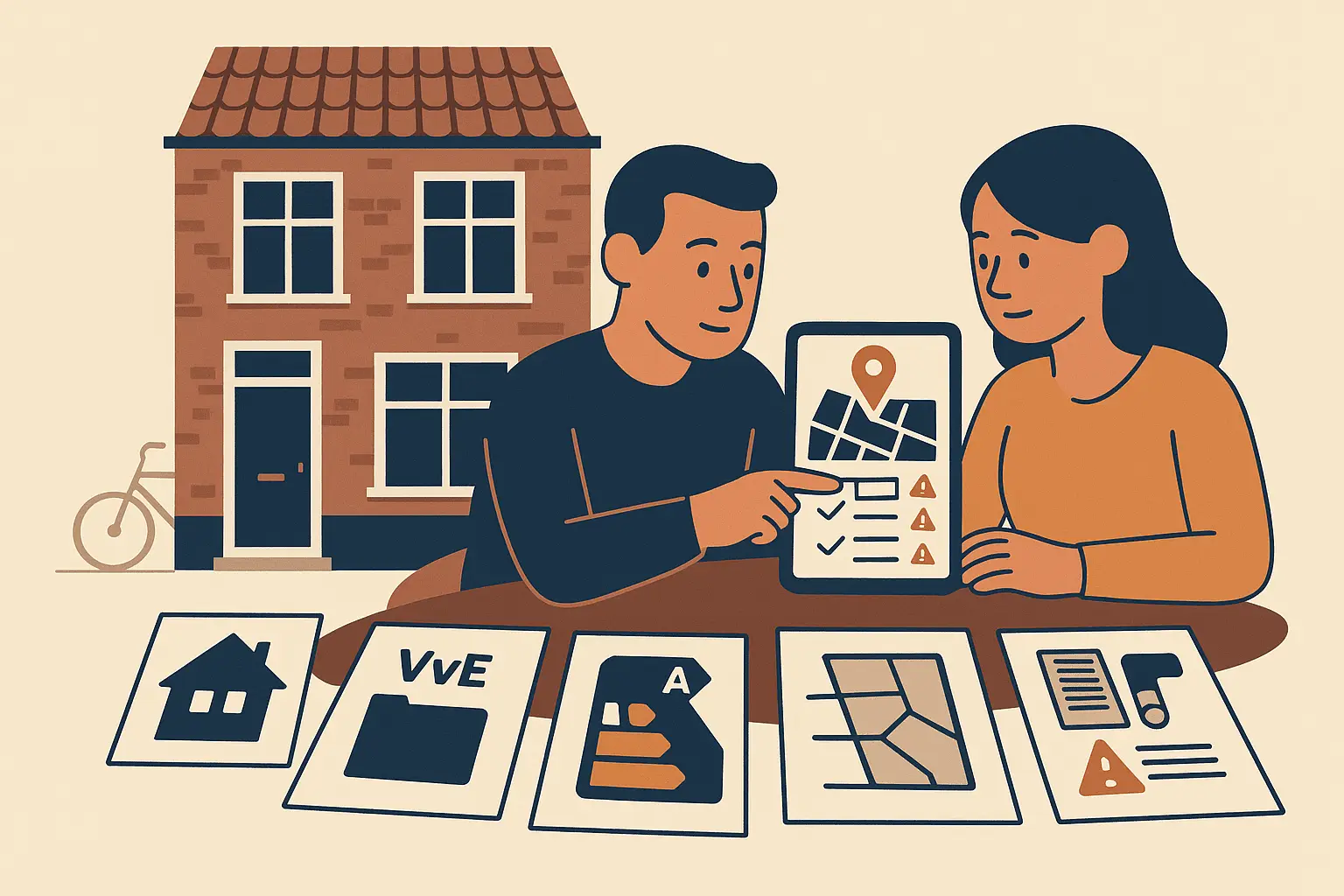
Asbestos is one of those property risks that can be easy to miss before bidding. A Dutch home can look well maintained, yet still contain asbestos in an old shed roof, floor layer, pipe insulation, façade panel, or shared apartment building part.
If you are searching for “asbestos house Netherlands buying”, the key pre-bid question is not: “Can I prove there is no asbestos?” Often, you cannot without specialist investigation. The better question is: are there enough signals to ask more questions, adjust your offer, add a condition, or walk away?
Considering a specific property? Use Huisscan to check a Dutch property before you bid. Enter one address and upload the sales documents to get a clear pre-bid report with available property data, risk signals, document analysis, and buyer questions.
Why asbestos matters before your offer
Asbestos was widely used in older building materials because it was strong, heat-resistant, and cheap. In the Netherlands, it may still be present in homes, sheds, garages, apartment buildings, and garden structures built or renovated before the mid-1990s.
Asbestos is not always an immediate danger if it is sealed, undamaged, and left alone. The risk increases when material is damaged, weathered, drilled, removed, sanded, or disturbed during renovation.
Before you bid, asbestos can matter because it may affect:
- renovation plans and timelines;
- removal costs;
- the value you attach to the home;
- whether you want a building inspection or specialist asbestos check;
- future VvE costs in an apartment building;
- your willingness to buy without extra conditions.
The aim is calm risk awareness, not panic. Many Dutch buyers purchase older homes with asbestos signals. The important part is knowing what you are accepting before you make the offer.
The Dutch age and data signals to check first
The first signal is usually the bouwjaar: the construction year. You may see this in the listing, the sales brochure, or public Dutch property data such as the BAG register.
As a rule of thumb, asbestos deserves extra attention when a home, extension, shed, garage, roof, floor, or apartment building part dates from before the mid-1990s.
Check these signals:
Bouwjaar before the mid-1990s
This does not prove asbestos is present, but it makes the question relevant.Older extensions or renovations
A 1930s house renovated in the 1970s or 1980s may have asbestos-containing materials added later.Sheds, garages, and outbuildings
Dutch gardens often contain older schuren, bergingen, or garage roofs with asbestos-cement sheets.Apartment buildings with shared parts
In an apartment, asbestos may be in the roof, façade, pipe ducts, storage areas, or other common parts managed by the VvE.Unclear renovation history
If the seller cannot explain when certain materials were installed, treat this as an information gap.
A newer interior does not automatically remove the risk. Cosmetic renovation can hide older layers underneath.
Common places asbestos may appear in Dutch homes
You cannot reliably identify asbestos by sight alone. Still, certain materials and locations deserve attention before buying a house in the Netherlands.
Common Dutch asbestos signals include:
Asbestcement golfplaten
Corrugated asbestos-cement roof sheets, often on sheds, garages, barns, or extensions.Dakbeschot or roof boarding
Older roof boards or panels beneath roof covering.Façade panels and soffits
Exterior panels around the roof edge, dormers, balconies, or façades.Pipe insulation and old heating systems
Especially around older technical installations, crawl spaces, boiler rooms, or service ducts.Old vinyl flooring or floor tiles
Asbestos may be in floor tiles, backing layers, or adhesive, especially under newer flooring.Flue pipes, chimney channels, and ventilation ducts
Older heat-resistant components may contain asbestos.Window sills or interior boards
Some older boards, panels, or fire-resistant materials can be asbestos-suspect.Crawl spaces and meter cupboards
Older service areas may contain hidden pipes, boards, or debris.Garden or soil debris
Weathered roof sheets or demolished outbuildings can leave asbestos-suspect fragments in the garden or soil.
Do not break, drill, or sample suspected material yourself. If the issue is important to your decision, ask a qualified asbestos specialist or building professional.
Documents and Dutch terms that deserve attention
Asbestos risk often shows up in the documents before it shows up during a viewing. Read the sales file carefully.
Look for these documents and terms:
Vragenlijst / NVM-vragenlijst
The seller questionnaire. It may ask whether the seller is aware of asbestos or asbestos-suspect materials.Asbestclausule
An asbestos clause in the purchase agreement. This often means the buyer acknowledges that asbestos may be present, especially in older homes. Read it carefully and ask your buyer agent, legal adviser, or notary if you are unsure.Ouderdomsclausule
An age clause. This is common in older Dutch homes and may limit expectations about construction quality. It is not asbestos-specific, but it is a signal to investigate older materials.Bouwkundig rapport
A building inspection report. A general inspector may flag asbestos-suspect materials, but this is not the same as a certified asbestos inventory.Asbestinventarisatierapport
An asbestos inventory report. This is more specific and is usually prepared by a specialist. It may be needed before certain demolition or renovation work.Omgevingsvergunningen and bouwarchief
Building permits and municipal archive documents can show old extensions, roof changes, or renovations.VvE-stukken and MJOP
For apartments, check the owners’ association documents and the meerjarenonderhoudsplan. These may mention roof replacement, façade work, pipe ducts, storage areas, or asbestos investigations.Bodemrapport or soil information
If there are signs of old demolition, industrial use, or asbestos-suspect debris in the garden, soil information may be relevant.
Useful Dutch words to search for in documents include: asbest, asbestverdacht, asbesthoudend, asbestcement, golfplaten, hechtgebonden, niet-hechtgebonden, sloopmelding, and sanering.
How asbestos can affect your bid or decision
Asbestos signals do not automatically mean you should walk away. They do mean you should make a more informed bid.
Before offering, consider:
Price adjustment
If a shed roof, floor, or technical area may need removal, get an estimate where possible and reflect uncertainty in your bid.Offer conditions
You may want to discuss a building inspection condition, document review condition, or further investigation with your buyer agent. Conditions are part of negotiation and should be worded by a qualified professional.Renovation planning
If you plan to open walls, remove floors, replace a roof, or demolish a shed, asbestos risk becomes more important.Apartment exposure through the VvE
Even if your private apartment looks fine, shared asbestos in a roof, façade, or service shaft may affect future service charges or maintenance decisions.Financing and valuation
If possible removal or replacement costs are material, discuss the impact with your mortgage advisor or appraiser.Walking away
If the seller cannot answer basic questions, documents are missing, and your renovation depends on uncertain asbestos removal, walking away may be the clearest decision.
The main pre-bid mistake is not buying a home with asbestos risk. It is bidding as if the risk does not exist.
Practical pre-bid asbestos checklist
Use this checklist before you bid:
- Check the bouwjaar of the home and any extensions.
- Check whether sheds, garages, dormers, roofs, or façades look older than the interior.
- Search the sales documents for asbest, asbestclausule, asbestverdacht, and asbestinventarisatie.
- Read the seller questionnaire carefully.
- Ask whether the seller knows of asbestos in the home, garden, shed, garage, or apartment building.
- Ask whether any asbestos has already been removed and request invoices or reports.
- For apartments, check VvE documents, the MJOP, and meeting minutes for asbestos-related work.
- If you plan renovation, ask whether an asbestos inventory may be needed before work starts.
- If asbestos is suspected, ask for specialist input before relying on assumptions.
- Decide before bidding: accept the risk, adjust the price, add a condition, ask more questions, or walk away.
Useful questions to ask the selling agent:
- “Is the seller aware of asbestos or asbestos-suspect materials?”
- “Are there any asbestos reports available?”
- “Has asbestos ever been removed from the property?”
- “Are the shed, garage, roof sheets, floor layers, or pipe ducts original?”
- “For this apartment: has the VvE investigated asbestos in common parts?”
- “Will an asbestos clause be included in the purchase agreement?”
What Huisscan can help you check
Huisscan is designed as a pre-bid property check Netherlands tool: practical support before you make an offer.
With one Dutch address and uploaded documents, a Huisscan pre-bid report can help you:
- check available Dutch property data, including age and property context;
- identify age-related asbestos signals;
- scan uploaded documents for Dutch asbestos terms and clauses;
- highlight missing or unclear information;
- summarise relevant risks in plain English;
- prepare better buyer questions for the selling agent, VvE, inspector, or advisor;
- connect asbestos signals with other property risks Netherlands buyers should consider before bidding.
Huisscan does not inspect the building, test materials, certify whether asbestos is present, or replace a building inspector, asbestos specialist, appraiser, mortgage advisor, lawyer, or notary. It helps you organise the available information so you can check a Dutch property before bidding with fewer blind spots.
FAQ
Should I avoid every Dutch home built before the mid-1990s?
No. Many older Dutch homes are bought and lived in without issue. The construction year is a signal to ask better questions, not an automatic reason to stop. Focus on the location, condition, documents, and your renovation plans.
Does a building inspection confirm whether asbestos is present?
Usually not. A general bouwkundige keuring may identify asbestos-suspect materials, but confirmation normally requires specialist assessment and, in some cases, laboratory analysis. Ask what the inspection does and does not cover.
What does an asbestclausule mean?
An asbestclausule is an asbestos clause in the purchase agreement. It often states that asbestos may be present and that the buyer accepts certain risks. The exact wording matters, so ask a qualified professional if you are unsure.
Does the seller have to remove asbestos before selling?
Not automatically. Asbestos can often remain in place if it is not damaged or disturbed, but rules and responsibilities depend on the material, condition, planned work, and current regulations. Ask a specialist or the relevant authority for your situation.
Can I renovate a house with asbestos?
Possibly, but you need to plan carefully. If asbestos-suspect materials may be disturbed, an asbestos inventory, notification, or certified removal may be required. Check current rules before starting work.
How can expats ask about asbestos in Dutch?
You can use simple Dutch questions such as:
- “Is er asbest bekend in de woning?”
- “Zijn er asbestverdachte materialen aanwezig?”
- “Is er een asbestinventarisatierapport beschikbaar?”
- “Is er ooit asbest verwijderd?”
- “Geldt er een asbestclausule in de koopovereenkomst?”
Check the address before you bid.