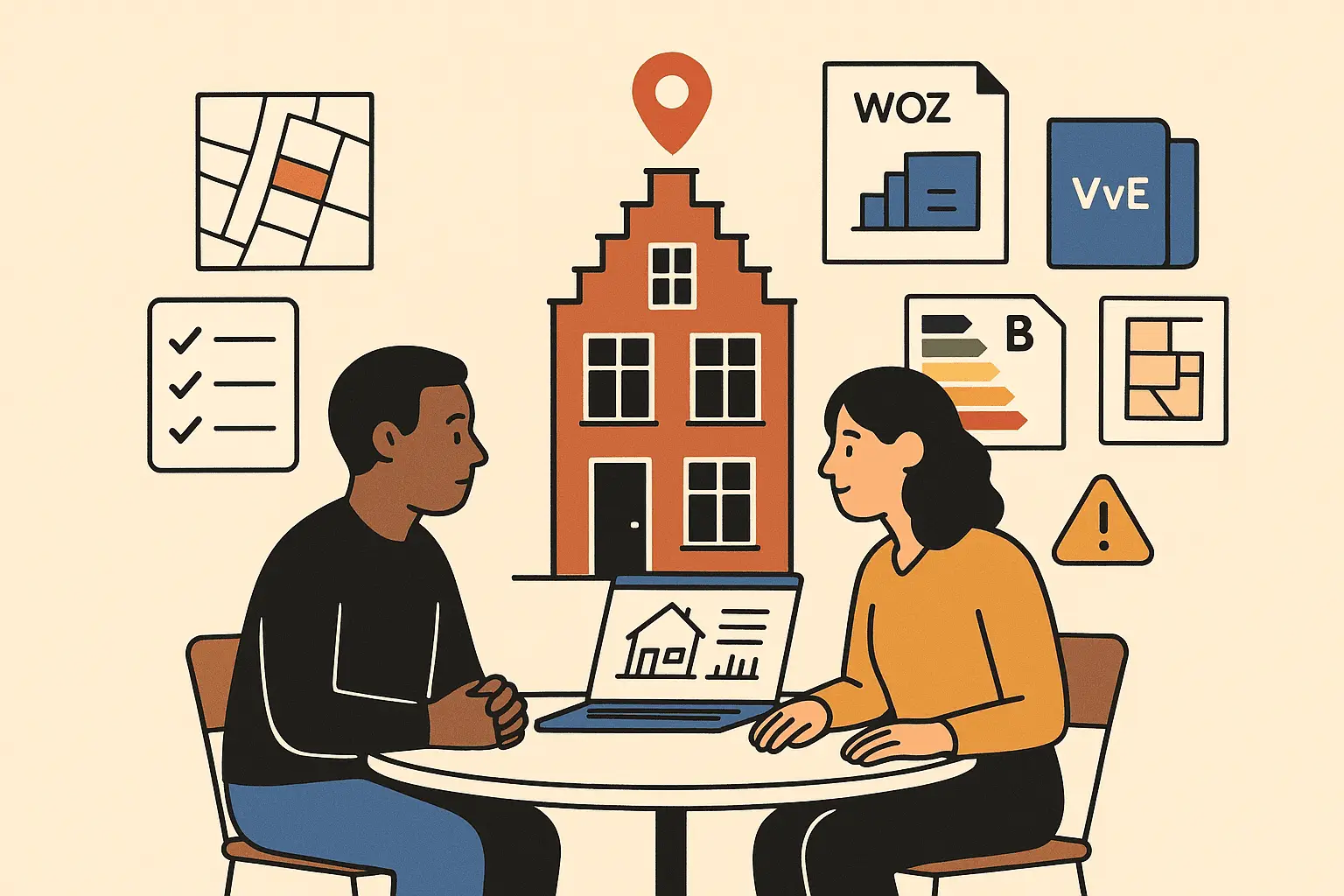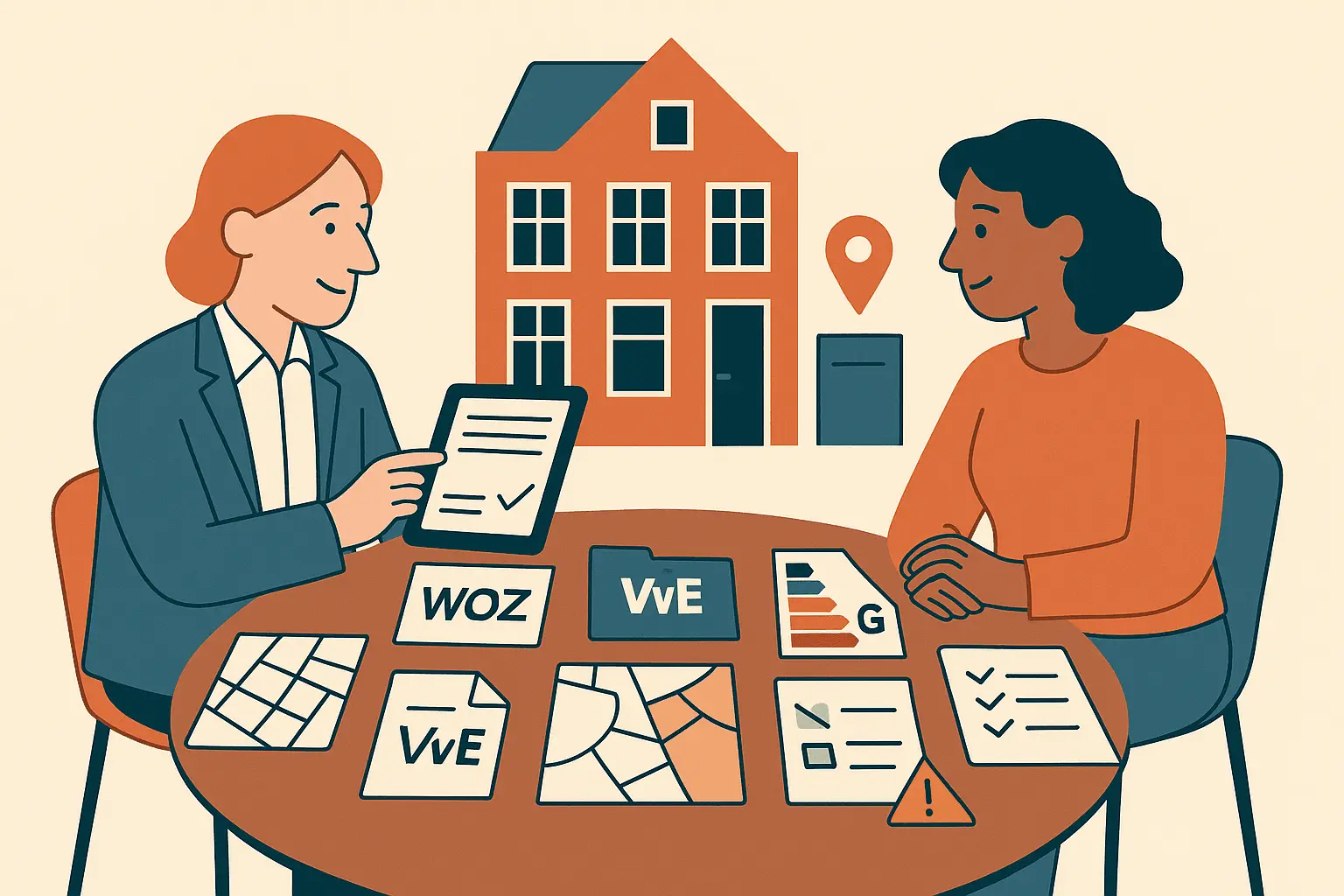
Railway noise: buyer checklist
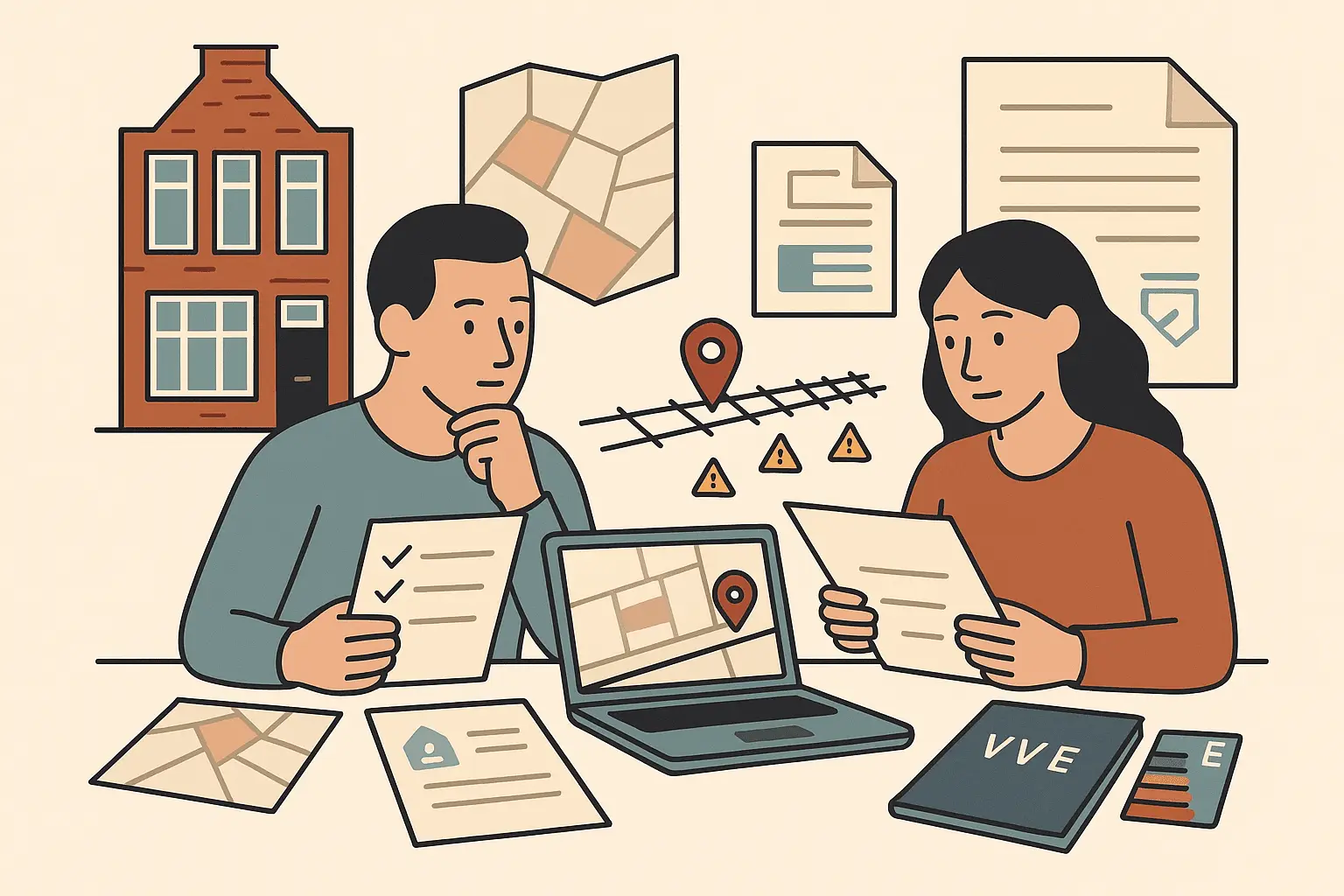
Buying near a railway line in the Netherlands can be convenient, but it can also affect sleep, garden use, working from home, and resale appeal. The key pre-bid question is simple: is the noise profile acceptable for you, at this price, with these documents and risks?
Searches like “railway noise house Netherlands buying” usually come from one concern: you do not want to discover the real impact only after you have signed. This Railway noise: buyer checklist helps you check the location, documents, Dutch terms, and questions before making an offer.
Considering a home near the tracks? Huisscan can help you check Dutch property before bidding. Enter one Dutch address and upload available documents to get a clear Huisscan pre-bid report with property data, risk signals, document analysis, and buyer questions.
Why railway noise deserves a pre-bid check
Railway noise is not just “trains passing by”. The experience can differ a lot by property and location.
Check for:
- Distance to the track: close properties are not always the only ones affected; higher floors can sometimes hear over noise barriers.
- Type of rail use: passenger trains, freight trains, metro/light rail, shunting yards, stations, and level crossings all sound different.
- Time of day: freight and maintenance can be more noticeable at night.
- House layout: a bedroom facing the track is different from a storage room facing the track.
- Façade quality: glazing, ventilation grilles, roof insulation, gaps, and window frames matter.
- Outdoor space: a balcony or garden on the railway side may be less usable for some buyers.
- Vibration: trillingen are separate from airborne noise and may need different checks.
Railway noise is one of the practical property risks Netherlands buyers should screen before bidding, especially if the listing looks attractive because of location, station access, or price.
Dutch terms and data sources to know
If you are buying a house in the Netherlands as an expat, many useful sources and documents will be in Dutch. These are the terms to recognise.
| Dutch term | Plain English meaning |
|---|---|
| Spoorweglawaai or railverkeerslawaai | Railway noise |
| Geluidbelasting | Noise exposure, often modelled at the façade |
| Geluidkaart | Noise map |
| Geluidscherm | Noise barrier or sound screen |
| Gevel | Façade / outside wall |
| Geluidwering or gevelisolatie | Acoustic insulation of the façade |
| Ventilatierooster | Ventilation grille, often a weak point for noise |
| Trillingen | Vibrations |
| Spoorwegovergang | Level crossing |
| Wissel | Rail switch/points, sometimes causing extra noise |
| Omgevingsplan | Municipal planning rules under the current planning system |
| Bestemmingsplan | Older zoning plan term, still seen in documents |
| Externe veiligheid / Basisnet | External safety routes, relevant near some freight rail corridors |
Useful sources to check include:
- Atlas Leefomgeving: public environmental maps, including noise layers in many areas.
- Gemeentelijke geluidkaart: municipal noise maps or environmental reports, where available.
- Omgevingsloket / Regels op de kaart: planning rules for the address and surrounding area.
- ProRail project pages: possible rail works, station changes, track upgrades, or maintenance projects.
- Kadaster, BAG, and map data: building location, year, parcel context, and surrounding infrastructure.
- Sales documents: brochure, property questionnaire, VvE documents, renovation invoices, and any building reports.
Noise maps are useful as a first filter, but they are not the same as standing in the bedroom at night. They often show modelled outdoor exposure and may not fully capture peaks, braking noise, announcements, vibration, or your personal sensitivity.
What to inspect during the viewing
Do not rely on one quiet 20-minute viewing.
During viewings, check:
- Stand in the main bedroom with windows open and closed.
- Listen in the living room, home office space, and garden or balcony.
- Check whether noise enters through ventilation grilles, old frames, roof sections, or sliding doors.
- Notice whether the property is near a station, bend, bridge, switch, level crossing, or shunting area.
- Visit the street at a different time if possible: evening, rush hour, or a quieter moment for comparison.
- Check whether the property sits behind a noise barrier, and whether your floor is above it.
- Ask yourself: would I still accept this sound if I were tired, working from home, or trying to sleep?
A phone noise app can help you compare moments, but it is not an official acoustic measurement. Treat it as a personal reference, not proof.
Documents and buyer questions to review before you offer
Before bidding, look for evidence in the documents, not only reassurances from the viewing.
Documents to review:
- Sales brochure: does it mention railway proximity as a benefit, a risk, or not at all?
- Vragenlijst: the seller’s property questionnaire may include comments about nuisance, defects, renovations, or known issues.
- Building inspection report: may mention window condition, cracks, gaps, or façade concerns.
- Renovation invoices: look for HR++ glass, triple glazing, acoustic glass, new frames, roof insulation, or ventilation upgrades.
- Energy label: useful for insulation context, but it is not an acoustic certificate.
- VvE documents for apartments: check maintenance plans, façade/window responsibilities, complaints, and planned works.
- Planning documents: check whether nearby rail or station changes are planned.
Questions to ask the selling agent, seller, or neighbours:
- How noticeable are trains in the main bedroom at night?
- Are there freight trains, maintenance works, or station announcements?
- Have there been complaints about railway noise or vibration?
- Have windows, frames, façade parts, or ventilation systems been improved for noise?
- Are there planned rail projects, station changes, or nearby developments?
- For apartments: who pays for window or façade upgrades, the owner or the VvE?
- Have previous buyers raised railway noise during negotiations?
If answers are vague, that does not automatically mean the property is bad. It means you should price the uncertainty or investigate further before bidding.
Railway noise: buyer checklist
Use this checklist before making an offer.
Location and data
- Check the distance and line of sight from the home to the railway.
- Review public noise maps, such as Atlas Leefomgeving or local municipal maps.
- Check the omgevingsplan or older bestemmingsplan for rail-related planning context.
- Search for ProRail or municipal project information near the address.
- Check if the rail line includes freight, station areas, switches, bridges, or level crossings.
Viewing and lived experience
- Listen in the bedrooms with windows open and closed.
- Check the garden, balcony, or terrace during a train pass.
- Visit the area at another time of day if possible.
- Note vibration, rattling, or low-frequency rumble separately from sound.
- Compare the noise to your daily use: sleeping, calls, remote work, children, or guests.
Building and documents
- Check glazing type, window frame condition, and ventilation grilles.
- Review seller questionnaires for nuisance or renovation notes.
- Check invoices for acoustic or façade improvements.
- For apartments, review VvE responsibilities and planned façade/window maintenance.
- Do not assume a good energy label means strong sound insulation.
Offer decision
- Decide whether the noise is acceptable without future upgrades.
- Estimate whether upgrades are possible, permitted, and affordable.
- Consider whether your bid should reflect railway exposure.
- Discuss offer conditions with your buyer agent or relevant professional.
- Be ready to walk away if the risk does not fit your needs.
How railway noise can affect price, conditions, or your decision
Railway proximity can be both a benefit and a drawback. Some buyers value quick station access. Others will avoid properties where sleep or outdoor use is affected.
Before bidding, consider three practical outcomes.
1. Price adjustment
If the home has clear railway exposure, compare it with similar homes in quieter streets, not only with homes in the same neighbourhood. A lower bid may be reasonable if you expect reduced comfort, future acoustic upgrades, or resale objections from future buyers.
2. Offer conditions
Depending on the market and your situation, you may want time for document review, a building inspection, or extra checks. Conditions can affect how attractive your bid looks, so discuss this with your buyer agent or advisor. Huisscan can help you identify questions, but it does not replace professional advice.
3. Walk-away decision
Walking away can be the right decision if the noise conflicts with your daily life. Examples:
- You are a light sleeper and the main bedroom faces the track.
- You need quiet for remote work and the façade is weak.
- The VvE controls window upgrades and no improvements are planned.
- There are possible rail changes nearby and you cannot assess the impact.
- You notice vibration and the documents do not explain it.
The goal is not to prove every home near rail is risky. The goal is to decide whether this specific address fits your comfort, budget, and uncertainty before you bid.
What Huisscan can help you check
Huisscan is built for a practical pre-bid property check Netherlands buyers can use before making an offer.
With one Dutch address and uploaded documents, Huisscan can help turn scattered Dutch property data into a clearer pre-bid view, including:
- Available address and property data.
- Location risk signals, including railway proximity where detectable from available sources.
- Document analysis of brochures, questionnaires, VvE files, reports, and other uploads.
- Dutch term explanations, such as spoorweglawaai, geluidbelasting, omgevingsplan, and trillingen.
- Questions to ask the selling agent, seller, neighbours, buyer agent, or relevant professional.
- A clearer view of whether the issue may affect price, conditions, further checks, or your decision to stop.
Huisscan supports decision-making. It does not replace a notary, lawyer, appraiser, building inspector, mortgage advisor, acoustic specialist, or buyer agent.
FAQ
Is a house near a railway always a bad buy in the Netherlands?
No. Some buyers accept railway noise in exchange for station access, location, or price. The question is whether the specific noise pattern, building quality, and documents fit your needs before bidding.
Where can I check railway noise before making an offer?
Start with public noise maps such as Atlas Leefomgeving, municipal information, planning documents, and project pages from relevant authorities or ProRail. Then verify the lived experience during viewings and by asking targeted questions.
What does “geluidbelasting” mean?
Geluidbelasting means noise exposure. In property and planning documents, it often refers to modelled noise at the façade. It is useful, but it does not tell you exactly how the home will sound indoors.
Does double glazing solve railway noise?
It can help, but it is not the full story. Noise can also enter through ventilation grilles, old frames, roof parts, gaps, and lightweight façade elements. Vibration is a separate issue and may not be solved by glazing.
Should I ask for an offer condition because of railway noise?
That depends on the market, the property, and your risk tolerance. You can discuss inspection, document review, or other conditions with your buyer agent or qualified advisor. Be aware that conditions may affect how the seller views your bid.
Can Huisscan tell me if the noise is acceptable?
Huisscan can help you identify risk signals, review documents, explain Dutch terms, and prepare better buyer questions. It cannot decide your personal comfort level or replace an on-site acoustic assessment.
Check the address before you bid.