
Right of way: what buyers should know
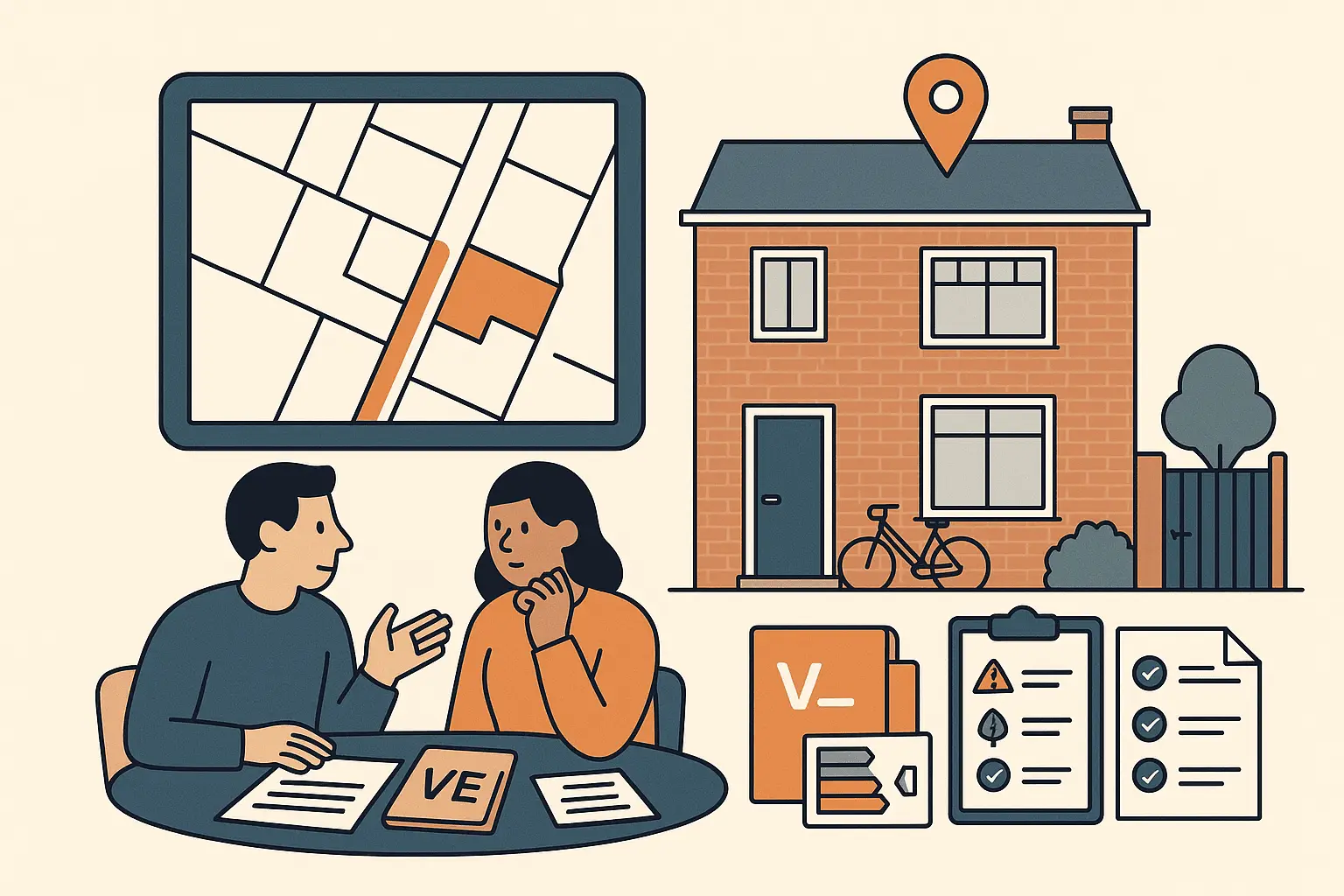
A right of way can look harmless: a small path behind the house, a shared driveway, or a neighbour crossing a side gate. But before you bid on a Dutch property, it can affect privacy, access, parking, renovation plans, and resale.
In Dutch documents, right of way is often called recht van overpad or appears under erfdienstbaarheden. It can be a benefit for the property you want to buy, or a burden on it. The key pre-bid question is simple: is the arrangement clear, registered, and acceptable for how you want to use the home?
Check a Dutch property before you bid. With Huisscan, one Dutch address and uploaded documents can become a clear pre-bid report with available Dutch property data, Kadaster signals, document analysis, and practical buyer questions.
What a right of way means in Dutch property
If you are searching for right of way Netherlands property, the Dutch term you will usually meet is recht van overpad. This is often a type of erfdienstbaarheid, which is similar to an easement or servitude.
In plain English: one property has the right to use part of another property for a specific purpose, often to pass over it.
Common Dutch terms:
- Recht van overpad — right to pass over someone else’s land, often on foot or by bicycle.
- Recht van weg — right of way, sometimes broader and potentially including vehicles, depending on the deed.
- Erfdienstbaarheid — an easement or servitude attached to the land, not just to one person.
- Heersend erf — the property that benefits from the right.
- Dienend erf — the property that must allow the use.
- Mandelig pad — a jointly owned path or alley, with shared rights and often shared maintenance.
- Achterom / brandgang — a rear access path or alley, common behind terraced houses.
The exact wording matters. A right to walk over a path is different from a right to drive a car over a driveway. A right for one neighbour is different from access used by several households, tenants, visitors, or delivery services.
Why it matters before you bid
A right of way is one of the quieter property risks Netherlands buyers can miss. It may not look dramatic during a viewing, but it can affect daily use of the home.
It can matter if:
- neighbours may cross your garden, driveway, or side path;
- your property depends on access over someone else’s land;
- you planned to fence, build, extend, or park on the route;
- the route must remain clear;
- maintenance costs are shared or unclear;
- there has been a neighbour dispute about access;
- the listing suggests “private driveway” or “rear access”, but the documents say something different.
Example: a house has a side driveway. During the viewing it looks like private parking. But the deed says the rear neighbour has a right of way by car. That may limit parking, fencing, and future extension plans.
Another example: a terraced house has a back gate to an alley. That may be a registered right of way, a jointly owned path, a VvE or municipal arrangement, or simply informal use. Each situation has different consequences.
Where to check: Kadaster, deeds and seller documents
Do not rely only on the sales brochure. A brochure may mention “shared path” or “achterom”, but the legal detail is usually in the property documents.
Useful sources include:
| Source | What to look for | Why it matters |
|---|---|---|
| Kadaster information | Parcel layout, ownership context, registered deed references, possible rights and restrictions | Kadaster signals can show that further deed review is needed |
| Akte van levering | The seller’s deed of transfer | Often contains a section on erfdienstbaarheden, special burdens, and restrictions |
| Older referenced deeds | Historic wording of rights of way | Older rights may be described in previous deeds, not fully repeated |
| Draft purchase agreement | What rights, burdens, and restrictions the buyer accepts | Important before signing or making an unconditional offer |
| Seller questionnaire / NVM vragenlijst | Known rights, neighbour use, disputes, shared paths | Helps compare the seller’s answers with the legal documents |
| Cadastral map | Boundaries and parcel shape | Useful context, but not proof of the exact right of way |
| Splitsingsakte and VvE documents | For apartments: common areas, access, parking, storage, bicycle rooms | Access rights may sit in apartment division or VvE rules |
| Omgevingsplan or municipal information | Public routes, zoning context, access constraints | Helpful background, but not a replacement for private-law deed checks |
A simple cadastral map is not enough. The map may show parcel boundaries, but it may not show who is allowed to pass, how often, by what route, or with which vehicles.
If the documents are unclear, ask the selling agent, your buyer agent, or a notary/legal professional to explain the wording before you bid.
Practical viewing signs and seller questions
During the viewing, look for physical clues:
- a worn path across the garden or driveway;
- gates between neighbouring plots;
- a paved strip along the side of the house;
- a back alley used by several homes;
- a garage that can only be reached over another parcel;
- signs such as “privé”, “eigen weg”, or “recht van overpad”;
- fences, locks, or barriers that suggest access tension;
- neighbours using the route during the viewing.
Ask specific questions before bidding:
- Who owns the path, driveway, or alley?
- Who is allowed to use it?
- Is use limited to walking, cycling, or also cars?
- Is the right registered in a deed?
- Can the seller provide the deed text and any drawings?
- Who maintains the path and pays for repairs?
- Can gates, locks, cameras, lighting, or fences be installed?
- Have there been disputes with neighbours about access?
- Does the right affect planned extensions, parking, garden changes, or outbuildings?
- Does the draft purchase contract mention the same rights as the deed?
A calm rule of thumb: if access is important to your use of the home, do not treat it as a minor detail.
How it can affect your offer, conditions, or decision to walk away
A right of way does not automatically make a property unattractive. Many Dutch homes have normal, workable access arrangements. The issue is whether the arrangement fits your expectations and is properly understood before you bid.
It may affect your decision in three ways.
1. Price
If others have the right to cross part of the property, you may value the home differently. Loss of privacy, limited parking, shared maintenance, or reduced renovation options can be relevant to your bid.
2. Conditions
If the documents are incomplete or unclear, you may want to make your offer conditional on satisfactory review of title documents, Kadaster information, or notarial clarification. Ask a qualified professional or buyer agent to help with wording.
3. Walk-away decision
Walking away may be sensible if the access is essential but not documented, if the seller cannot explain a conflict, or if the right of way blocks a key reason you wanted the property.
Examples:
- You planned to extend over a side path, but the deed requires that path to remain open.
- The only practical access to a garage depends on informal neighbour permission.
- The listing says “private driveway”, but the documents show a shared right of way for another parcel.
- A neighbour dispute is already active and the seller’s explanation is vague.
When buying a house in the Netherlands, the goal is not to remove every uncertainty. The goal is to know which uncertainty you are accepting before you commit.
Practical pre-bid checklist
Use this checklist before making an offer:
- Search the documents for recht van overpad, recht van weg, erfdienstbaarheid, mandeligheid, bijzondere lasten, and beperkingen.
- Check whether the property is the heersend erf or dienend erf, or both.
- Confirm the route: where exactly does the right of way run?
- Confirm permitted use: walking, cycling, car access, deliveries, visitors, tenants.
- Check whether the right is registered or only described informally.
- Compare the sales brochure with the deed and seller questionnaire.
- Ask whether there are neighbour disputes or maintenance disagreements.
- Check whether your plans for parking, fencing, renovation, or garden use are affected.
- For apartments, review the splitsingsakte, drawings, and VvE documents.
- If unclear, ask a notary, legal professional, or buyer agent before bidding.
- Decide whether the issue changes your price, conditions, or willingness to proceed.
This is a practical part of a pre-bid property check Netherlands buyers should consider, especially when access, privacy, or future building plans matter.
What Huisscan can help you check
Huisscan helps you check Dutch property before bidding by turning one address and uploaded documents into a clear pre-bid view.
For right-of-way questions, a Huisscan pre-bid report can help you:
- collect available Dutch property data for the address;
- review Kadaster-related signals where available;
- flag document terms such as recht van overpad, erfdienstbaarheid, mandelig pad, and bijzondere lasten;
- compare listing claims with uploaded deeds, questionnaires, and purchase documents;
- identify missing documents or unclear wording;
- generate practical questions for the selling agent, buyer agent, or notary;
- organise the issue so you can decide whether to bid, bid lower, add conditions, or pause.
Huisscan supports pre-bid decision-making. It does not replace a notary, lawyer, appraiser, building inspector, mortgage advisor, or other qualified professional.
FAQ
Is a right of way the same as owning the path?
No. You may have the right to use a path without owning it. Or you may own land that someone else has the right to use. Ownership and use rights are separate questions.
Does Kadaster always show a right of way clearly?
Not always in a simple map or extract. Kadaster information can point to registered rights and relevant deeds, but the practical detail is often in deed text and older referenced documents. If the wording is important, ask a professional to interpret it.
What if the seller says “everyone has always used it”?
That is useful information, but not enough on its own. Long-term use, informal permission, and registered rights are different things. Ask for the deed, any written agreements, and whether there have been disputes.
Can I block or change a right of way after buying?
Do not assume that you can. If a right of way exists, blocking, narrowing, moving, or changing it may create legal problems. Check the deed and ask a qualified professional before relying on any change.
Is a right of way always a reason not to bid?
No. Many rights of way are normal and manageable. The risk is mainly when the right is unclear, conflicts with your plans, affects essential access, or is not reflected properly in the sale documents.
Should expats be extra careful with Dutch terms?
Yes. Terms like recht van overpad, erfdienstbaarheid, mandeligheid, and achterom can be easy to underestimate in translation. If you are buying in a competitive market, check the documents before making a fast offer.
Check the address before you bid.


