Overbidding: what to check before offering more
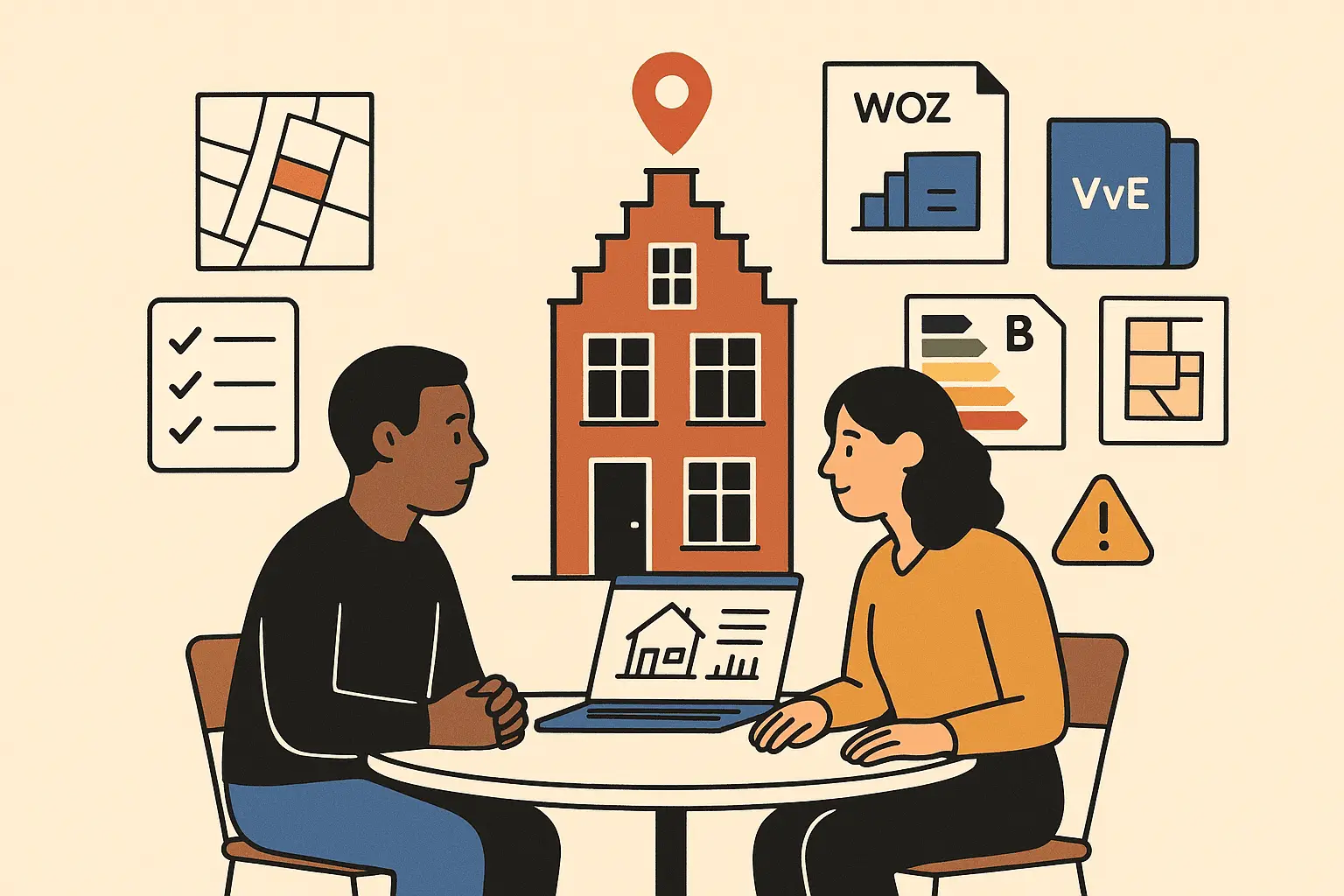
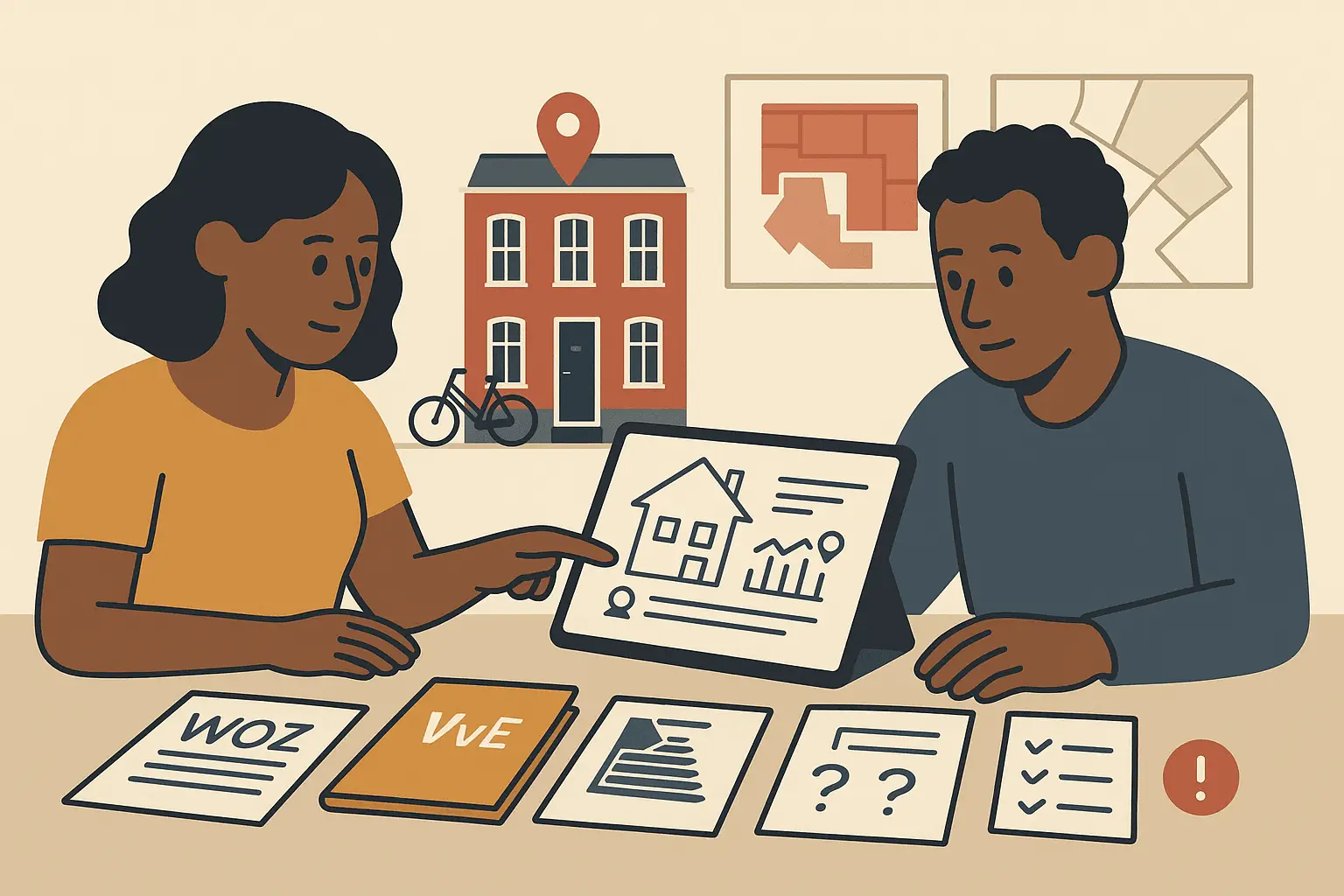
Overbidding can feel like the only way to stay in the running, especially in popular Dutch cities and commuter towns. But offering more than the asking price is not one decision. It affects your financing, your conditions, your repair budget, and sometimes your willingness to walk away.
If you are searching for overbidding Netherlands house, the real question is not “How much should I add?” It is: “What do I need to check before I offer more?”
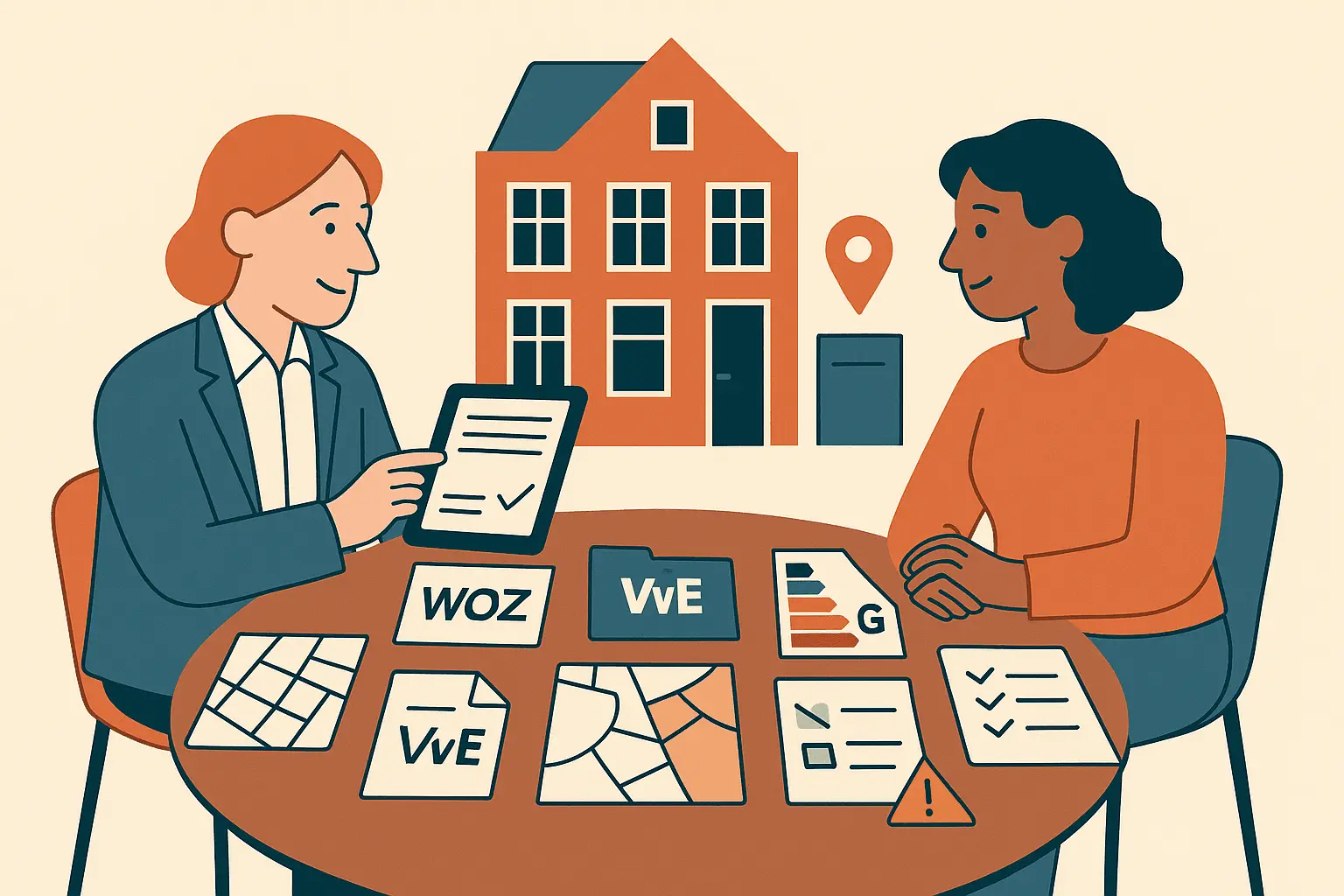
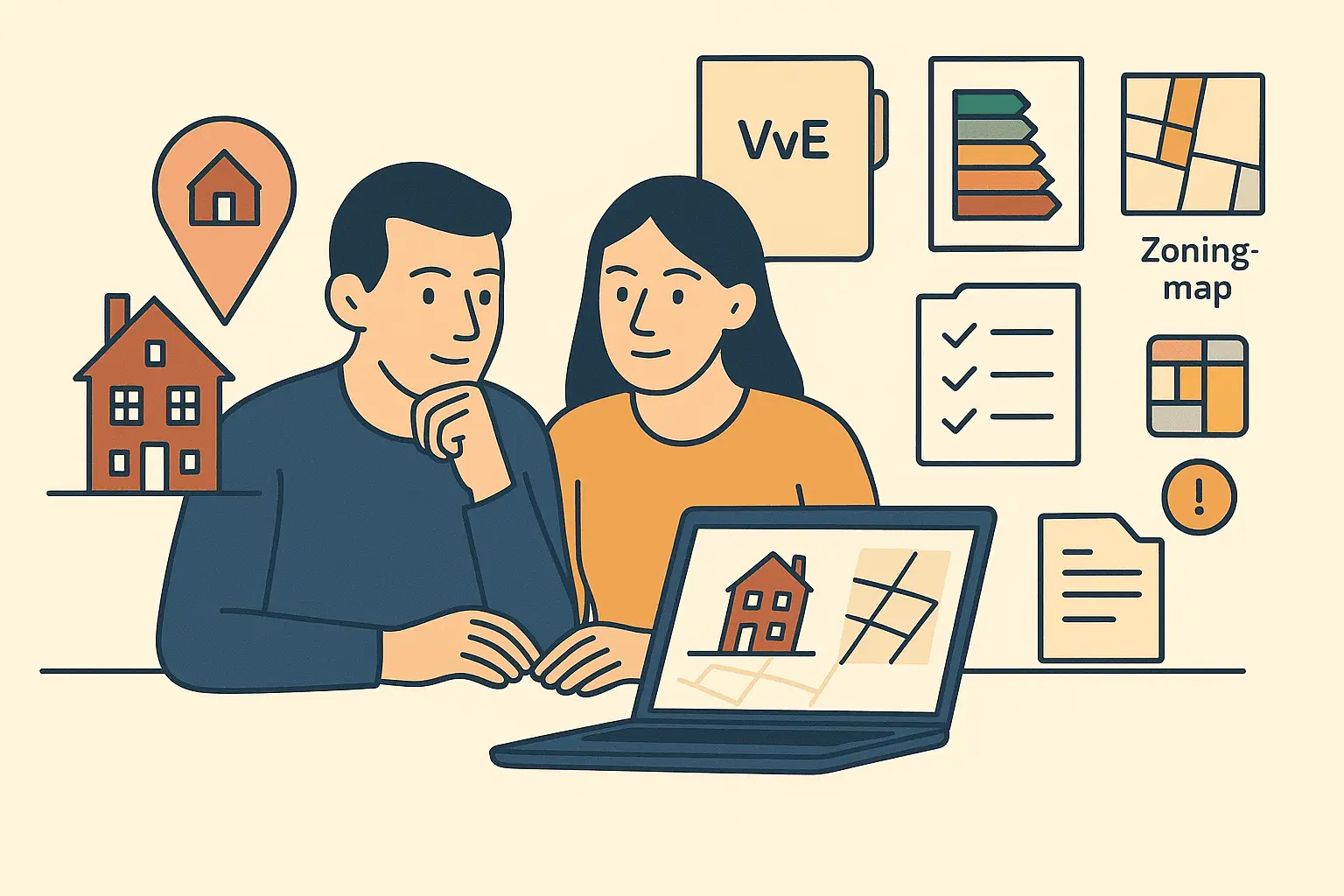
Planning to bid above asking? Check the address first. Huisscan can turn one Dutch address and uploaded sales documents into a clear pre-bid report with available property data, risk signals, document analysis, and better buyer questions.
Why overbidding in the Netherlands needs a pre-bid check
In the Netherlands, the asking price, or vraagprijs, is not always the seller’s expected final price. Sometimes it is set low to attract more viewers. Sometimes it reflects real issues: overdue maintenance, a weak apartment owners’ association, leasehold costs, noise, foundation concerns, or a location risk.
That is why overbidding should never be based only on emotion or competition.
Before offering more, you want to understand:
- whether the asking price is realistic compared with the property;
- whether your mortgage can support the offer;
- whether you need extra savings if the valuation is lower;
- whether documents contain clauses that shift risk to the buyer;
- whether there are property risks that justify a lower bid or stronger conditions.
A good pre-bid property check Netherlands approach is simple: check the property first, then decide your maximum bid.
1. Check whether the asking price is a starting point or a warning signal
A house listed at €475,000 and selling above that may still be fairly priced if the asking price was deliberately low. Another house may look affordable but need major repairs or have monthly costs that make it expensive.
Before you overbid, compare the asking price with the property’s likely value drivers.
Useful Dutch terms and data points:
- WOZ-waarde: the municipal tax value. It is not a market valuation, but it can give context.
- Kadaster data: official property and ownership-related data, including registered transactions where available.
- BAG data: official address and building information, such as construction year and use.
- Gebruiksoppervlakte wonen: usable living area, often based on NEN 2580 measurement rules.
- Energielabel: the official energy label, relevant for comfort, running costs, and renovation planning.
- Vraagprijs vs. koopsom: asking price versus final purchase price.
Also look at the property’s condition and location. A renovated home with a strong energy label and few visible risks may support a different bid than a similar-sized home with old windows, a dated roof, and unclear maintenance history.
The key question is:
Am I bidding more because the asking price is low, or am I ignoring risk because I want to win?
2. Check your financing before you offer more
Overbidding can create a financing gap.
In the Netherlands, your mortgage options are closely linked to the property value assessed by a qualified appraiser, the taxatiewaarde, and your personal financial situation. If you offer above what the property is valued at, you may need to cover the difference with your own funds.
Before increasing your offer, ask your mortgage advisor:
- What is my realistic maximum purchase price?
- What happens if the appraisal comes in below my bid?
- How much own money do I need for purchase costs, renovations, and any gap?
- Does the energy label or planned renovation affect my options?
- Should I include a financieringsvoorbehoud?
A financieringsvoorbehoud is a financing condition. It can allow you to withdraw if you cannot obtain the mortgage under agreed terms. Sellers may prefer bids with fewer conditions, but removing this protection can be risky if your financing is not certain.
Do not use your full theoretical budget as your automatic bid ceiling. A safe bid also leaves room for:
- moving costs;
- transfer-related costs;
- notary and advisory costs;
- immediate repairs;
- furniture or appliances;
- energy improvements;
- higher monthly service charges or ground lease payments.
Overbidding is not only about the purchase price. It is about whether the total cost still works.
3. Check Dutch property risks that can change your bid
Some risks do not make a property “bad,” but they should affect your bid, conditions, or questions.
Common property risks Netherlands buyers should check include:
- Foundation issues, or fundering: especially relevant in some older areas and soil types.
- Soil contamination, or bodemverontreiniging: may be relevant for older industrial locations or certain plots.
- Flooding and water management: the Netherlands manages water carefully, but local exposure still matters.
- Noise and nuisance: roads, railways, flight paths, nightlife, schools, or planned construction.
- Zoning and planning, or omgevingsplan: future building plans or restrictions can affect use and value.
- Monument status or protected cityscape: renovations may require extra permissions.
- Leasehold, or erfpacht: ground lease terms can affect monthly costs and future value.
- Apartment association, or VvE: weak reserves or major planned maintenance can lead to extra contributions.
- Energy performance: a low energy label may mean higher costs and future improvement work.
- Unpermitted changes: extensions, roof terraces, or converted spaces may need further checking.
For example, overbidding on an apartment can look reasonable until you discover that the VvE has limited reserves and major façade work is being discussed. Overbidding on a charming older house can look manageable until you factor in roof, window, insulation, or foundation concerns.
The right response is not always “walk away.” Sometimes it is:
- bid less;
- include a building inspection condition;
- ask for missing documents;
- reserve money for repairs;
- change your maximum price;
- ask a specialist before bidding.
4. Read the sales documents before removing conditions
In a competitive process, buyers sometimes focus on price and skip the documents. That is risky. The documents often tell you what the seller knows, what is included, and which risks may be shifted to the buyer.
Important Dutch sales documents can include:
- Vragenlijst: seller’s questionnaire about the property, defects, renovations, disputes, and use.
- Lijst van zaken: list of items included or excluded, such as flooring, appliances, curtains, or garden items.
- Energielabel: official energy performance certificate.
- Meetrapport: measurement report for usable floor area.
- Eigendomsbewijs or leveringsakte: previous deed of transfer.
- Concept koopovereenkomst: draft purchase agreement.
- Splitsingsakte and splitsingsreglement: legal apartment division documents.
- VvE documents: service charges, meeting minutes, budget, reserve fund, maintenance plan, and insurance.
- Bouwkundig rapport: building inspection report, if already available.
Watch for clauses such as:
- Ouderdomsclausule: old-age clause, common for older homes.
- Niet-zelfbewoningsclausule: non-owner-occupancy clause, often used when the seller did not live there.
- Asbestclausule: asbestos clause, relevant for many older properties.
- Funderingsclausule: foundation-related clause, where applicable.
- Bouwkundige keuring: building inspection condition.
These clauses do not automatically mean you should not buy. But they do mean you should understand what risk you are accepting before you offer more or waive conditions.
If a document is missing, ask for it. If a clause is unclear, ask your buyer agent, notary, legal advisor, or another qualified professional to explain it.
Practical checklist before overbidding
Use this checklist before making a higher offer on a Dutch property.
Set your real ceiling
What is your maximum total budget, including purchase costs and repairs?
How much cash do you have if the appraisal is lower than your bid?
Have you confirmed this with a mortgage advisor?
Check price context
Is the asking price low compared with the property, or is there a reason?
Does the living area match the brochure and measurement report?
Is the WOZ value broadly in line with expectations, while remembering it is not a market valuation?
Check property condition
Are there signs of overdue maintenance?
Is a building inspection needed before or after the offer?
Are roof, windows, façade, damp, foundation, and installations relevant concerns?
Check apartment-specific risks
Is there an active VvE?
Are reserves and service charges realistic?
Are major works discussed in VvE minutes?
Is there a multi-year maintenance plan, or MJOP?
Check legal and location risks
Is there leasehold, or erfpacht?
Are there zoning restrictions or planned developments nearby?
Is the property a monument or in a protected area?
Are there soil, noise, water, or foundation signals to investigate?
Check documents
Have you read the vragenlijst and lijst van zaken?
Are there clauses that shift risk to the buyer?
Are permits, renovations, or extensions clear?
Are all important VvE documents available for an apartment?
Check your offer conditions
Do you need a financing condition?
Do you need a building inspection condition?
What transfer date works for you?
Are included items clearly listed?
Are you comfortable with the bank guarantee or deposit requirement?
Decide your response
Bid higher because the data supports it.
Bid lower because risks or costs are unclear.
Add conditions because you need protection.
Ask more questions before bidding.
Walk away if the risk does not fit your budget.
What Huisscan can help you check
Huisscan is built around one practical promise: Check a Dutch property before you bid.
With one Dutch address, Huisscan can help turn available Dutch property data into a clearer pre-bid view. You can also upload relevant documents, such as the brochure, seller questionnaire, VvE documents, energy label, or draft purchase agreement.
A Huisscan pre-bid report can help you review:
- available address and property data;
- building and usage information where available;
- energy label and basic property characteristics;
- potential risk signals linked to the address or property type;
- document highlights and clauses to pay attention to;
- VvE-related points for apartments;
- questions to ask the selling agent, buyer agent, mortgage advisor, inspector, or notary.
Huisscan does not replace a notary, appraiser, building inspector, mortgage advisor, lawyer, or buyer agent. It helps you prepare better before you speak with them or before you place a bid.
That matters because overbidding is often time-sensitive. A clear pre-bid report can help you move from “I like the house” to “I understand what I am offering on.”
FAQ
Is overbidding always a bad idea when buying a house in the Netherlands?
No. Overbidding is not automatically wrong. Sometimes the asking price is deliberately low, and a higher bid may still be reasonable. The risk is overbidding without checking financing, documents, property condition, and location risks first.
How much should I overbid on a Dutch house?
There is no safe universal amount. Your bid should depend on your budget, the property’s likely value, repair needs, appraisal risk, competition, and your own walk-away point. Do not base your bid only on what you think other buyers may do.
Can my mortgage cover an offer above the asking price?
It depends on your financial situation and the appraised value of the property. If your offer is higher than the valuation used for the mortgage, you may need extra savings. Check this with a mortgage advisor before bidding.
Should I remove the financing or building inspection condition to win?
Only if you understand and accept the risk. Removing conditions may make an offer more attractive to a seller, but it can expose you if financing fails or serious defects appear. Ask a qualified advisor before making an unconditional offer.
Which documents should I read before overbidding?
At minimum, review the brochure, seller questionnaire, list of included items, energy label, measurement information, and any draft purchase agreement clauses. For apartments, also check VvE minutes, budgets, reserves, insurance, and maintenance plans.
How can Huisscan help before I bid?
Huisscan can help you check Dutch property before bidding by turning one address and uploaded documents into a clear pre-bid report with available property data, risk signals, document analysis, and practical buyer questions.
Check the address before you bid.