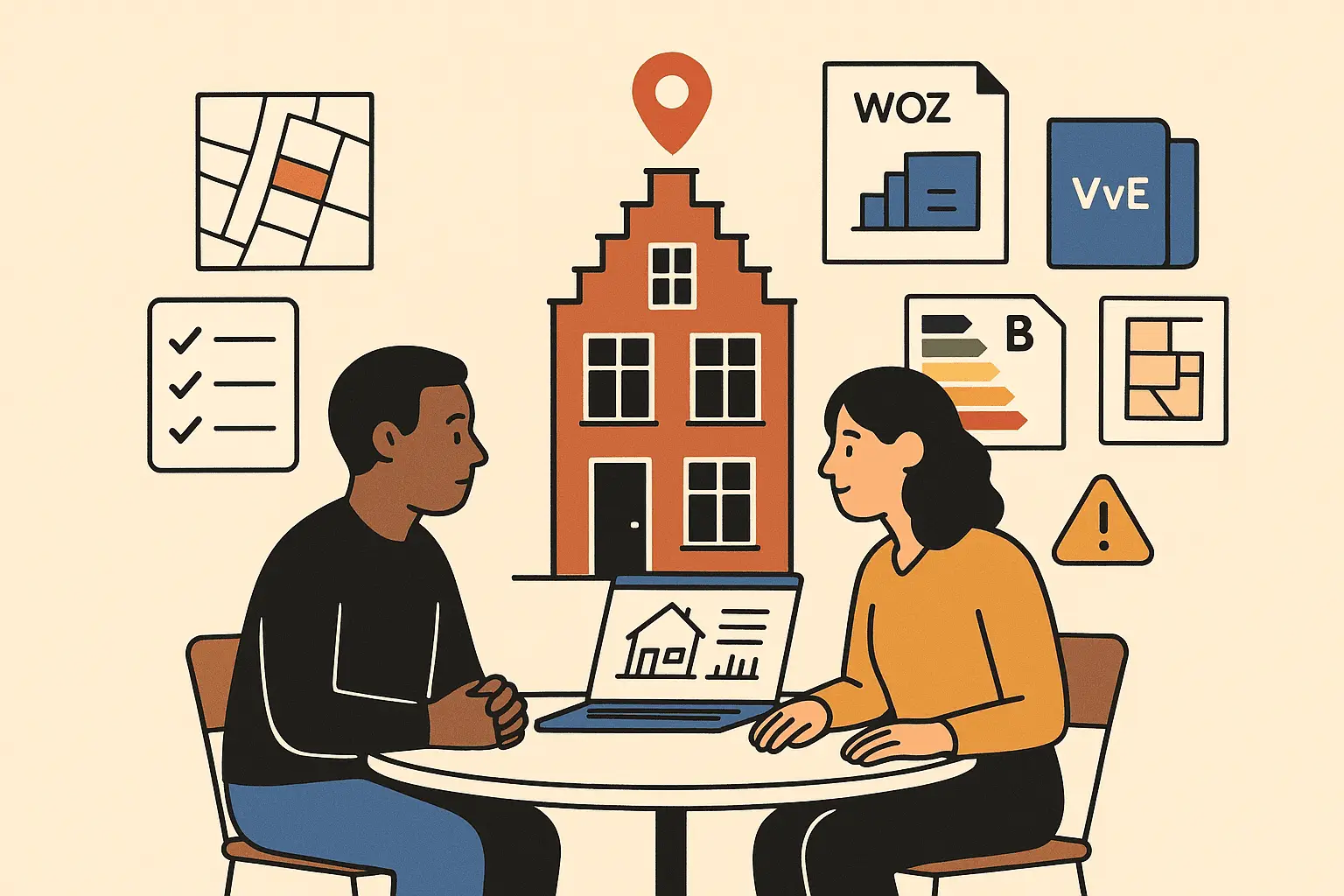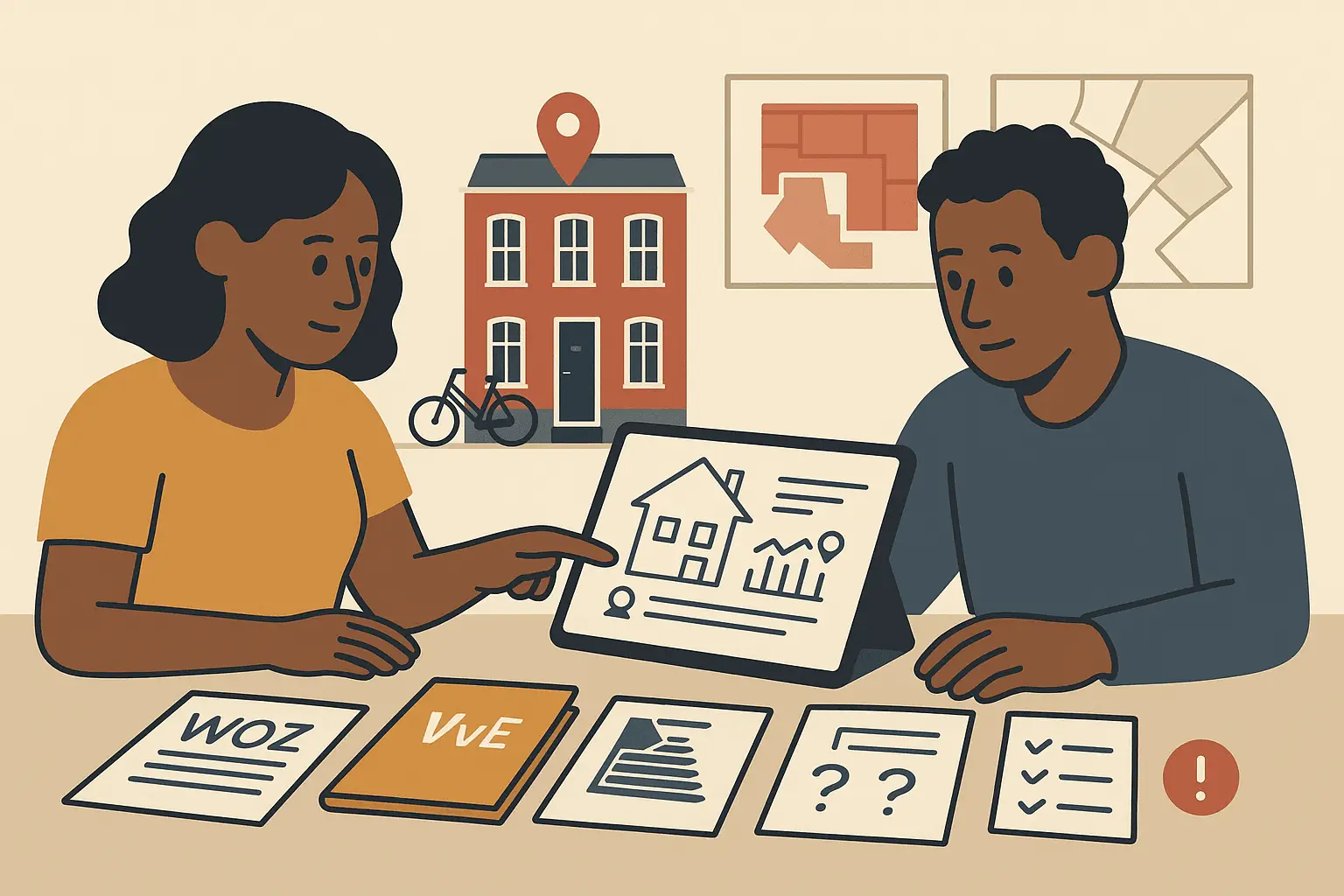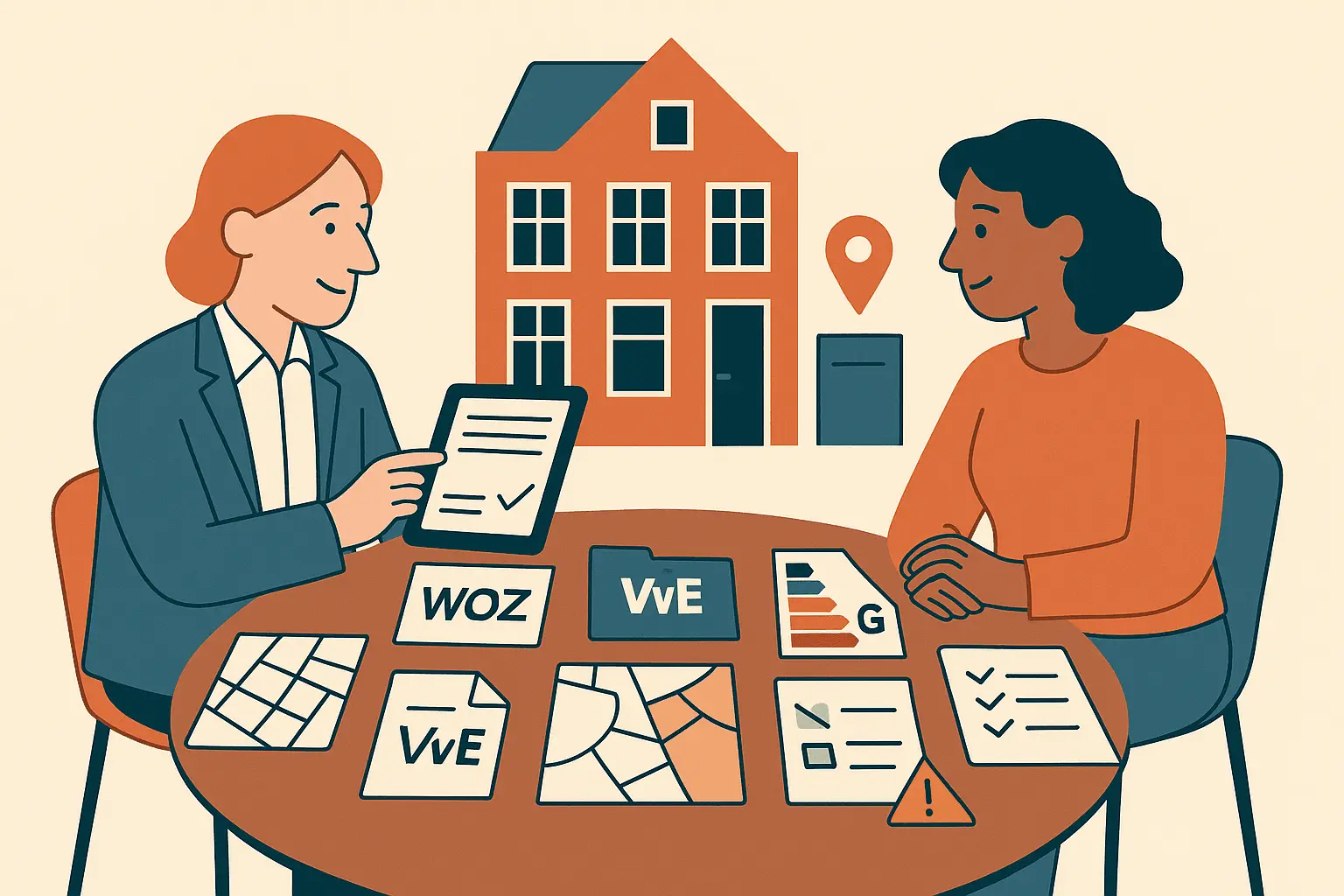
Neighborhood data before buying
A house can look right on the listing and still raise questions once you look at the street, the zoning, the soil, the noise, or the documents. For buyers and expats, the challenge is not only finding neighborhood data house Netherlands sources. It is knowing which local signals matter before you make an offer.
Neighborhood data before buying should help you answer one practical question: is this still the right property, at the right price, with the right questions or conditions attached?
Looking at a specific Dutch address? Huisscan can help you check a Dutch property before you bid by turning one address and uploaded documents into a clear pre-bid report with available Dutch property data, risk signals, document analysis, and buyer questions.
Why neighborhood data matters before buying a house in the Netherlands
In the Netherlands, buyers often have to decide quickly. The viewing may be short, the listing may focus on the interior, and the sales brochure will not always explain the wider location risks.
Useful neighborhood data can help you understand:
- whether the asking price makes sense for the street and area;
- whether there are local nuisance factors, such as traffic, rail, aircraft noise, nightlife, or construction;
- whether zoning or future development could affect your enjoyment or resale;
- whether soil, water, foundation, or environmental signals deserve extra questions;
- whether parking, permits, public transport, schools, shops, or commute routes fit your daily life.
The goal is not to predict everything. It is to make a calmer pre-bid decision and avoid bidding blindly.
Dutch terms and data sources to know
When buying a house in the Netherlands, you will see Dutch terms that are important for location research. These are the basics.
- Buurt / wijk: neighborhood or district. Dutch data is often grouped at these levels.
- Gemeente: municipality. The municipality is often the source for zoning, permits, parking rules, and local plans.
- BAG: the official register for buildings and addresses. It can show basic address and building information.
- Kadaster: the Dutch land registry. It records ownership, parcel information, and certain property rights.
- WOZ-waarde: a municipal property value used for local taxes. It can be a useful signal, but it is not the same as a current market valuation.
- Omgevingsplan: the environmental/zoning plan under the Dutch planning system. Older documents may refer to bestemmingsplan. This tells you what is allowed in an area.
- Omgevingsvergunning: an environmental permit, for example for building works or changes of use.
- VvE: the owners’ association for apartments. VvE documents can reveal building issues, shared costs, rules, and planned maintenance.
- Erfpacht: leasehold land. You own the home but not always the land underneath it, depending on the arrangement.
- Bodem: soil. Soil information can matter for contamination, subsidence, or foundation concerns.
- Waterschap: water authority. Relevant for water management, flood context, and local water systems.
Useful sources can include the municipality website, Omgevingsloket, Kadaster, WOZ-waardeloket, PDOK, CBS neighborhood data, water authority information, provincial maps, and documents provided by the selling agent. Public data is a starting point; if something matters for your decision, verify it with the right professional or authority.
Local signals to check before you bid
Noise and daily nuisance
Check the location at different times if possible: daytime, evening, and weekend. A quiet viewing at 11:00 may not show rush-hour traffic, school traffic, nightlife, tram noise, or aircraft routes.
Ask:
- Is the property near a railway, motorway, busy road, tram line, school, café area, or industrial site?
- Are there noise maps or municipal data for this area?
- Does the seller’s questionnaire mention nuisance from neighbors, traffic, or surroundings?
Zoning and future development
A green view today is not always a protected green view. Check the omgevingsplan and local development plans.
Ask:
- What is the land next door allowed to become?
- Are there building permits or redevelopment plans nearby?
- Could a quiet commercial space become hospitality, retail, or housing?
- Are there restrictions because of a protected cityscape, monument status, or local rules?
Parking and access
Parking can affect daily life and resale value, especially in larger cities.
Check:
- whether the property has private parking;
- whether a parkeervergunning is needed;
- whether there may be a waiting list or area restrictions;
- whether visitors, delivery vehicles, bikes, or mobility needs are practical.
Rules can change, so check current municipal information.
Water, soil, and foundation context
Dutch property risks Netherlands buyers often overlook are linked to soil and water. In some areas, soft soil, peat, groundwater, or older foundations can matter.
Ask:
- Is the property in an area known for subsidence or foundation concerns?
- Are there local soil contamination records or former industrial uses nearby?
- Is there flood or water management information relevant to the location?
- Does the building age or type suggest you should ask more about foundations?
This is not a substitute for a building inspection or specialist foundation advice, but it can help you decide whether to investigate further before bidding.
Amenities and future marketability
Neighborhood data is not only about risk. It also helps you understand how usable the location is.
Look at:
- public transport and commute times;
- shops, schools, childcare, healthcare, parks, and sports facilities;
- cycling routes and station access;
- the feel of the street compared with nearby streets;
- how similar homes in the area are presented and priced.
A property may be right for one buyer and wrong for another. The key is to connect the data to your own use case.
Documents and disclosures that may reveal local risks
Do not rely only on maps and online sources. The seller’s documents may contain signals that affect your bid.
Review, where available:
- Sales brochure: check claims about location, floor area, parking, renovation, and surroundings.
- Vragenlijst: the seller’s questionnaire. It may mention nuisance, disputes, defects, permits, soil, asbestos, or other known issues.
- Lijst van zaken: the list of items included or excluded in the sale.
- VvE documents for apartments: minutes, annual accounts, maintenance plan, reserve fund, house rules, and planned works.
- Splitsingsakte: the deed of division for apartments, explaining rights, obligations, and private/shared areas.
- Erfpacht documents: leasehold conditions, ground rent arrangements, and future changes.
- Permits and renovation documents: useful if the home has been altered or extended.
- Title or deed information: may mention rights, obligations, or restrictions affecting the property.
If important documents are missing before bidding, that is itself a signal. You may decide to ask for them, adjust your offer, include a condition, or pause.
How neighborhood data can influence your offer
Neighborhood data before buying is useful only if it changes your decision-making. It can affect your bid in several ways.
Price
Local signals can support or challenge the asking price. For example, a home near heavy traffic, uncertain redevelopment, difficult parking, or possible foundation concerns may need a different risk view than a similar home one street away.
Conditions
You may want to discuss conditions with your buyer agent, mortgage advisor, or other professional. Depending on the situation, buyers sometimes consider conditions related to financing, inspection, document review, VvE review, or specific confirmations. Conditions can affect how attractive your offer is, so use them carefully.
Buyer questions
Good neighborhood research helps you ask better questions, such as:
- “Are there known building plans nearby?”
- “Has the seller experienced noise or nuisance?”
- “Are there VvE discussions about shared repairs or neighborhood issues?”
- “Is the parking permit transferable or available under current municipal rules?”
- “Are there foundation, soil, or water issues known in this street?”
Decision to walk away
Sometimes the best pre-bid decision is not to bid. That may be the case if the location risk is unacceptable for you, key documents are missing, the answers are unclear, or the future use of nearby land conflicts with your plans.
Practical checklist: Neighborhood data before buying
Use this checklist before making an offer on a Dutch property.
- Confirm the exact address, property type, floor area, plot or apartment details.
- Check the street in person at different times if possible.
- Review the buurt, wijk, and gemeente context.
- Check zoning through the omgevingsplan or relevant municipal sources.
- Look for nearby permits, construction plans, or redevelopment areas.
- Check traffic, rail, tram, aircraft, nightlife, school, or industrial noise signals.
- Review parking rules, permit zones, and practical access.
- Look at water, soil, subsidence, and foundation context where relevant.
- Compare the asking price with nearby homes, WOZ signals, and local market evidence.
- Review the seller’s questionnaire and other available documents.
- For apartments, read the VvE documents before bidding where possible.
- For leasehold, understand the erfpacht terms and ask a qualified professional if needed.
- Write down your top unanswered questions before setting your bid.
- Decide in advance which risks affect price, conditions, or your decision to walk away.
What Huisscan can help you check
Huisscan is built for the pre-bid moment: Check a Dutch property before you bid.
With one Dutch address, Huisscan can create a clear pre-bid report using available property data and local signals. You can also upload documents, such as the sales brochure, seller questionnaire, VvE documents, leasehold information, or other files you received from the selling agent.
A Huisscan pre-bid report can help you:
- bring available Dutch property data into one clearer view;
- identify risk signals linked to the address, documents, and local context;
- understand Dutch terms that may affect your decision;
- spot missing or unclear information before you bid;
- generate practical buyer questions for the selling agent, buyer agent, mortgage advisor, inspector, or notary.
Huisscan supports your decision-making. It does not replace legal, building, appraisal, mortgage, tax, or notarial advice.
FAQ: neighborhood data house Netherlands
What neighborhood data should I check before buying a house in the Netherlands?
Start with zoning, nearby development, noise, parking, soil and water context, public transport, amenities, and seller documents. For apartments, also check VvE documents. For leasehold properties, check the erfpacht terms.
Where can I find reliable Dutch property data?
Useful sources include the municipality, Omgevingsloket, Kadaster, WOZ-waardeloket, PDOK, CBS neighborhood data, water authority information, and documents from the selling agent. Availability and detail vary by address, so verify important points.
Is WOZ value enough to judge the price?
No. The WOZ-waarde is a useful signal, but it is not a full market valuation and may not reflect current buyer demand, renovation quality, VvE health, leasehold, or local risks. Use it alongside comparable sales and professional advice where needed.
Can neighborhood data change my bid?
Yes. Local risks or advantages can influence your price, your questions, your conditions, or your decision not to bid. For example, unclear future construction, difficult parking, or possible foundation concerns may change how you view the property.
How can expats understand Dutch documents before bidding?
Focus on key terms such as VvE, erfpacht, omgevingsplan, omgevingsvergunning, WOZ, Kadaster, and vragenlijst. If documents are unclear, ask your buyer agent or a qualified professional. Huisscan can also help analyze uploaded Dutch documents and turn them into clearer buyer questions.
Check the address before you bid.