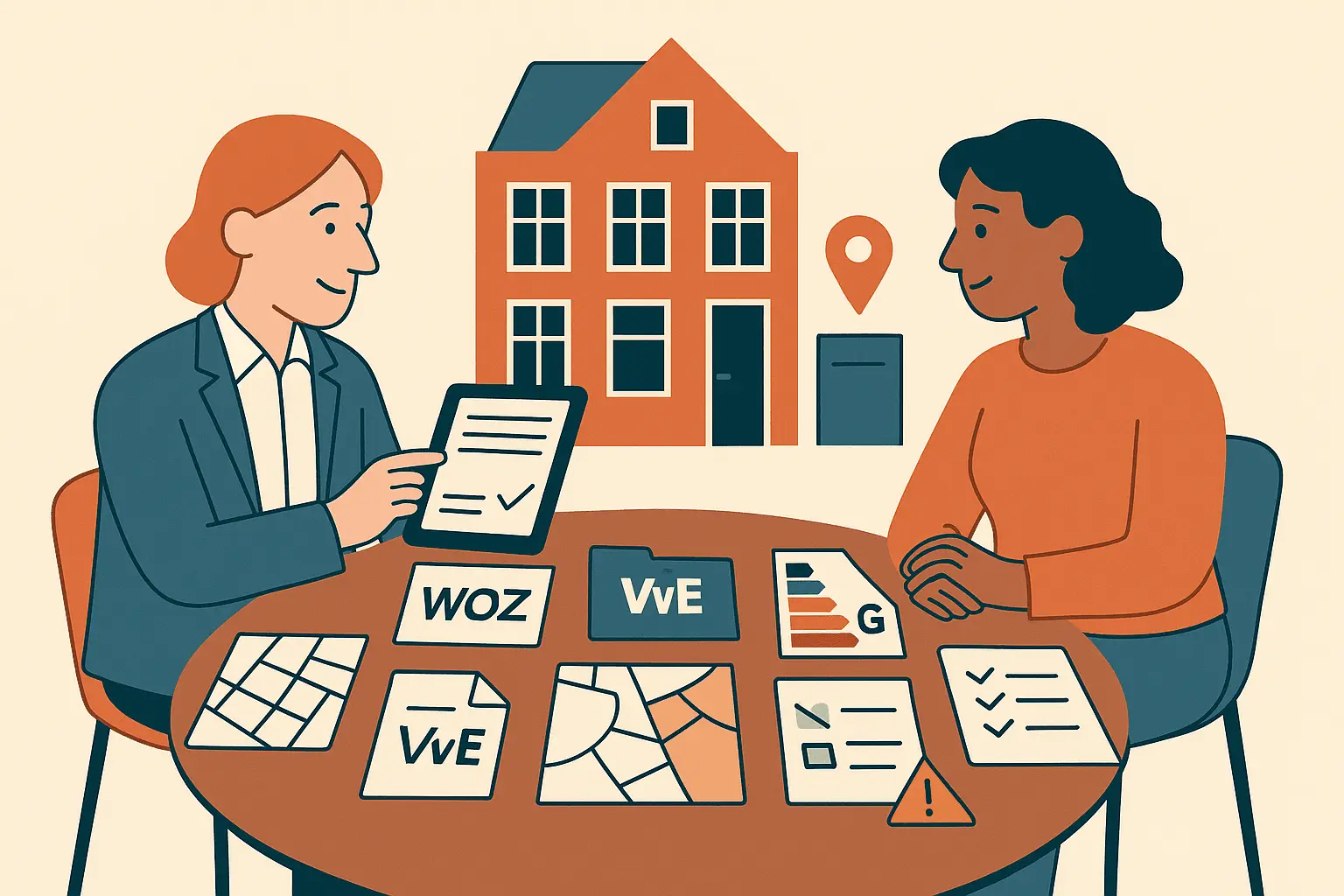
How to use Huisscan before a viewing

A house viewing in the Netherlands can feel rushed. You may have 20 minutes in the property, several other buyers nearby, and a decision to make soon after: bid, wait, ask for conditions, or walk away.
That is exactly where Huisscan helps. The promise is simple: Check a Dutch property before you bid. By checking the address before the viewing, you arrive with better questions instead of only a brochure and a gut feeling.
Viewing booked? Enter the address in Huisscan before you go. Huisscan can turn one Dutch address, plus any documents you upload, into a clear pre-bid report with available property data, risk signals, document analysis, and buyer questions.
Why use Huisscan before a house viewing?
Using Huisscan before house viewing appointments helps you use the viewing time better.
Instead of asking only “how old is the kitchen?” or “are there other bidders?”, you can focus on issues that may affect your offer:
- Is the living area consistent across sources?
- Is there a homeowners’ association, or VvE?
- Is the home on erfpacht leasehold land?
- Are there signs of future maintenance costs?
- Do the seller documents mention defects, disputes, or special clauses?
- Are there surroundings, planning, or environmental signals worth checking?
This matters because the viewing is not just for deciding whether you like the home. It is also for collecting the information you need before making a bid.
Huisscan is not a replacement for a buyer agent, building inspector, appraiser, mortgage advisor, notary, or lawyer. It is a practical pre-bid property check for the Netherlands that helps you ask better questions earlier.
Step 1: start with the address
The simplest way to use Huisscan is to start with one Dutch address.
Before the viewing, enter the address and review the report. Depending on availability, Huisscan can help organise Dutch property data from sources and documents such as:
- Basic property records, such as address, use, building year, and surface indications
- Cadastral and parcel-related information where available
- Energy label information
- Public planning or zoning context, often linked to the omgevingsplan or municipal information
- VvE or leasehold information if it appears in uploaded documents
- Seller documents such as the questionnaire, brochure, or list of items
Then bring the questions from the report to the viewing. If something is unclear, ask the selling agent directly and request the missing document before bidding.
A useful workflow is:
- Enter the address in Huisscan.
- Upload the documents you already have.
- Read the risk signals and questions.
- Use the viewing to verify what cannot be seen clearly in the data.
- Decide whether to bid, adjust your price, add conditions, or walk away.
What Huisscan can help you check
Huisscan is designed to support a clearer pre-bid decision. It helps you turn scattered information into a practical report.
Property facts and inconsistencies
A listing may show one living area, while public records or documents suggest another. That does not automatically mean something is wrong, but it is worth asking about.
Huisscan can help you spot questions such as:
- Is the listed floor area consistent with other available data?
- Are extensions, roof terraces, storage rooms, or balconies clearly described?
- Does the use match the property type, such as apartment, house, or mixed use?
- Is the building year relevant for possible maintenance or insulation questions?
VvE information for apartments
For apartments, the VvE is important. VvE stands for Vereniging van Eigenaren, the homeowners’ association. It manages shared parts of the building, such as the roof, façade, stairwell, foundation, and insurance.
Huisscan can help review uploaded VvE documents and raise questions about:
- Monthly VvE contribution
- Reserve fund
- Maintenance plan, often called MJOP: meerjarenonderhoudsplan
- Minutes of recent meetings
- Planned works or disputes
- Insurance and shared responsibilities
A low monthly contribution is not always good if the VvE has little reserve for future maintenance.
Leasehold, or erfpacht
Erfpacht means you own the home but not always the land underneath it. You may pay a ground rent, often called canon, or there may be conditions about future payments.
Huisscan can help flag leasehold-related information in documents so you can ask:
- Is the property freehold or leasehold?
- If leasehold, has the canon been bought off?
- Until when?
- What happens after that period?
- Are there municipal or private leasehold conditions?
Always ask a qualified professional if you need legal or financial interpretation of leasehold terms.
Energy and sustainability
The energielabel gives a general indication of energy performance, but it does not tell the whole story.
Before bidding, check:
- Energy label
- Type of heating system
- Insulation mentioned in the brochure or questionnaire
- Double glazing or HR++ glass
- Solar panels, ownership, or lease arrangements
- Ventilation
- Expected improvements or maintenance
These points can affect comfort, monthly costs, and future renovation plans.
Surroundings and planning signals
A property can look perfect inside while the surroundings raise practical questions.
Huisscan can help you prepare questions about:
- Nearby roads, rail, or noise sources
- Water, flood, or soil-related signals where available
- Future developments in the area
- Monument status or protected cityscape
- Zoning or permitted use
- Parking situation
You do not need to solve every planning issue before the viewing. But you should know which questions to ask before placing a bid.
Documents to upload before the viewing
If the selling agent has shared documents, upload them to Huisscan before you visit. This helps turn long Dutch documents into clearer buyer questions.
Useful documents include:
- Verkoopbrochure: sales brochure
- Vragenlijst: seller questionnaire about the property
- Lijst van zaken: list of items included or excluded, such as curtains, appliances, or flooring
- Energielabel: energy label
- Eigendomsinformatie: ownership or cadastral information
- Bouwkundig rapport: building inspection report, if already available
- Splitsingsakte: deed of division for apartments
- VvE-stukken: homeowners’ association documents
- MJOP: long-term maintenance plan
- Notulen: VvE meeting minutes
- Jaarrekening: annual accounts of the VvE
- Erfpachtakte: leasehold deed, if relevant
For expats buying a house in the Netherlands, these documents can be difficult because they are often in Dutch and use technical terms. Huisscan helps you identify what matters before you ask the selling agent, buyer agent, mortgage advisor, or notary for further explanation.
Practical viewing checklist: questions to take with you
Use this checklist during the viewing. You do not need to ask every question. Focus on what the Huisscan pre-bid report flags as relevant.
Basic property questions
- Is the listed living area measured according to a recognised method?
- Are all extensions, dormers, or outbuildings permitted and documented?
- Are there known defects not visible during the viewing?
- Have there been recent repairs or renovations?
- Are there warranties, invoices, or permits available?
Building condition
- Are there signs of damp, leaks, cracks, or poor ventilation?
- What is the condition of the roof, gutters, façade, and window frames?
- Is the crawl space accessible?
- Are there foundation concerns in the street or neighbourhood?
- Would the seller accept a bouwkundige keuring as a condition?
Apartment and VvE questions
- Is the VvE active?
- How much is the monthly contribution?
- Is there a reserve fund?
- Is there an MJOP?
- Are major works planned, such as roof, lift, façade, or foundation work?
- Have there been disputes in recent meeting minutes?
Leasehold questions
- Is the property on freehold land or erfpacht?
- If erfpacht applies, is the canon paid annually or bought off?
- Until when are current terms valid?
- Are future costs clear?
- Can the agent provide the leasehold documents?
Energy and comfort questions
- What type of heating system is installed?
- How old is the boiler or heat pump?
- What insulation has been added?
- Are the solar panels owned, leased, or part of another arrangement?
- Is there mechanical ventilation, and has it been maintained?
Offer and negotiation questions
- What is the seller’s preferred transfer date?
- Are there specific seller conditions?
- Are there other serious bidders?
- Which documents are still missing?
- Are there clauses expected in the purchase agreement, such as an age clause or non-occupancy clause?
How Huisscan findings can affect your bid
A pre-bid report does not tell you exactly what to offer. It helps you understand what should influence your decision.
For example:
- If VvE reserves look limited and major maintenance is planned, you may want to ask more questions before bidding.
- If leasehold terms are unclear, you may wait for documents or ask a professional to review them.
- If property size or use seems inconsistent, you may verify the measurement before relying on the listing.
- If energy performance is weak, you may budget for improvements.
- If building condition is uncertain, you may include a building inspection condition where appropriate.
- If several risks are unresolved, you may decide the property is not right for you.
This is where a Huisscan pre-bid report is useful. It gives structure to your decision: what is clear, what is uncertain, what to ask, and what may affect price or conditions.
Dutch terms to understand before bidding
If you are buying a house in the Netherlands, these terms often appear before or shortly after the viewing:
- Kosten koper (k.k.): buyer’s costs, such as transfer-related costs and notarial costs. Ask your advisor for your own situation.
- Voorbehoud van financiering: financing condition, allowing the buyer to cancel under agreed conditions if financing is not obtained.
- Bouwkundige keuring: building inspection.
- Ontbindende voorwaarden: cancellation conditions included in the purchase agreement.
- VvE: homeowners’ association for apartments.
- Erfpacht: leasehold land.
- Ouderdomsclausule: age clause, often used for older homes to clarify expectations about condition.
- Niet-bewonersclausule: non-occupancy clause, used when the seller has not lived in the property.
- Bestemmingsplan / omgevingsplan: planning rules for land use and development.
Huisscan helps highlight these terms when they appear in property documents, so you know what to ask about before making an offer.
FAQ
Can I use Huisscan if I only have the address?
Yes. You can start with the address and review the available property data and risk signals. If you later receive the brochure, seller questionnaire, VvE documents, or leasehold documents, you can upload them for additional document analysis.
Does Huisscan replace a buyer agent or building inspector?
No. Huisscan supports pre-bid decision-making. It helps you prepare questions and spot issues to investigate. It does not replace professional legal, building, appraisal, mortgage, tax, or notarial advice.
When should I use Huisscan before a viewing?
Use it as soon as a property becomes serious enough to view. That gives you time to read the report, prepare questions, and request missing documents before the bidding moment.
Is Huisscan useful for apartments?
Yes, especially because apartments often involve VvE documents, shared maintenance, reserve funds, insurance, and rules in the deed of division. These can affect future costs and buyer obligations.
What should I do if Huisscan flags a risk?
Use the risk signal as a prompt, not as a final conclusion. Ask the selling agent for clarification, request documents, discuss the issue with your buyer agent or advisor, and decide whether it affects your bid, conditions, or willingness to proceed.
Check the address before you bid.